
Why Your 40s and 50s Need
Different Anti-Aging Approaches
Even if your skin concerns look similar on the surface, the aging mechanisms in your 40s and 50s are fundamentally different. Understanding what's really changing at each stage is the key to choosing the right treatments.
"Same lifting treatment — why are the results so different?"

This is one of the most common questions we hear during consultations. Patients in their early 40s often share stories of dramatic transformations after Thermage or thread Lifting, only for someone in their 50s to try the exact same procedure and walk away underwhelmed. On the flip side, we also hear from patients in their 50s who say Stem Cell Fat Grafting gave their entire face a renewed, lifted look they hadn't expected.
The reason these outcomes differ has nothing to do with the skill of the practitioner. It comes down to the fact that the aging process in your 40s and your 50s follows fundamentally different patterns. Which layers of the skin begin to break down first, how bone density and facial fat compartments shift over time — these factors change with age, and they mean the right treatment, sequence, and combination need to change too.
Your 40s vs. Your 50s — The Core Differences in Aging Patterns
Aging is a continuous process, but there are key turning points. Between your 40s and 50s, hormonal shifts and structural loss begin to overlap in ways that can significantly change how your skin looks and feels.
Loss of Elasticity + Early Volume Decline
- Collagen and elastin production begins to noticeably slow down
- Midface fat pads gradually shift and diminish
- Expression lines — crow's feet, nasolabial folds — deepen
- Overall skin thickness is relatively well maintained at this stage
- Accumulated sun damage makes dark spots and pigmentation more visible
- Skin tends to respond well to Lifting treatments during this period
Structural Loss + Full-Layer Changes
- Estrogen drops sharply around menopause, causing rapid thinning and loss of moisture
- Facial bone resorption — including the cheekbones and jaw — accelerates
- Fat compartments throughout the face begin to atrophy
- The skin's natural regenerative response slows considerably
- Lower face sagging and marionette lines become more pronounced
- Both volume restoration and skin regeneration need to be addressed together
Aging in Your 40s — Elasticity Is the First to Go
The defining feature of skin aging in your 40s is loss of elasticity. Collagen decreases by roughly 1% each year after age 25, and by the time you reach your 40s, that cumulative loss really starts to show. Fat pads in the mid-face — such as the buccal and malar fat pads — gradually shift downward, giving rise to nasolabial folds and sagging cheeks.
What makes this decade unique is that while the deep structural support of the skin begins to weaken, the skin itself still retains decent thickness and regenerative capacity. In practical terms, this means heat-based lifting treatments — high-intensity focused ultrasound (HIFU) and RF-based devices — as well as thread lifts tend to be quite responsive at this stage. The skin is still primed to respond to collagen-stimulating signals.
Botox also carries greater strategic value in your 40s. Before dynamic expression lines fully transition into static wrinkles permanently etched into the skin, preventive and corrective Botox management can meaningfully slow the pace of aging. Addressing dynamic wrinkles on the forehead, between the brows, and around the eyes early on helps prevent them from deepening into fixed lines by your 50s.
When it comes to fat grafting, those in their early-to-mid 40s often achieve more natural-looking results through pinpoint volume correction rather than broad-area volume restoration. If specific areas — such as under-eye hollows, temple recession, or tear troughs — show noticeably more volume loss than the rest of the face, a targeted approach to those zones delivers subtle, natural-looking correction without over-treating.
Recommended Treatment Approach for Your 40s
The core anti-aging strategy in your 40s centers on restoring firmness, correcting early volume loss, and taking a proactive, preventive approach before concerns become harder to address.
High-Intensity Thermal & Ultrasound Lifting
This is the ideal time for heat-based Lifting that targets the deep SMAS layer. Your skin still retains enough regenerative capacity to respond well, making collagen remodeling highly effective.
Preventive & Corrective Botox
The key is treating dynamic lines before they become permanently etched into the skin. Masseter Botox and Skin Botox can also help refine overall skin texture at the same time.
Targeted Volume Correction
Rather than full-face fat grafting, this is the right stage for precise, pinpoint corrections — think tear troughs and temples — for a result that looks natural and balanced.
Regenerative Skin Care in Combination
Pairing regenerative treatments like Exosome and Rejuran with Lifting procedures can accelerate recovery and extend the longevity of your results.
Aging in Your 50s — The Structure Itself Changes
The defining characteristic of aging in your 50s is that it's a structural problem, not just a surface one. As estrogen drops sharply around menopause, the skin becomes thinner and loses its ability to retain moisture. At the same time, the facial skeleton itself begins to gradually resorb. When the underlying bone structure — including the cheekbones and jawbone — diminishes, the fat and soft tissue resting on top lose their support and begin to sag.
At this stage, simply tightening or pulling the skin's surface has its limits. Lifting sagging skin may look like an improvement in the short term, but if the underlying bone volume has already been lost, the result tends to feel pulled rather than genuinely younger-looking.
This is exactly why Stem Cell Fat Grafting becomes especially important in your 50s. It's not just about adding volume — the fat tissue containing stem cells actively supports tissue regeneration at the treatment site. Improvements in skin thickness, pigmentation, and texture can all emerge as a result, making it a qualitatively different approach from conventional fillers or standard fat grafting. This is also the context in which Cellon Clinic, as a Ministry of Health and Welfare-designated Designated Advanced Regenerative Medicine Hospital, positions Stem Cell Fat Grafting as the cornerstone of its anti-aging practice.
Lifting treatments in your 50s also need to be approached differently. Energy-based Lifting still plays a supportive role, but because the skin's regenerative capacity is reduced, restoring volume first and then layering Lifting on top tends to produce better outcomes. The idea is to rebuild the foundational support structure before tightening the surface.
"After your 50s, the key to anti-aging isn't pulling harder — it's restoring the structure that's already collapsed. That's precisely why Stem Cell Fat Grafting is so meaningful at this stage." — From Cellon Clinic's Anti-Aging Treatment Philosophy
Anti-Aging in Your 50s: Recommended Treatment Order
Volume and structure first, firmness and surface refinement second. This sequence is what makes results look natural in your 50s.
Precision Assessment — Bone Structure, Volume, and Skin Thickness Evaluation
It's not just about surface wrinkles. A thorough evaluation of skeletal resorption, fat compartment atrophy, and skin thickness is essential — this assessment determines the priority order of treatments.
Stem Cell Fat Grafting — Volume Restoration and Tissue Regeneration Together
Stem cell-rich fat is transplanted into atrophied fat compartments, restoring volume while also improving skin thickness and texture. This procedure is only available at facilities designated as Designated Advanced Regenerative Medicine Hospitals by the Ministry of Health and Welfare.
Lifting — Enhancing Firmness on a Restored Foundation
After volume restoration, high-intensity ultrasound or RF Lifting is applied to further strengthen the SMAS layer. Lifting on a structurally restored face delivers natural-looking results without that pulled or overdone appearance.
Regenerative Skin Care in Parallel — Exosome, Rejuran, and More
During and after recovery, combining regenerative skin treatments such as Exosome and Rejuran therapy accelerates intrinsic skin quality improvement and helps sustain long-term results.
Botox and Surface Refinement — The Finishing Touch
Once structure and volume are in place, Botox is used to address expression lines, neck bands, and the jawline. With a stronger foundation, Botox delivers cleaner, more refined results.
Why Cellon Clinic Takes a Different Approach Based on Your Age
Cellon Clinic is a Ministry of Health and Welfare–designated Cheongdam Designated Advanced Regenerative Medicine Hospital. This designation goes beyond a simple certification — it means the clinic is authorized to perform regenerative medicine procedures using stem cells in full compliance with legal and medical standards. This is precisely why Stem Cell Fat Grafting is so meaningful for addressing the structural aging that becomes prominent in patients in their 50s and beyond.
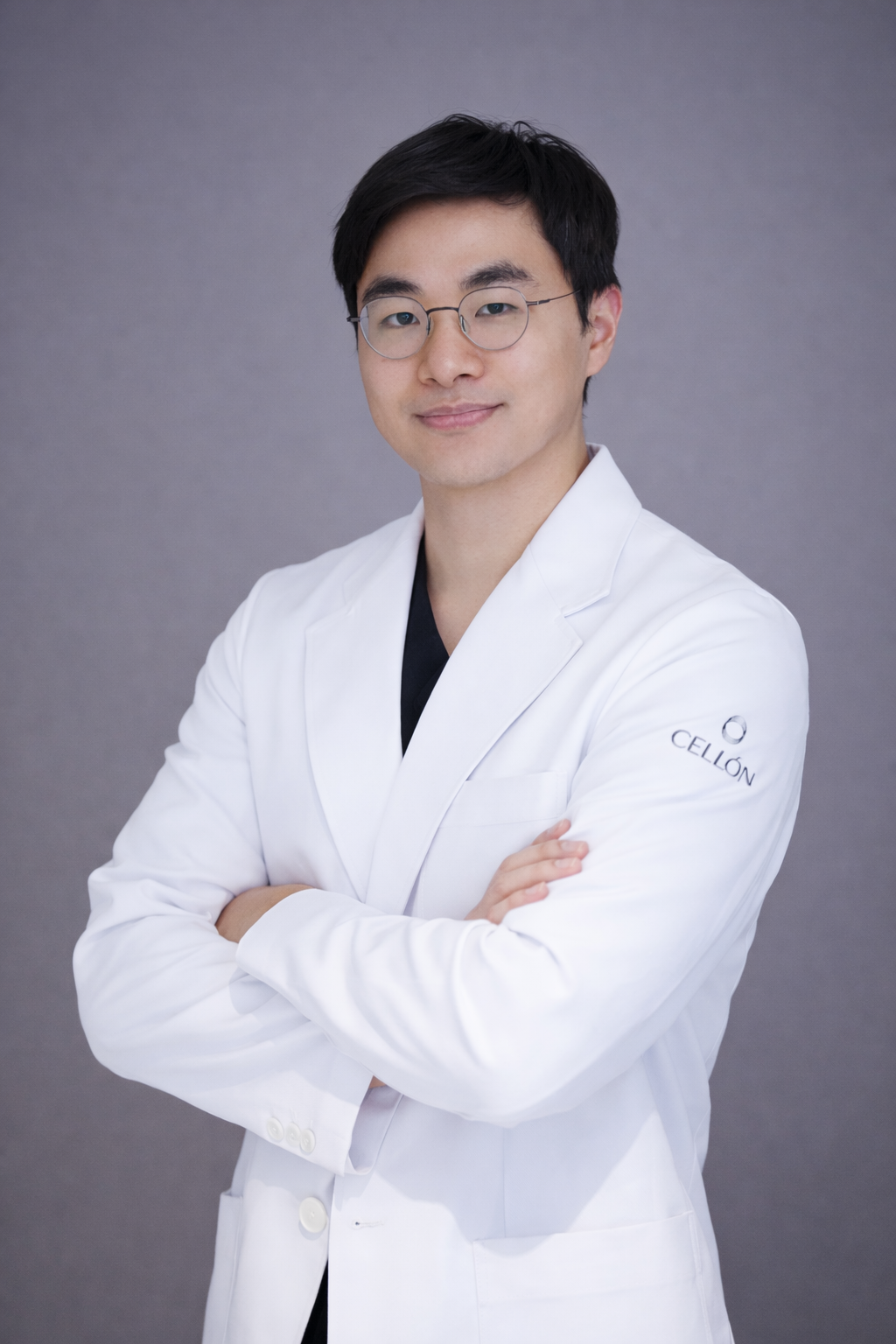
All consultations and procedures are personally performed by Head Physician Dr. Kang Seung-hoon. When it comes to anti-aging, the results often come down not to the procedure itself, but to who performs it, the judgment behind it, and the order in which treatments are approached. At Cellon, patients in their 40s and 50s are never treated with the same one-size-fits-all standard. Our approach begins by thoroughly understanding each individual's stage of aging and unique structural characteristics.
Cellon Clinic serves not only domestic patients but also medical tourists from Japan, China, Southeast Asia, and English-speaking countries — all held to the same clinical standard of care. Delivering the same quality of assessment and treatment regardless of language or background is the direction Cellon is committed to.
A Common Misconception — Do Older Patients Need More Aggressive Treatments?
The idea that stronger intensity or more volume equals a younger appearance can actually lead to unnatural results, especially as we age.
Understanding exactly what each age-related concern requires — and where — is the foundation of a successful outcome. The right treatment, in the right order, in the right amount: this is the principle behind truly natural anti-aging.
Frequently Asked Questions
Here are answers to the questions we hear most often during consultations about anti-aging treatments by age group.
QI'm in my 40s — should I go with Stem Cell Fat Grafting now, or is it better to start with Lifting?
In your early-to-mid 40s, your skin still retains a reasonable capacity for regeneration, which means Lifting treatments can deliver strong results at this stage. That said, if volume loss is already noticeable in specific areas — such as under the eyes or at the temples — addressing those areas first, or alongside Lifting, tends to produce a more natural outcome. Rather than choosing one over the other, the key is to have a proper assessment so we can prioritize what will make the biggest difference for you right now.
QI'm in my 50s — could high-intensity Lifting treatments be too harsh on my skin?
Skin does become thinner in your 50s, which means the energy settings and technique used during treatment require a more careful, tailored approach. More isn't always better — what matters is calibrating the energy level to suit your individual skin thickness and tissue condition. At Cellon Clinic, we evaluate your skin's condition before each treatment to determine the right settings for you personally.
QHow is Stem Cell Fat Grafting different from regular fat grafting?
Standard fat grafting focuses primarily on restoring volume. Stem Cell Fat Grafting goes a step further — the adipose-derived stem cells (ADSCs) contained within the transferred fat tissue can promote tissue regeneration and angiogenesis at the treatment site, delivering true regenerative medicine benefits. This means you can also expect improvements in skin thickness, texture, and overall skin quality. It's worth noting that this procedure can only be performed at facilities officially designated as Designated Advanced Regenerative Medicine Hospitals by the Ministry of Health and Welfare.
QIf I take good care of my skin in my 40s, will I need fewer treatments in my 50s?
People who consistently maintain their skin's elasticity and volume throughout their 40s often show less visible aging when they reach their 50s. However, certain changes — such as bone resorption and hormonal shifts — occur regardless of how diligently you care for your skin. Good habits in your 40s mean you're more likely to achieve your desired results with simpler, less intensive treatments in your 50s. But it doesn't mean treatments become unnecessary altogether.
QWhat should I bring or prepare for my first anti-aging consultation?
If you have photos of yourself from your 20s or 30s, bringing them along can be really helpful. Being able to see how your face has changed over time allows us to more accurately identify where volume has been lost and where sagging has begun. It's also useful to come prepared with a brief history of any previous treatments you've had — such as Botox or fillers — as this helps us plan the most effective approach for you.
Anti-Aging Tailored to Your Age —
Consult with Cellon Clinic Today
Dr. Kang Seung-hoon personally designs individualized treatment plans
based on the unique aging patterns of patients in their 40s and 50s.
Start your journey at Cellon Clinic, Cheongdam's Designated Advanced Regenerative Medicine Hospital.