
Blood-Derived vs. Fat-Derived Stem Cells
A Complete Breakdown of the Key Differences
Same name, but different origins, different mechanisms, and different best-fit applications. Let's take a clear, thorough look at how these two types of stem cells actually differ.
With Stem Cells, the Source Matters First
When most people hear the word "stem cells," they picture some kind of all-purpose regenerative cell. But the reality is more nuanced — stem cells are not all the same. Their characteristics vary significantly depending on where in the body they're harvested, and that directly shapes how they're used in clinical practice.
In the fields of dermatology and regenerative medicine, the two types discussed most often are hematopoietic stem cells (HSCs), derived from blood, and adipose-derived stem cells (ADSCs), harvested from fat tissue. Both are autologous — meaning they come from your own body — but they live in very different environments, perform very different functions, and serve very different purposes in aesthetic and regenerative treatments.
Let's walk through each one from the ground up. Once you understand the distinction, it will become clear why Cellon Clinic centers its regenerative medicine approach around adipose-derived stem cells.
What Are Hematopoietic Stem Cells?
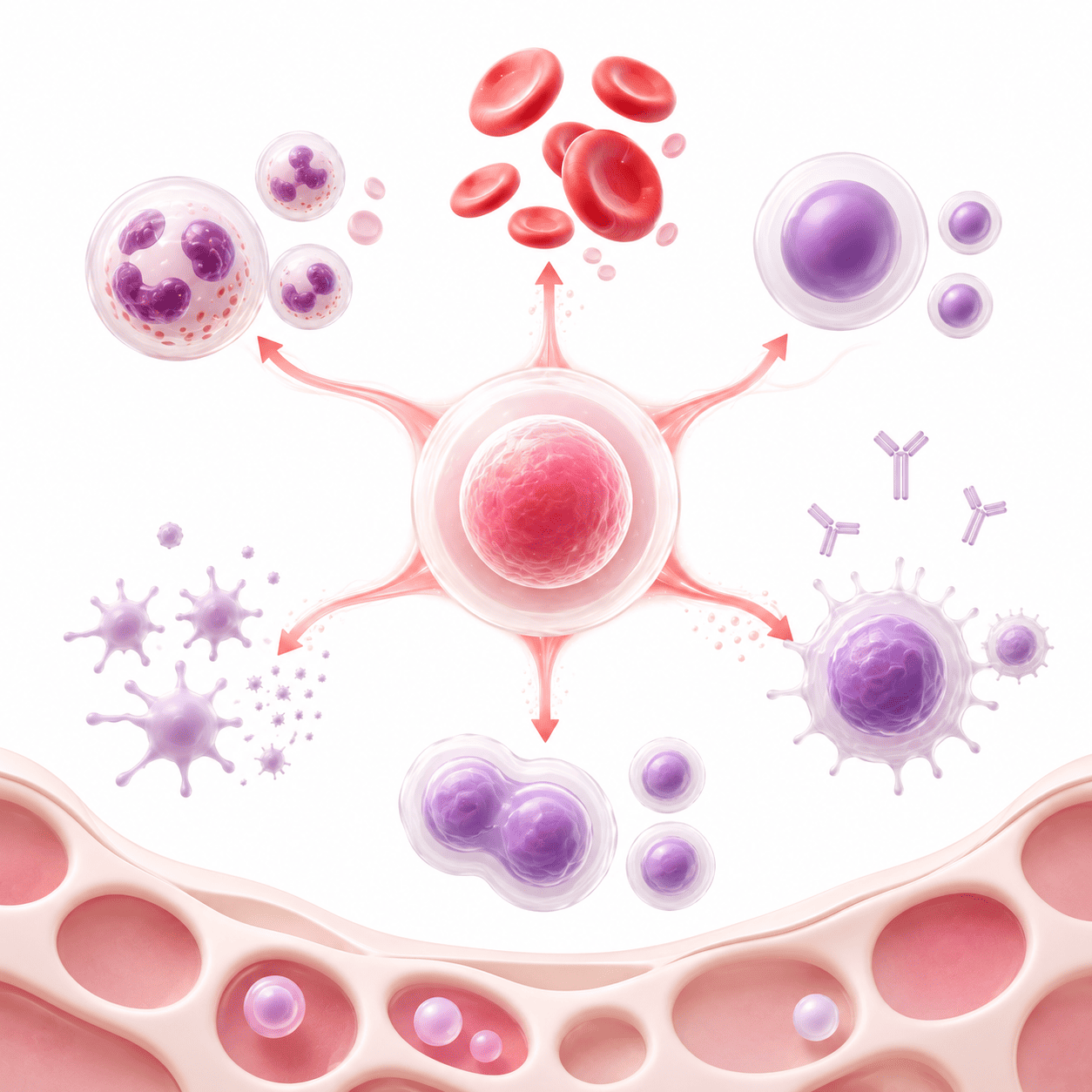
Hematopoietic stem cells are cells collected primarily from bone marrow or peripheral blood. Their main role is to produce blood cells — including red blood cells, white blood cells, and platelets. Medically, they are known as Hematopoietic Stem Cells (HSCs).
Where They Live
Bone marrow is their primary home. When needed, they can be mobilized into peripheral blood, and a small number are also found in umbilical cord blood.
Primary Differentiation
They differentiate into blood cell lineages, giving rise to red blood cells, white blood cells, platelets, and immune cells such as natural killer (NK) cells.
Clinical Applications
They are primarily used in hematology and oncology — for conditions such as leukemia and aplastic anemia, as well as rebuilding bone marrow function after chemotherapy.
Collection Process
They are obtained through bone marrow aspiration or by mobilizing cells into the bloodstream via G-CSF injections, followed by apheresis. The process is not straightforward and may require general anesthesia.
Hematopoietic stem cells are specialized for rebuilding the immune and blood systems — not for skin or soft tissue regeneration. Their direct use in dermatology or aesthetic regenerative medicine is highly limited.
What Are Adipose-Derived Stem Cells?
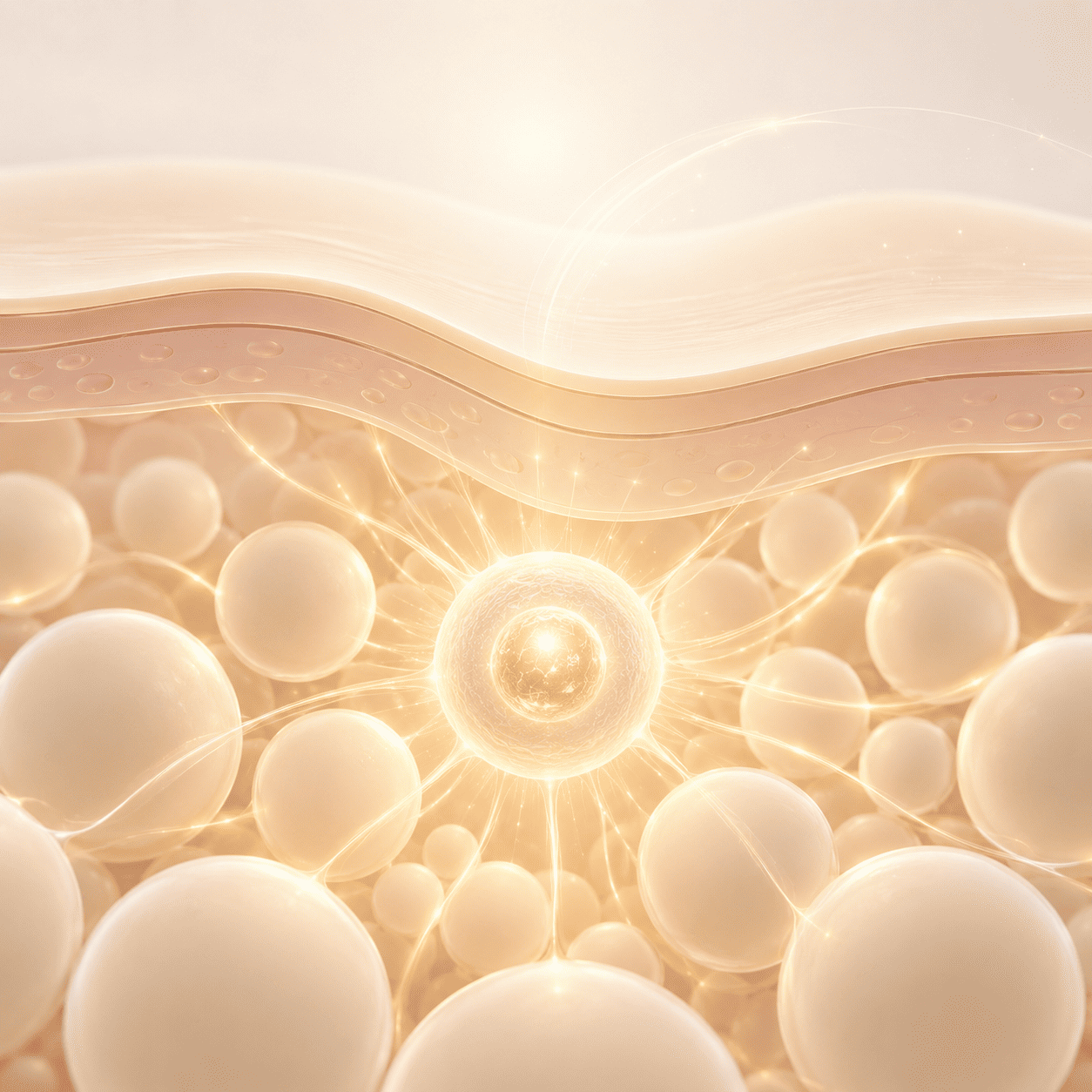
Adipose-Derived Stem Cells (ADSCs) are a type of mesenchymal stem cell found within fat tissue. They are isolated and purified from fat collected during liposuction or a dedicated fat-harvesting procedure.
There are three key reasons ADSCs have gained so much attention in dermatology and regenerative medicine.
-
1
Abundantly Available
Fat tissue is one of the most stem cell-dense tissues in the human body. Because ADSCs can be obtained during cosmetic procedures like liposuction, no additional invasive steps are needed to collect them.
-
2
Broad Differentiation Potential
ADSCs can differentiate into dermal skin cells, vascular endothelial cells, and collagen-producing fibroblasts — making them well-suited for cosmetic and regenerative goals such as skin rejuvenation, volume restoration, and angiogenesis stimulation.
-
3
Immunomodulatory & Anti-Inflammatory Properties
ADSCs secrete cytokines that regulate the surrounding immune response and reduce inflammation. Research suggests that this paracrine effect helps transplanted fat survive longer and integrate more naturally into surrounding tissue.
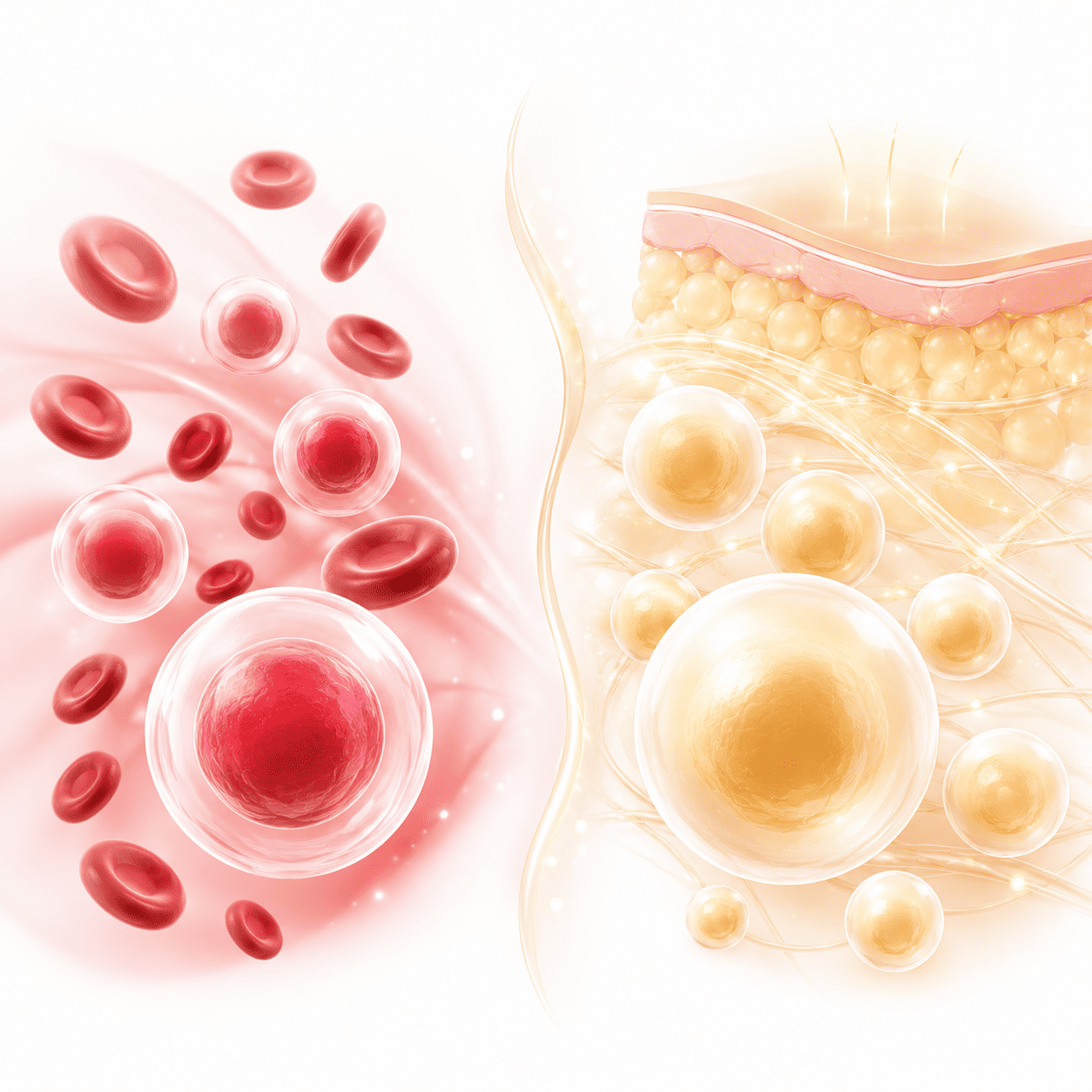
Side-by-Side Comparison — What Makes Them Different
Placing the two stem cell types side by side makes the differences far clearer.
| Category | Hematopoietic Stem Cells (HSC) | Adipose-Derived Stem Cells (ADSC) |
|---|---|---|
| Source Tissue | Bone marrow, peripheral blood, umbilical cord blood | Adipose tissue (abdomen, thighs, etc.) |
| Cell Lineage | Hematopoietic stem cell lineage | Mesenchymal stem cell lineage |
| Harvesting Method | Bone marrow aspiration / apheresis (invasive) | Collected alongside liposuction or fat harvesting (relatively non-invasive) |
| Harvesting Difficulty | High (requires specialized facility and general anesthesia) | Low (can be performed alongside fat procedures) |
| Primary Differentiation | Blood cells (red blood cells, white blood cells, platelets, etc.) | Fat, cartilage, bone, blood vessels, skin fibroblasts, etc. |
| Immunomodulatory Effect | Limited | Relatively strong (paracrine effect) |
| Primary Clinical Applications | Hematologic malignancies, immune reconstitution | Skin regeneration, improved fat graft survival, anti-aging |
| Suitability for Aesthetic & Regenerative Medicine | Low | High |
Why Do Regenerative Medicine Clinics Primarily Use Adipose-Derived Stem Cells?
It's not a matter of one being "better" than the other — blood stem cells and adipose-derived stem cells each excel in clearly different areas.
Blood stem cells are exceptional at restoring the blood and immune system — think leukemia treatment or bone marrow reconstruction after chemotherapy. Adipose-derived stem cells, on the other hand, are far better suited for goals like skin tissue regeneration, improving fat graft survival, and restoring volume lost to aging.
The reason adipose-derived stem cells matter so much in Stem Cell Fat Grafting isn't simply about cell count. For transplanted fat to survive, new blood vessels need to form quickly and surrounding inflammation needs to be kept in check. Adipose-derived stem cells help with both — simultaneously.
Here's a breakdown of the specific mechanisms through which adipose-derived stem cells contribute to regenerative procedures.
Promoting Angiogenesis
By secreting vascular growth factors such as VEGF, adipose-derived stem cells accelerate the formation of new blood vessels around transplanted fat. Without this vascular connection, grafted fat cannot receive nutrients — and cannot survive.
Anti-Inflammatory Protection Against Cell Death
The factors secreted by adipose-derived stem cells help suppress the inevitable inflammatory response that follows a graft. By reducing early cell death, they contribute to a higher overall survival rate of the transplanted tissue.
Stimulating Collagen Production
Through paracrine signaling that activates fibroblasts, adipose-derived stem cells indirectly stimulate collagen synthesis within the dermis — which can lead to visible improvements in skin elasticity and texture.
Differentiation Plasticity
Adipose-derived stem cells can flexibly differentiate into the cell types needed based on the surrounding microenvironment. This plasticity makes them well-suited to meet the diverse cellular demands that arise throughout the tissue regeneration process.
Cellon Clinic's Regenerative Medicine Approach — What Is Stem Cell Fat Grafting?
Cellon Clinic is a Cheongdam-based Designated Advanced Regenerative Medicine Hospital recognized by the Ministry of Health and Welfare, offering Stem Cell Fat Grafting procedures that fully harness the regenerative properties of adipose-derived stem cells.
So what sets Stem Cell Fat Grafting apart from conventional fat grafting? Standard fat grafting transplants fat cells as they are. Stem Cell Fat Grafting goes a step further — SVF (Stromal Vascular Fraction) is isolated from the harvested fat and reintroduced in a stem cell-enriched form.
What Is SVF (Stromal Vascular Fraction)?
SVF is a cellular mixture obtained by treating adipose tissue with an enzyme (collagenase) and then centrifuging it. It contains a rich blend of adipose-derived stem cells (ADSCs), vascular endothelial progenitor cells, immunomodulatory cells, and growth factors. This is precisely why transplanting SVF-enriched fat delivers far more regenerative signals than transferring fat cells alone.
Designation as an Advanced Regenerative Medicine Hospital is not granted to just any medical institution. Under the Regenerative Medicine Act, a facility must meet strict standards for infrastructure, personnel, and quality management before it can be officially designated. Cellon Clinic is one of the select designated institutions in Cheongdam that meets all of these requirements.
The goal is never simply to "inject as many stem cells as possible." Lead physician Dr. Kang Seung-hun considers the most critical step to be careful case selection and treatment planning — evaluating each patient's anatomical structure, volume loss patterns, and skin condition to determine where Stem Cell Fat Grafting will deliver genuine, meaningful results.
Blood Stem Cells vs. Adipose Stem Cells — FAQ
Here are answers to the questions we hear most often from patients.
Not quite. Different types of stem cells are capable of differentiating into different cell types, and each works on a different body system. Blood stem cells are specialized for rebuilding the blood and immune systems, while adipose (fat-derived) stem cells are better suited for soft tissue regeneration and the recovery of skin and blood vessels. Which stem cells are used — and where — makes all the difference in outcomes.
Stem Cell Fat Grafting involves harvesting adipose tissue from your own body, so you'll need to have a sufficient amount of fat available for collection. Eligibility may also be affected by underlying health conditions or medications you're currently taking. It's important to consult with a physician first to determine whether this procedure is right for you.
Swelling immediately after the procedure makes it difficult to assess the true results. It typically takes several weeks for the transplanted fat to stabilize and for swelling to fully subside, and final outcomes are generally evaluated three to six months post-procedure. Regenerative effects also tend to accumulate over the medium to long term, rather than appearing all at once in the short term.
Various approaches are being explored at the research level, but the clinical use of blood stem cells for cosmetic or skin regeneration purposes is currently very limited. They are difficult to harvest, show low efficiency in differentiating toward soft tissue, and lack the safety and efficacy evidence that adipose stem cells have. In a real-world regenerative medicine dermatology setting, adipose-derived stem cells (ADSC/SVF) are a far more practical choice.
Conventional fat grafting involves centrifuging harvested fat and transplanting it directly. Stem Cell Fat Grafting adds an SVF (stromal vascular fraction) isolation step, allowing a stroma rich in stem cells and vascular endothelial progenitor cells to be transplanted alongside the fat. This can improve vascularization around the grafted fat and create a better environment for cell survival. That said, regardless of the procedure chosen, meaningful results depend on designing the treatment to match each patient's individual condition and goals.

Wondering if Stem Cell Fat Grafting is right for you?
Dr. Kang Seung-hoon, Director of Cellon Clinic, consults personally with every patient.
We'll walk you through everything using the standards of Cheongdam's Designated Advanced Regenerative Medicine Hospital.