
Blood Stem Cells vs. Fat-Derived Stem Cells
What's the Difference in Regenerative Medicine?
They both go by the name "stem cells," but their origins, properties, and applications are worlds apart. Here's a clear breakdown — from a dermatology and regenerative medicine perspective — of which stem cells are used in which context, and why.
What Exactly Are Stem Cells?
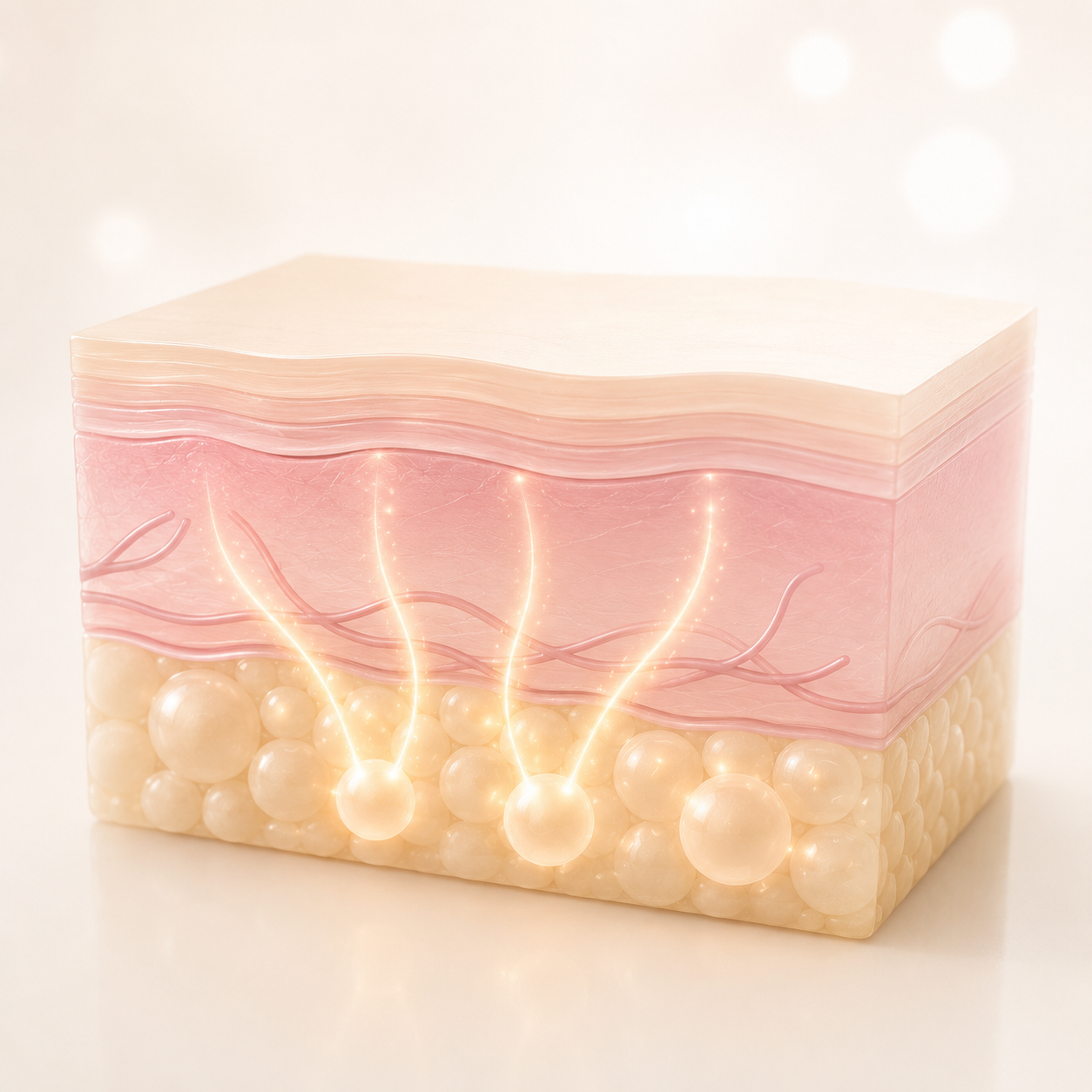
In simple terms, stem cells are cells that haven't been assigned a specific role yet. When the right conditions arise, they can differentiate into specialized tissue cells or replicate themselves to increase in number. These two abilities — self-renewal and multipotency — are exactly what make stem cells the cornerstone of regenerative medicine.
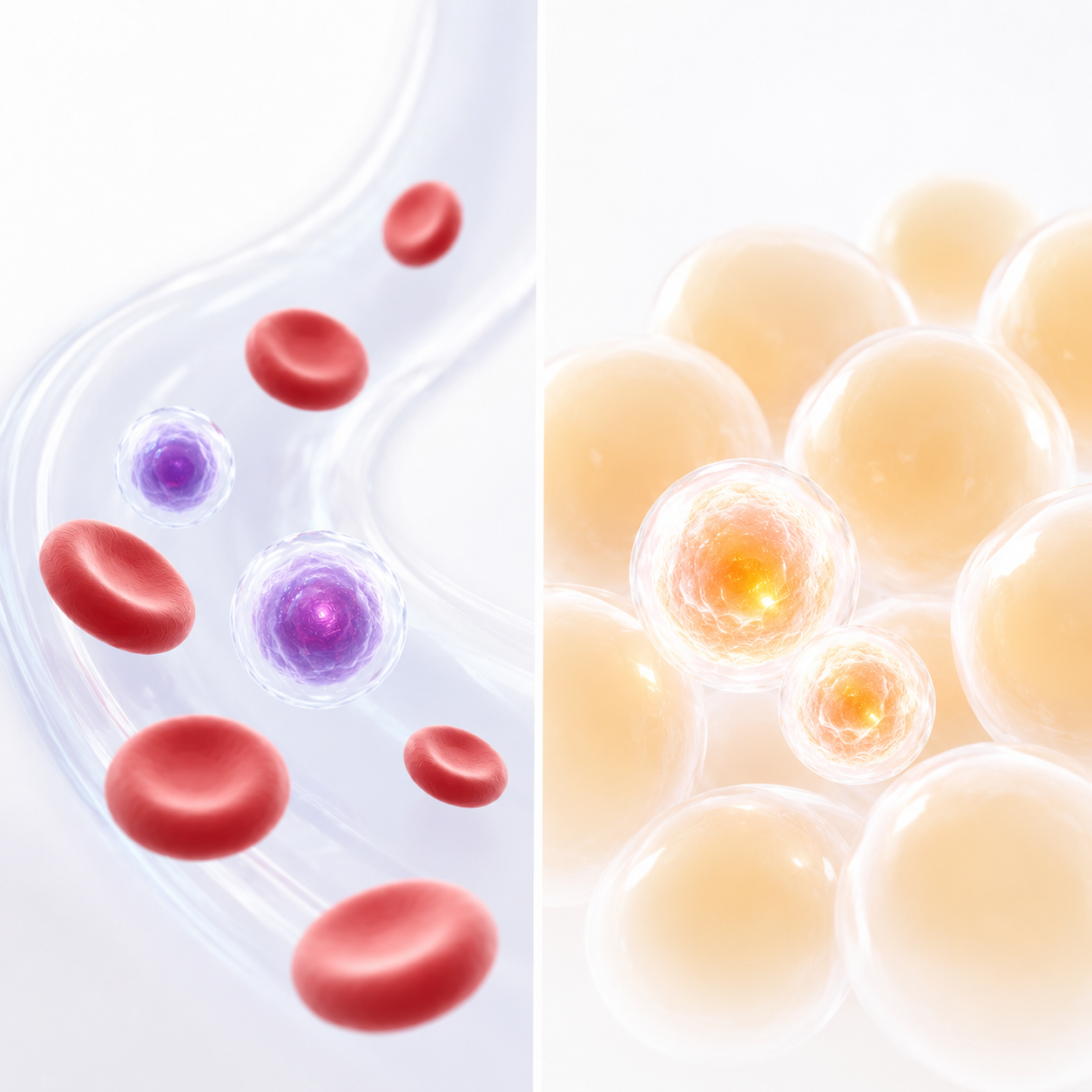
That said, the characteristics of stem cells vary significantly depending on where they're harvested from. Two of the most commonly discussed types are Hematopoietic Stem Cells (HSC), derived from blood (bone marrow or peripheral blood), and Adipose-Derived Stem Cells (ADSC), isolated from fatty tissue.
Because the names sound similar, you might wonder if they're essentially the same thing — but in practice, they differ quite a bit in terms of origin, differentiation potential, and clinical applications. From a dermatological and regenerative medicine standpoint, understanding these differences is actually a pretty important factor when choosing a treatment.
Hematopoietic Stem Cells — The Cells Behind Blood and Immunity
Hematopoietic stem cells are harvested from bone marrow, peripheral blood, or umbilical cord blood (cord blood). As their name suggests, these are the stem cells responsible for producing blood.
Red blood cells, white blood cells, platelets — nearly every cell that makes up your blood originates from hematopoietic stem cells. Immune cells such as T cells, B cells, and NK cells also differentiate from this same source. This is why hematopoietic stem cell transplantation plays a central role in treating diseases where the blood and immune system have broken down — conditions like leukemia, lymphoma, and aplastic anemia. What's commonly referred to as a "bone marrow transplant" is, in fact, a transplant of these hematopoietic stem cells.
The harvesting process is relatively invasive. Cells must either be extracted directly from the bone marrow, or mobilized into the peripheral blood using drugs such as G-CSF (granulocyte colony-stimulating factor) before being collected via apheresis. The yield from the body is also comparatively limited, and the collection process can involve a degree of discomfort.
Another critical consideration is immune rejection. When hematopoietic stem cells from a donor are transplanted, immune reactions such as graft-versus-host disease (GVHD) can occur — making donor matching and immunosuppressive management absolutely essential.
Adipose-Derived Stem Cells — The Source of Regeneration and Rejuvenation
Adipose-derived stem cells (ADSCs) are isolated from fat tissue obtained through procedures such as liposuction. Because fat tissue is naturally rich in stem cells, even a relatively small amount of harvested fat can yield a significant number of stem cells.
ADSCs belong to a class of cells known as mesenchymal stem cells (MSCs). MSCs have the ability to differentiate into various connective tissue cell types, including fat cells, bone cells, cartilage cells, and muscle cells — a very different differentiation pathway from hematopoietic stem cells, which give rise to blood and immune cells.
What makes ADSCs especially noteworthy in aesthetic regenerative medicine, however, goes beyond their differentiation potential. ADSCs secrete a range of growth factors — including VEGF, HGF, and IGF — along with various cytokines, triggering what is known as the "paracrine effect": rather than transforming into new cells themselves, ADSCs create a regenerative environment that stimulates the surrounding tissue to heal and renew itself.
Hematopoietic Stem Cells (HSCs)
- Source: Bone marrow, peripheral blood, umbilical cord blood
- Differentiation: Blood and immune cell lineages
- Primary applications: Treatment of blood disorders such as leukemia and lymphoma
- Harvesting method: Invasive (bone marrow aspiration, apheresis, etc.)
- Availability: Limited
- Immune considerations: Risk of GVHD with allogeneic transplantation
- Direct use in skin regeneration: Currently limited
Adipose-Derived Stem Cells (ADSCs)
- Source: Fat tissue (abdomen, flanks, etc.)
- Differentiation: Connective tissue lineages — fat, bone, cartilage, muscle
- Primary applications: Skin regeneration, improved fat graft survival, anti-aging
- Harvesting method: Liposuction (can be performed under local anesthesia)
- Availability: Relatively abundant
- Immune considerations: No rejection risk when using autologous cells
- Paracrine effect: Secretes growth factors to promote a regenerative environment
Why ADSC Is Gaining Attention in Regenerative Dermatology
When regenerative medicine comes up in dermatology and plastic surgery, the term "stem cells" almost always refers to adipose-derived regenerative cells — ADSC — at its core. But why?
The biggest reason is accessibility. Fat tissue can be harvested with relatively minimal invasiveness, and adults naturally have an ample supply of it, making autologous (self-donated) cells a practical option. Using your own cells means they can be safely reintroduced into the body without triggering an immune rejection response.
Beyond that, fat tissue is far more than a simple energy reservoir. It contains a complex mixture known as SVF (Stromal Vascular Fraction) — comprising not only ADSC, but also vascular endothelial cells, pericytes, immune cells, and more. This rich cellular composite carries significant regenerative potential, meaning fat grafting can deliver benefits that go well beyond simple volume restoration.
Cellon Clinic is a Cheongdam Designated Advanced Regenerative Medicine Hospital, certified by the Ministry of Health and Welfare. This designation means the clinic has been reviewed and authorized by the Ministry to perform advanced regenerative medicine procedures — including those involving cells and genes — legally and safely. All stem cell-related treatments at Cellon are carried out within this regulatory framework.
What Is the Connection Between Adipose Stem Cells and Fat Grafting?
Cellon Clinic's signature PAMI fat grafting technique is closely tied to ADSCs. When fat is transferred, what matters isn't just the volume of fat injected — it's how many regenerative components, including ADSCs, survive within that fat and remain viable after transfer.
The key lies in how the fat is harvested and processed. Centrifugation methods, filtration techniques, processing temperature, and handling time all directly affect ADSC survival rates. Cellon Clinic's PAMI fat grafting is built on a refined processing approach specifically designed to minimize cellular damage throughout the entire procedure.
ADSCs also secrete growth factors that actively promote angiogenesis — the formation of new blood vessels — around the grafted fat tissue. How quickly those new vessels connect to the transplanted area is critical for the long-term survival of the graft. Research suggests that fat tissue richer in ADSCs tends to show higher engraftment rates as a result.
How ADSCs Contribute at Each Stage of Fat Grafting
A small amount of fat is extracted from the abdomen or flanks. At this stage, minimizing cell damage is absolutely critical.
Impurities such as blood and oil are removed, while the SVF fraction containing ADSCs is carefully preserved throughout the process.
Fat is injected in small, dispersed amounts tailored to the layered anatomy of the face. Maintaining a high count of viable cells — including ADSCs — is key.
Growth factors secreted by ADSCs stimulate new blood vessel formation, creating an environment where the transplanted fat can survive and thrive.
Once the grafted fat stabilizes, collagen production and elasticity in the surrounding tissue also improve — delivering results that go well beyond simple volume restoration.
So Are Blood Stem Cells Completely Unrelated to Dermatology?
Not entirely. Platelet-Rich Plasma (PRP) therapy — one of the most widely used skin regeneration treatments — actually relies on components derived from blood. PRP isn't a stem cell treatment per se, but it harnesses the growth factors released by platelets in the blood (PDGF, TGF-β, EGF, and others) to stimulate skin regeneration.
More recently, Exosome-based regenerative treatments have also been gaining attention. These use extracellular vesicles secreted by stem cells to deliver similar regenerative signals — without introducing the cells themselves. Because only the "signaling molecules" produced by stem cells are used rather than the cells directly, this approach is attracting interest from both a regulatory and safety standpoint.
In summary, dermatological regenerative medicine draws on two distinct but complementary approaches: blood-derived components (such as PRP and Exosomes) and adipose-derived stem cells (ADSCs). Protocols that combine both are also being actively researched.
PRP (Platelet-Rich Plasma)
Platelet-rich plasma is isolated and concentrated from a patient's own blood, then injected into target areas. Platelet-derived growth factors stimulate tissue regeneration — though PRP itself is not a stem cell treatment.
Exosome
Extracellular vesicles secreted by stem cells. Rather than injecting cells directly, Exosome therapy delivers regenerative signals only — a next-generation approach drawing significant regulatory interest.
SVF (Stromal Vascular Fraction)
A complex of cells isolated from adipose tissue through enzymatic processing. Contains ADSCs and is often used alongside fat grafting to improve graft survival rates.
Rejuran (PDRN)
Derived from salmon DNA, PDRN activates cellular regeneration signals to promote skin tissue repair — a regenerative factor-based treatment in its own right.
When considering stem cell treatments, what matters more than the name of the stem cell is understanding the purpose and method of application. Even treatments that share the same name can have entirely different clinical contexts.
Cellon Clinic Regenerative Medicine ContentHow Cellon Clinic Approaches Regenerative Medicine
As a Ministry of Health and Welfare–designated Cheongdam Designated Advanced Regenerative Medicine Hospital, Cellon Clinic treats stem cell procedures not as simple cosmetic treatments, but as evidence-based regenerative medicine. Dr. Kang Seung-hoon, the clinic's medical director, personally oversees all consultations and procedures — holding domestic and international patients to the same standard of care.
Stem Cell Fat Grafting and anti-aging combination treatments form the core of Cellon's signature lineup. Rather than conventional fat grafting focused purely on volume, the clinic employs PAMI fat grafting — a specialized processing and injection method that maximizes the regenerative potential of ADSC-rich fat — to achieve both natural-looking results and meaningful tissue regeneration at the same time.
Cell-signaling–based regenerative therapies such as Exosome and Rejuran are integrated with fat grafting and Lifting procedures in synergistic combination protocols. Knowing that every treatment is performed within a facility that meets the rigorous standards of a Designated Advanced Regenerative Medicine Hospital provides patients with genuine peace of mind.
Frequently Asked Questions

Explore Regenerative Medicine at Cellon Clinic
Curious about the difference between blood stem cells and fat-derived stem cells — or which regenerative treatment is right for your skin? Feel free to reach out via WhatsApp anytime. Cellon Clinic is a Designated Advanced Regenerative Medicine Hospital in Cheongdam, led personally by Chief Director Dr. Kang Seung-hoon.
Chat with Us on WhatsApp