
Cellon Clinic — Regenerative Treatment Comparison Guide
Exosome vs Rejuran
Both Are Regenerative Treatments — So What's the Difference?
Breaking down the ingredients, mechanisms, and which skin type each one is best suited for. An honest, side-by-side comparison of two of the most popular regenerative treatments.
Why It's So Easy to Get Them Confused
Both claim to "regenerate" — but they work quite differently

Exosome and Rejuran treatments share a common philosophy — both send signals to skin cells, encouraging them to heal and rebuild from within. That's why they both fall under the umbrella of "regenerative treatments." But when you look closely at the ingredients, the starting points, the mechanisms of action, and the target cells are all quite different.
"I've heard both are great — so which one should I get?" It's one of the most common questions we hear at the clinic. This article is our answer. We'll walk you through the basics of each ingredient, and help you understand which one is better suited for your specific skin concerns.
Understanding the Ingredients
What Is Rejuran Actually Made Of?
The key ingredient in Rejuran is PDRN (Polydeoxyribonucleotide) — a compound derived from the purified DNA of sperm cells found in fish such as salmon and trout. The name may sound technical, but the concept is straightforward: it's essentially a fragment of DNA.
PDRN binds to A2A adenosine receptors on the surface of skin cells. Once these receptors are activated, signaling pathways open that promote collagen synthesis while simultaneously suppressing inflammatory responses. In other words, Rejuran works by directly "stimulating" these cellular receptors.
Beyond cellular signaling, PDRN also breaks down to directly supply the purine and pyrimidine bases needed for DNA synthesis — essentially delivering the "building blocks" cells need to repair themselves. This is why multiple studies support its effectiveness in healing damaged tissue and improving the appearance of scars.
Understanding the Ingredients — 2
Exosomes Are "Messengers Sent by Your Cells"
Exosomes are incredibly tiny, nano-sized vesicles secreted by cells. When stem cells are cultured, they naturally release these particles to communicate with surrounding cells. Packed inside each exosome is a rich collection of signaling molecules — including growth factors, microRNA, proteins, and cytokines.
Unlike Rejuran, which targets a single cell receptor, exosomes deliver an entire "package" of signaling molecules directly into the cell. Hundreds of signaling compounds are transmitted simultaneously, triggering a complex cascade of responses — including cellular regeneration, inflammation suppression, and angiogenesis.
The composition of exosomes varies depending on which type of stem cells they are derived from. Sources include adipose (fat) tissue, umbilical cord blood, and bone marrow — each with a distinct growth factor profile and slightly different clinical indications. At Cellon Clinic, our regenerative medicine expertise allows us to select the most appropriate exosome source for each patient's needs.
Rejuran (PDRN) is a single signaling molecule that targets a specific receptor. Exosomes, on the other hand, are nano-structures that deliver hundreds of signaling molecules all at once. Think of it this way: Rejuran acts like a single point of contact, while exosomes act like a broad surface — covering far more ground in a single treatment.
Key Figures by Ingredient
Key Numbers Behind Each Ingredient
Here are some core metrics worth knowing when choosing a regenerative treatment.
* Figures are representative estimates based on published research to date and may vary depending on the product or manufacturer.
Side-by-Side Comparison
Side-by-Side Comparison — At a Glance
The table below makes it easy to see exactly how these two treatments differ.
| Category | Rejuran (PDRN) | Exosome |
|---|---|---|
| Key Ingredient | Polydeoxyribonucleotide (PDRN purified from salmon/trout DNA) | Stem cell-derived nano-vesicles (complex of growth factors, miRNA & cytokines) |
| Mechanism of Action | Binds A2A adenosine receptors → stimulates collagen synthesis + suppresses inflammation | Absorbed into cells, simultaneously activating multiple signaling pathways |
| Regulatory Classification | Pharmaceutical drug (fully approved in Korea) | Regenerative medicine domain (operated within Korea's Advanced Regenerative Medicine framework) |
| Primary Indications | Skin texture refinement, acne scarring, enlarged pores, fine lines, dull skin tone | Advanced aging, photoaging, post-laser recovery, overall skin vitality restoration |
| Post-Treatment Response | Mild swelling or bruising possible; quick return to daily activities | Slight redness or sensitivity; settles within a few days |
| Recommended Starting Age | Late 20s to early 30s (suitable for prevention and maintenance) | Mid-30s and beyond (most effective when visible signs of aging are present) |
| Treatment Interval | Every 2–4 weeks; 4–6 sessions or more recommended | Every 1–2 months; adjusted based on skin condition |
| Combination Suitability | Pairs well with laser, radiofrequency, Botox, and more | Synergistic effects expected when combined with laser treatments for enhanced recovery |
Recommendations by Skin Concern
Which Treatment Is the Better Fit for My Skin Concerns?
It's not about one treatment being superior to the other. The right choice depends on your skin's current condition and what you're hoping to restore.
For acne scars, enlarged pores, or uneven skin texture — Rejuran
Rejuran PDRN excels at repairing damaged tissue. When the skin's underlying structure has been compromised — as with acne scarring — stimulating A2A receptors to boost collagen synthesis can be especially effective. It's well-suited for gradually refining skin texture through a series of treatments.
For overall loss of vitality due to aging — Exosome
When skin cells themselves are underperforming — elasticity has declined and your complexion has lost its overall glow — Exosome's multi-signal delivery may be the more effective approach. Rather than targeting a single pathway, it activates cells on a broader level, triggering a response across aging skin as a whole.
For post-laser or resurfacing recovery — Exosome
When you want to speed up recovery after laser, IPL, or resurfacing treatments, combining Exosome therapy is a widely used approach. Its anti-inflammatory and regenerative signals can accelerate skin healing and help deliver smoother, more refined results.
For ongoing skin maintenance in your mid-30s or younger — Rejuran
Rejuran can be started at a relatively young age for preventive maintenance. Before significant aging sets in, it provides continuous support for collagen synthesis and helps suppress inflammation — making it an excellent long-term routine treatment for keeping skin in stable, healthy condition.
Synergy Combinations
What changes when you combine both treatments?
Since Rejuran and Exosome work through different biological pathways, they can be done on the same day or sequentially with minimal interference. In fact, they complement each other beautifully — Rejuran lays the groundwork for tissue repair while Exosome broadens the scope of cellular activation.
This approach uses Rejuran to initiate tissue repair in areas affected by acne scarring or skin damage, then adds Exosome when an overall revitalization boost is needed. A stepwise strategy like this can be especially effective when the skin's condition is significantly compromised.
Exosome is applied immediately after laser treatment to accelerate recovery, followed by ongoing Rejuran sessions to continuously stimulate collagen synthesis. This combination can help laser results last longer and remain more even over time.
That said, whether to combine treatments, the order, and the interval between sessions all depend on your individual skin condition and treatment history. It's essential to determine the right plan through a proper consultation.
Cellon Clinic's Approach
What It Means to Receive Regenerative Treatments at Cheongdam's Designated Advanced Regenerative Medicine Hospital
Cellon Clinic has been designated as an Advanced Regenerative Medicine Hospital by the Korean Ministry of Health and Welfare. This designation is more than just a certificate — it means the clinic meets strict standards for delivering regenerative treatments safely.
Cellon Clinic offers a structured lineup of regenerative treatments, including Exosome and Rejuran therapies. Rather than simply administering products, every decision — what ingredients to use, on which skin type, and how to apply them — is made based on clinical evidence.
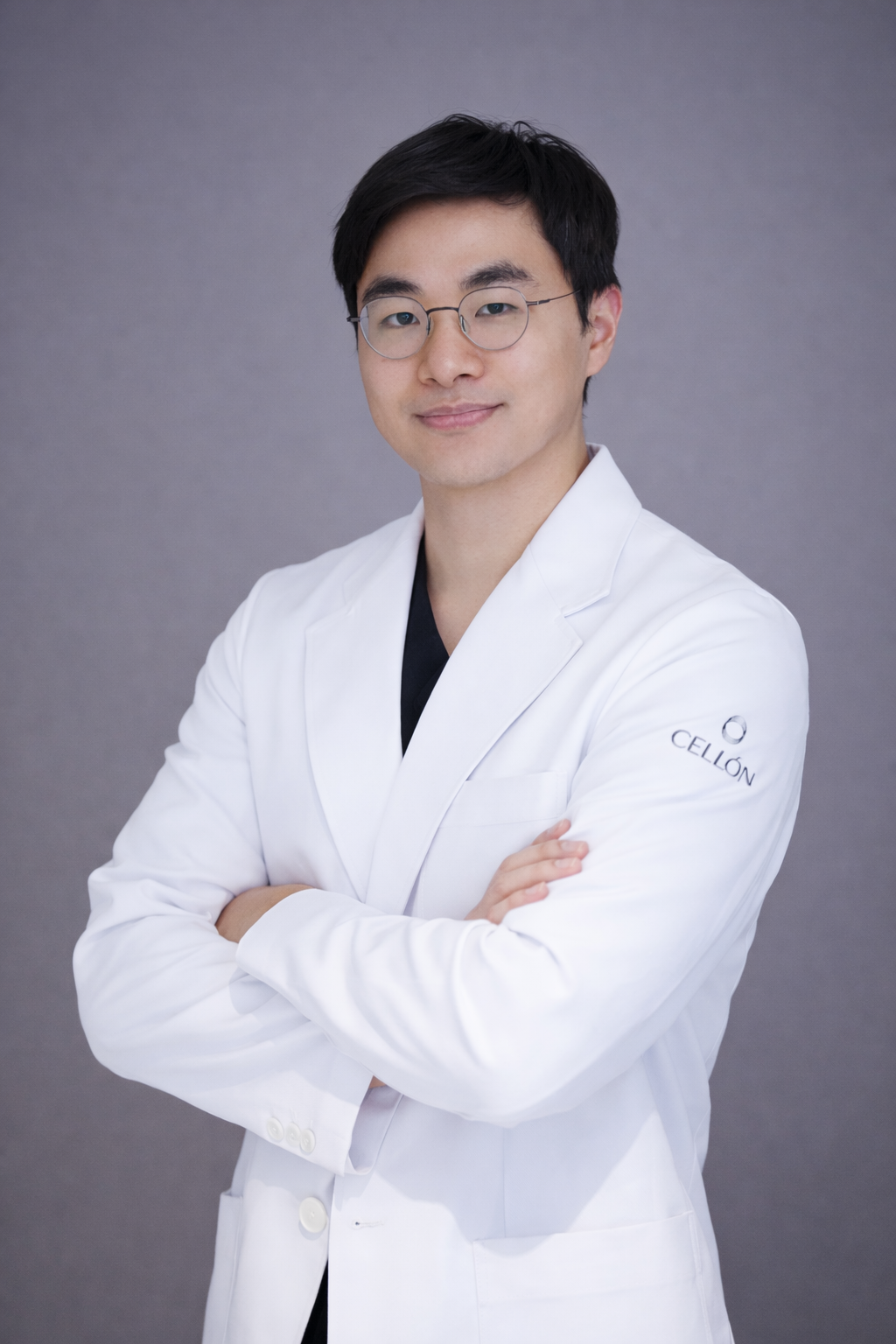
All consultations and treatment planning are personally handled by Chief Director Dr. Kang Seung-hoon. Even with the same regenerative procedure, the physician's experience and clinical judgment make all the difference in outcomes.
With regenerative treatments, what matters most isn't just the ingredient itself — it's who administers it, what clinical judgment guides the decision, and what condition the skin is in. That's why the same Exosome or Rejuran treatment can yield very different results depending on the provider's expertise and protocol.
AEO — Frequently Asked Questions
Your Top Questions About Exosome & Rejuran — Answered
Here are the questions we hear most often during consultations.
Not sure which treatment is right for your skin? Find out at your consultation.
It's not about which is better — Exosome or Rejuran. It's about figuring out what your skin actually needs right now. At Cellon Clinic, our regenerative treatment specialists are here to guide you through that process, step by step.
Chat with us on WhatsAppCellon Clinic — Cheongdam, Gangnam-gu, Seoul / Designated Advanced Regenerative Medicine Hospital by the Ministry of Health and Welfare