Facial Fat Grafting Touch-Up:
When Is the Right Time?
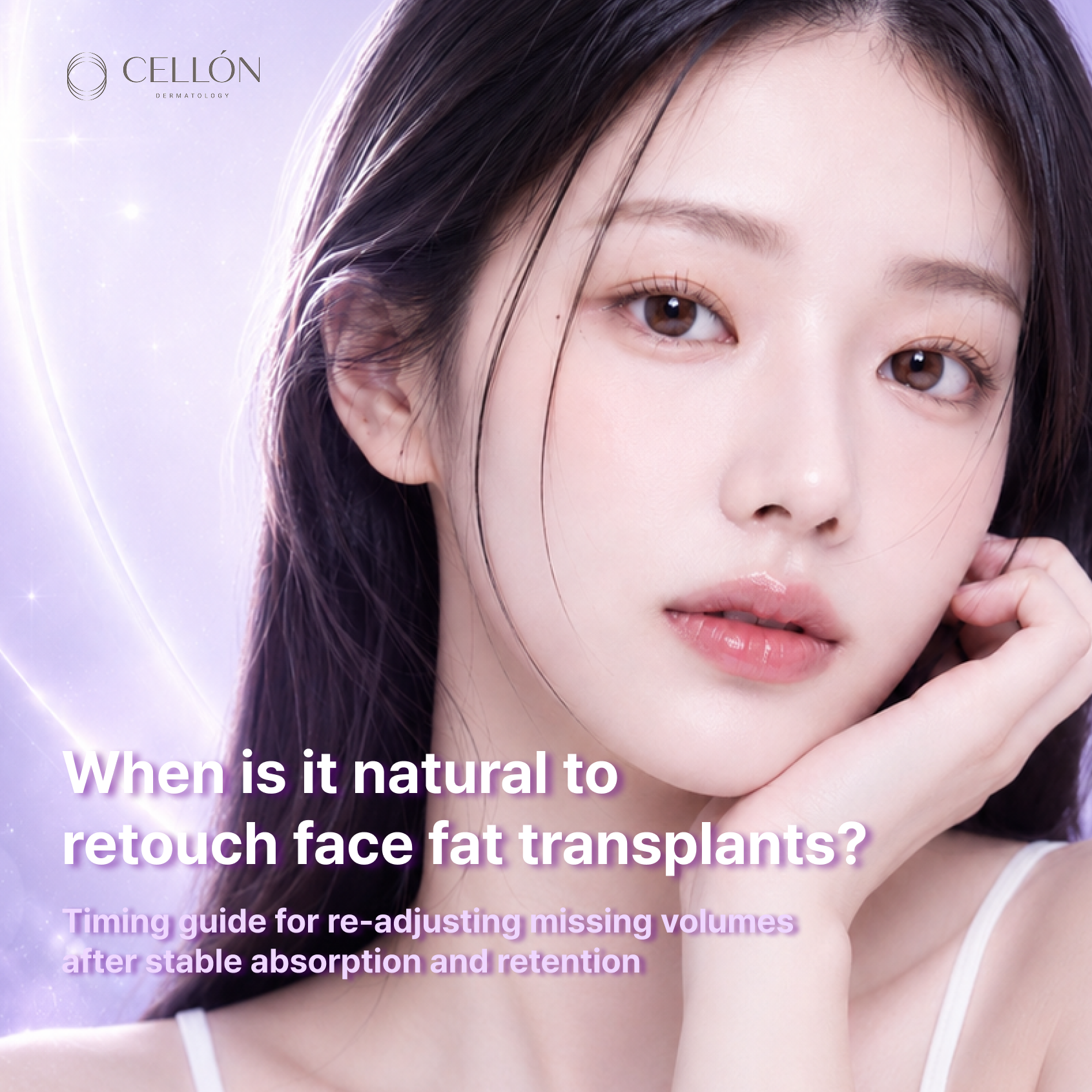
If you've been left wishing for just a little more volume after your procedure, timing is everything. From understanding how fat survives to knowing exactly when to retouch, Cellon Clinic breaks it all down — honestly.
Fat Reabsorption Isn't a Sign That Something Went Wrong
If you've noticed that your results seem a little less full than right after your fat grafting procedure, you're most likely experiencing a completely normal physiological response. Some of the transplanted fat cells don't fully adapt to their new environment and are naturally reabsorbed by the body — a process that occurs regardless of the technique used.
Graft survival rates vary depending on several factors: how the fat was harvested and processed, the blood supply in the recipient area, and your own tissue environment. What matters most isn't how much was reabsorbed, but whether the remaining fat has settled in stably. Fat cells that successfully engraft tend to maintain a natural, lasting volume for years to come.
Many patients considering a touch-up worry that something went wrong during their original procedure. But reabsorption is simply part of the outcome — it's expected. A touch-up is a corrective step considered when, after absorption has stabilized, the volume or symmetry you were hoping for still hasn't been fully achieved. Planning with that possibility in mind from the start is a far more realistic and informed approach.
reabsorption to complete
for a touch-up
your target volume
The Benchmark for Timing a Touch-Up — Why "6 Months" Matters
In the first one to two months after fat grafting, your body is still in the process of settling — swelling is gradually subsiding, and it's difficult to accurately assess how much volume has actually been retained. Many patients notice what feels like a loss of volume during this period, which is largely swelling resolving rather than fat being lost. This is exactly why patience and careful observation matter more than quick decisions.
By the third month, the major wave of reabsorption begins to wind down. Around the six-month mark, the survival of the remaining grafted fat reaches a relatively stable state. It's only at this point that you can realistically evaluate where your results stand. At Cellon Clinic, we generally recommend waiting at least six months after the initial procedure before determining whether a touch-up is needed.
The ideal touch-up window for most patients falls between six and twelve months post-procedure. By this stage, reabsorption has stabilized — yet the tissue still retains enough flexibility to provide a favorable environment for additional fat grafting. Going beyond a year isn't necessarily problematic, but it's worth keeping in mind that cumulative tissue changes over time can alter the conditions for grafting.
FAMI Fat Grafting & Retouch Strategy — Why the Approach Is Different
FAMI Fat Grafting is a precision fat grafting method used at Cellon Clinic, with a strong focus on the processing steps that improve the purity and viability of fat cells. Rather than simply adding volume, the technique is designed to maximize the engraftment rate of living cells — which is why the retouch strategy differs fundamentally from conventional approaches.
Because FAMI Fat Grafting tends to offer relatively high engraftment stability, cases that do require a retouch often need only minimal correction. On the other hand, when a staged approach is planned from the outset, a secondary retouch can be built into the initial treatment plan — allowing volume to be layered precisely, area by area.
It's also important not to think of retouching solely as a form of "correction." Even when initial results are excellent, volume naturally shifts over time due to aging and individual lifestyle factors. Adapting gracefully to those changes — that's the more refined anti-aging strategy that FAMI Fat Grafting makes possible.
Conventional Retouch Approach
- -Results assessed only after absorption is complete
- -Considered when volume loss is clearly noticeable
- -Typically recommended 6 months to 1 year post-procedure
- -Performed only after swelling and induration have fully resolved
FAMI Fat Grafting–Based Retouch Strategy
- +Retouch inclusion planned from the initial treatment design stage
- +Precise correction tailored to engraftment patterns by zone
- +Natural, ongoing maintenance aligned with the aging process
- +Enhanced engraftment environment through regenerative therapies such as Exosome and Rejuran
A retouch isn't about fixing a failed outcome. It's the process of refining your results as your face naturally evolves over time.
Signs You May Need a Touch-Up
Not every fat grafting procedure requires a touch-up. If your results are satisfying and stable, there's no reason to consider additional treatment. The following signs are worth paying attention to if they persist for more than six months.
When there is a visible difference in volume between the two cheeks, forehead, or temples. If the asymmetry persists beyond six months — after all swelling has fully resolved — it may be an indication for a touch-up.
When fat absorption exceeds expectations, leaving you without the fullness you were hoping for. Areas like the nasolabial folds, under-eyes, and forehead tend to have higher absorption rates, making touch-ups more common in those zones.
When fat has grafted unevenly, leaving the skin surface lumpy or causing certain areas to appear raised. In these cases, a touch-up may be combined with regenerative treatments for optimal results.
Once swelling has fully resolved and at least six months have passed, if one or more of the above signs apply, a consultation with a specialist can help determine whether a touch-up is the right next step.
Cellon Clinic's Approach to Touch-Up Fat Grafting
As a Ministry of Health and Welfare-designated Designated Advanced Regenerative Medicine Hospital in Cheongdam, Cellon Clinic approaches touch-up procedures with more than just volume correction in mind — we prioritize improving the tissue environment for regeneration. For fat to graft and survive long-term, the underlying environment needs to be healthy first.
Every touch-up consultation begins with a side-by-side review of your previous procedure records and your current facial condition. We assess how much absorption occurred in each area, evaluate skin texture and tissue quality, and consider the natural progression of facial aging — all to determine the most balanced and natural direction for correction.
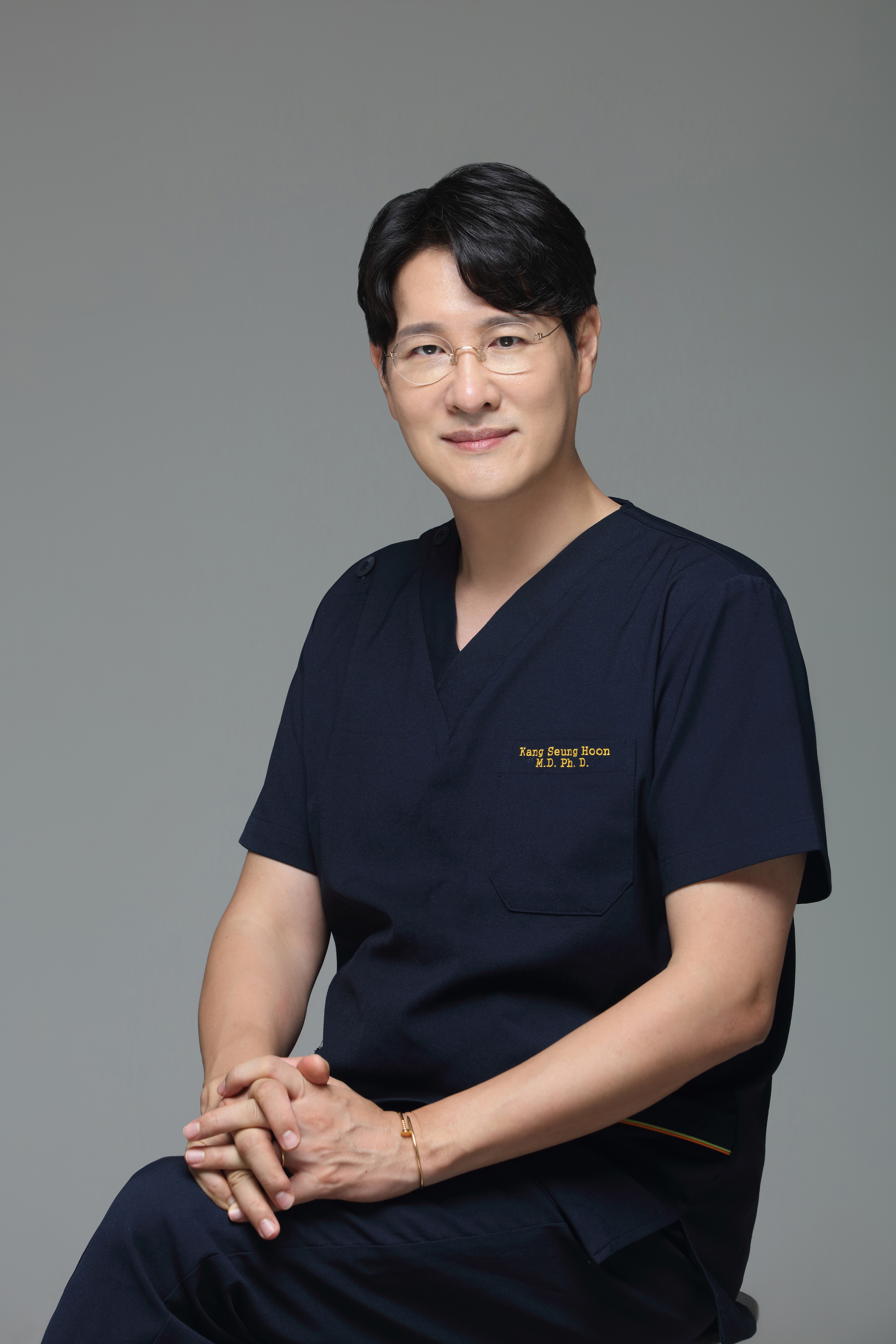
Touch-up procedures follow the same fat refinement and processing protocol used in our primary PAMI Fat Grafting. When needed, regenerative treatments such as Exosome or Rejuran therapy can be combined to optimize the graft environment. Lead physician Dr. Kang Seung-hoon personally oversees every step, from consultation through procedure.
-
01
Re-evaluation Based on Prior Procedure Records
We compare absorption patterns by treatment zone from the initial procedure against current volume. Establishing a clear, evidence-based understanding of what needs correction — and how much — is what makes precise planning possible.
-
02
Skin & Tissue Assessment
Before proceeding with a touch-up, we confirm that your skin and tissue are in suitable condition for treatment. If any fibrosis or inflammation is present, those concerns are addressed first.
-
03
PAMI-Based Precision Correction Planning
Fat volume and injection depth are mapped in detail to match the specific needs of each deficient area. The focus is on placing exactly the right amount in exactly the right location — not overcorrecting.
-
04
Regenerative Enhancement Add-On (Optional)
Regenerative therapies such as Exosome or Rejuran can be combined with your touch-up to further optimize the environment for grafted fat cell survival and integration.
Frequently Asked Questions
-
QDo I have to get a retouch at the same clinic where I had my original procedure?
Not necessarily — but it's strongly advisable. The clinic that performed your original procedure already has records of exactly how much fat was grafted, where, and how your tissue responded. That data is what makes precise correction planning possible. If you go to a different clinic, a full re-evaluation from scratch will take considerably more time.
-
QIs the recovery after a retouch similar to the first procedure?
In most cases, the correction volume is smaller than the initial procedure, so swelling tends to be more mild and recovery shorter. That said, it does vary depending on the treatment area and the amount of fat transferred. Even for a retouch, the same core recovery principles apply — adequate rest, avoiding pressure on the treated area, and refraining from massage.
-
QWhat happens if I get a retouch too soon?
If you proceed before absorption is fully complete, additional volume loss can occur afterward — leading to uneven results or, in some cases, excess volume. On top of that, introducing new trauma to tissue that hasn't fully healed increases the risk of hardening or fibrosis. For safety, we recommend waiting at least 6 months, ideally a full year, before having your results assessed.
-
QDoes PAMI Fat Grafting require fewer retouches?
Because PAMI Fat Grafting uses a refined purification process that maximizes fat cell survival, absorption rates tend to be lower — which can reduce the need for retouches. That said, results still vary by area and individual. High-movement zones like the under-eyes, nasolabial folds, and corners of the mouth naturally absorb more fat. Some patients choose to include a planned retouch as part of their overall treatment strategy from the start.
-
QWhat if I don't have enough fat for a retouch?
The amount of fat needed for a retouch is typically less than what was used in the original procedure. For smaller volumes, donor sites beyond the abdomen — such as the inner thighs or around the knees — can be considered. If you're concerned about limited fat reserves, a consultation to assess available donor areas and harvest volume would be the best first step.
Cellon Clinic · Cheongdam