
When Facial Fat Grafting Gets Complicated:
What You Need to Know Before Your Procedure
Fat grafting doesn't deliver the same results for everyone. Your anatomical structure, skin condition, and treatment history are three factors that can dramatically affect your outcome. Here, we'll give you an honest look at which cases call for extra caution — based on our PAMI fat grafting standards.
Fat Grafting Is More Complex Than You Might Think
Facial fat grafting tends to be seen as a relatively safe and straightforward procedure, largely because of its reputation for delivering natural-looking volume restoration. In reality, however, every stage — harvesting, processing, and injection — requires precise judgment, and results can vary considerably depending on each patient's individual condition.
In particular, the PAMI fat grafting technique offered at Cellon Clinic uses specially processed fat designed to maximize the survival rate of fat cells. Because the processing method is so precise, achieving the expected engraftment rate can be difficult if the right conditions aren't in place at the time of transplantation.
With that in mind, today we want to walk you through something worth knowing before your consultation: namely, in which situations fat grafting may be more challenging or require extra caution. This isn't about ruling anyone out — it's about helping you understand which factors can affect your results, so that when you come in for a consultation, you can make the most of it.
Key Factors That Affect Fat Grafting Outcomes
Challenges in fat grafting generally fall into three main categories — issues with the graft material (fat), issues with the recipient site (surrounding tissue), and issues with the patient's overall health.
Graft Material — Quantity and Quality of Harvestable Fat
Fat grafting uses the patient's own fat, harvested from their body. If a patient has very little body fat, or if previous Liposuction procedures have already depleted the donor sites, it may be difficult to collect a sufficient volume for grafting.
Recipient Site — Condition of the Surrounding Tissue
For transplanted fat cells to survive, they need oxygen and nutrients supplied by the surrounding tissue. In cases involving repeated procedures, residual filler, scar tissue, or a history of excessive fat grafting, vascularization becomes more difficult and graft survival rates can be significantly reduced.
Overall Health — Medical Factors That Influence Graft Survival
Systemic conditions such as smoking, diabetes, poor circulation, and the use of immunosuppressants can directly impact the survival rate of grafted fat cells. Smoking in particular is a significant disadvantage, as it inhibits the formation of the tiny blood vessels needed for successful engraftment.
Situations That Require Extra Caution
The following cases don't necessarily rule out fat grafting altogether, but they do require a thorough evaluation by your medical team during consultation.
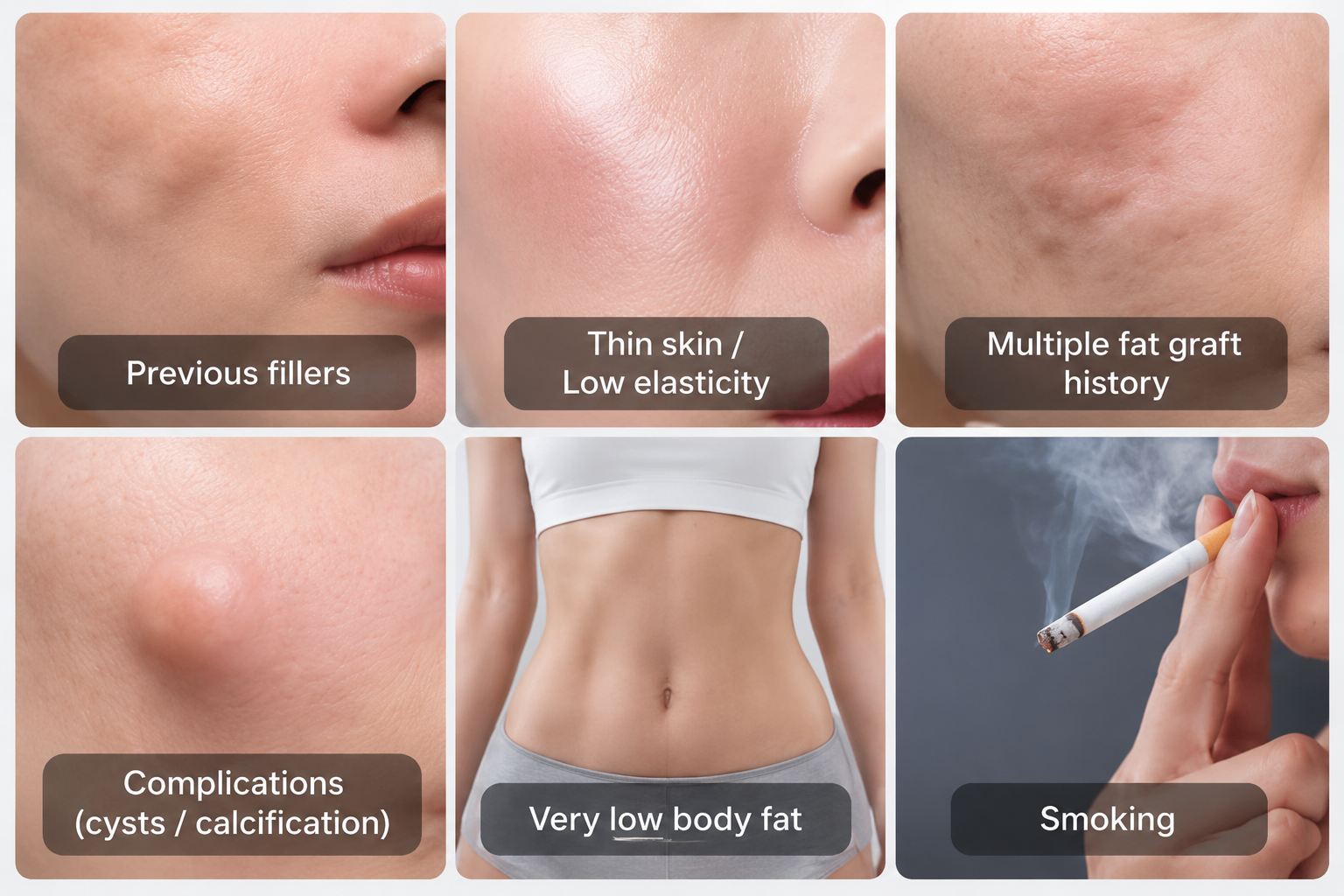
Extensive History of Filler Treatments
If hyaluronic acid filler hasn't fully dissolved, or if any permanent filler remains in certain areas, the available space for fat injection may be limited. When filler and transplanted fat coexist in the same area, predicting final volume becomes more difficult, and you may end up with unwanted overfilling or asymmetry. In some cases, a pre-procedure assessment of residual filler is necessary.
Very Thin Skin or Severely Reduced Skin Elasticity
When the skin is extremely thin, surface irregularities after fat injection can become visible. Areas like the under-eye hollows or the eyelids — where skin is naturally delicate — require particularly careful judgment from an experienced provider. Insufficient skin elasticity can also cause the skin to sag after the procedure, producing the opposite of the intended result.
Multiple Prior Fat Grafting Procedures in the Same Area
Repeated fat grafting in the same area can lead to fibrosis within the recipient tissue, making it harder for new blood vessels to form. Some patients assume they can simply replace whatever fat was absorbed, but the condition of the recipient tissue changes over time — making outcomes harder to predict with each subsequent procedure.
Previous Complications from Overfilling
If a prior fat grafting procedure resulted in complications such as cysts, calcification, or hardened nodules due to overfilling, the condition of the affected tissue must be assessed before any new treatment. In some cases, those complications need to be resolved first, and depending on the findings, a repeat procedure may not be advisable.
Extremely Lean Body Type or Insufficient Body Fat
The fat used in grafting is harvested from your own body — typically the abdomen, thighs, or flanks. If you have very little body fat, it may be difficult to collect a sufficient amount, and the harvesting process itself can become limiting. With FAMI-based techniques in particular, some fat is lost during processing, so an adequate harvest volume is essential to ensure enough is available for injection.
Active Smoking or No Plan to Quit Around the Time of the Procedure
Smoking impairs oxygen delivery to the small blood vessels and interferes with the process by which transplanted fat cells establish themselves in surrounding tissue. Because it directly affects graft survival rates, patients are generally advised to stop smoking at least 2–4 weeks before the procedure and for a period afterward as well. If quitting isn't something you're able to commit to, it's important to temper your expectations for the outcome.
Why PAMI Fat Grafting Is Demanding — High Standards Come With Prerequisites
PAMI fat grafting at Cellon Clinic uses a specialized cell-friendly processing method — not conventional centrifugation — to maximize the survival rate of fat cells. Because the process itself is so precise, the best results are achieved when the recipient tissue environment is fully optimized.
Put another way, if the recipient tissue is already significantly damaged or systemic conditions are unfavorable for engraftment, even the most advanced processing technique won't be able to deliver its full benefits.
The outcome of fat grafting isn't determined by technique alone. The patient's tissue condition and lifestyle account for more than half of the engraftment rate. That's why an honest, thorough assessment at the consultation stage is the most important step.
Dr. Kang Seung-hoon, Director, Cellon Clinic
This is exactly why consultations at Cellon Clinic go beyond simply discussing which areas to treat and how much volume to add. We take a comprehensive look at the current condition of your tissue, your history of prior procedures, and your overall lifestyle. When we identify factors that may make the procedure more challenging, suggesting an alternative approach at that stage consistently leads to better long-term outcomes.
If Fat Grafting Isn't an Option, What Are the Alternatives?
Being told that fat grafting isn't suitable for you doesn't mean there's nothing that can be done. Depending on your goals and individual circumstances, there are several alternative approaches worth considering.
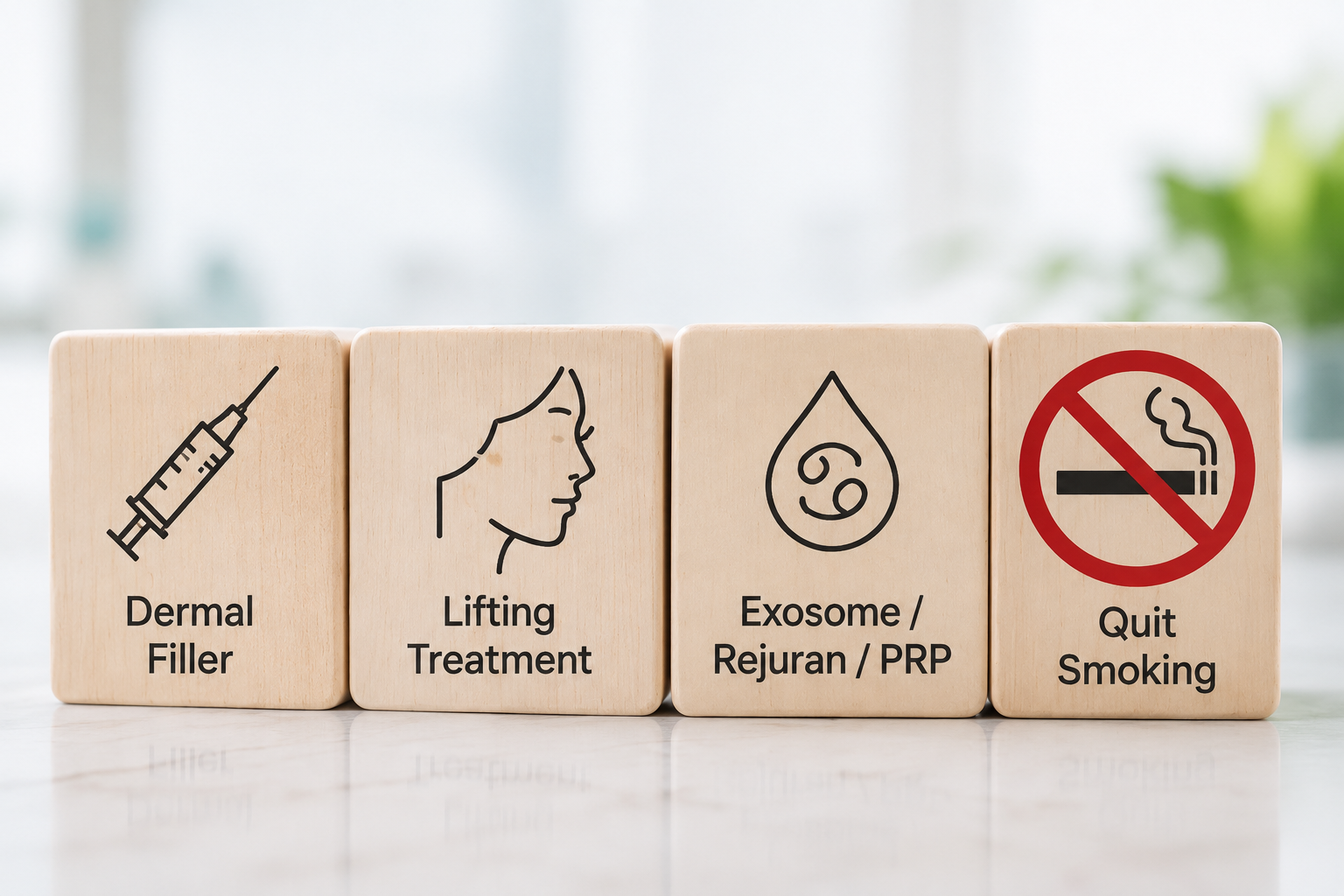
Alternatives to Consider Instead of Fat Grafting
When Preparatory Treatment Is Needed Before Fat Grafting
Cellon Clinic's Approach
As a Designated Advanced Regenerative Medicine Hospital recognized by the Ministry of Health and Welfare, Cellon Clinic doesn't stop at simply concluding that fat grafting isn't possible. We also offer a staged treatment plan — using regenerative therapies such as Exosome, Rejuran, and PRP to improve the current tissue condition and create a more favorable environment for grafting, before revisiting fat grafting as an option. Because the goal was never fat grafting itself — it's achieving the best possible outcome for you.
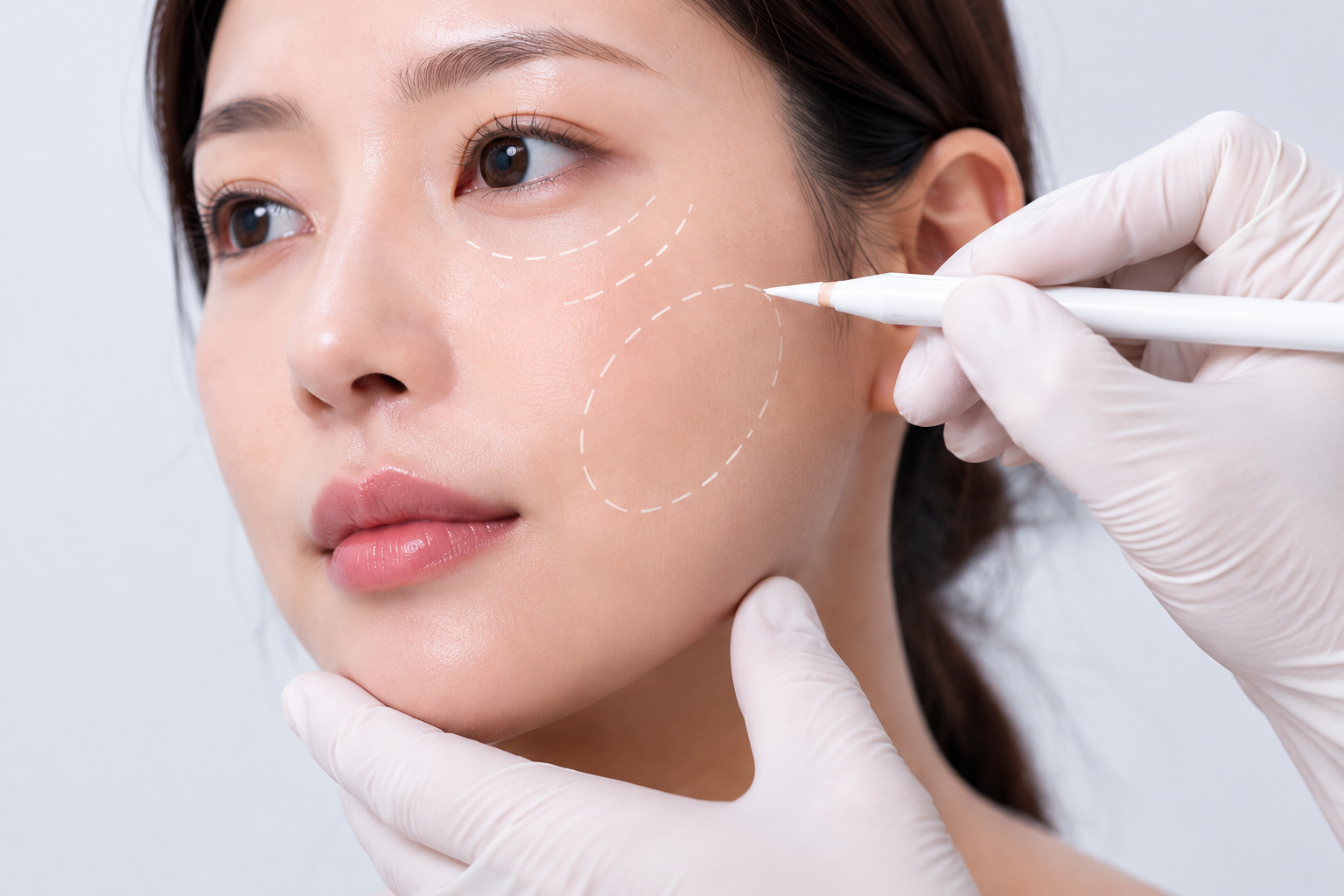
Things to Think About Before Your Fat Grafting Consultation
Coming in with these details already in mind helps our medical team give you a much more accurate assessment.
Frequently Asked Questions
Here are answers to the questions we hear most often from people considering fat grafting before their consultation.
A history of filler doesn't automatically rule out fat grafting. That said, if hyaluronic acid filler is still present, it's safest to dissolve it with hyaluronidase first and allow a stabilization period before reassessment. For permanent-type fillers, candidacy depends on the location and volume involved, so please be sure to disclose your full filler history during your consultation.
Whether enough fat can be harvested from a lean frame needs to be assessed through an in-person examination. Because the FAMI technique uses a portion of the harvested fat during processing, a sufficient total volume must be available to yield an adequate amount for injection. In some cases, alternatives such as filler may be a more practical solution.
Predicting survival rates for secondary fat grafting is more challenging than for a first-time procedure. Tissue changes from the previous treatment — including fibrosis and reduced recipient space — can all affect outcomes. It's important to first understand why the initial graft didn't survive well, then develop a strategy based on those findings. Please share as much detail as possible about your previous procedure and how it healed during your consultation.
Smoking is one of the most significant factors known to reduce fat graft survival. The nicotine and carbon monoxide in cigarettes cause microvascular constriction and reduce oxygen supply to the grafted tissue. This is why we recommend quitting at least two to four weeks before the procedure and continuing to abstain for a period afterward. Proceeding without quitting can lead to highly unpredictable results, even with an otherwise identical treatment.
It depends on your specific goals. If volume restoration is the priority, hyaluronic acid filler can be a realistic alternative. If sagging is the main concern, thread Lifting or energy-based treatments such as HIFU or SELAVE may be more appropriate. A staged approach is also an option — improving the tissue environment first with regenerative treatments like Exosome or Rejuran, then revisiting fat grafting at a later stage. We'll work through the options together during your consultation to find the best fit for you.

Let's Find Out If Fat Grafting Is Right for You
Dr. Kang Seung-hoon, Chief Physician at Cellon Clinic, will personally review your current skin condition and treatment history
to give you an honest recommendation tailored to your needs.