
Facial Fat Grafting:
Are There Areas Where It Truly Works —
and Areas Where It Doesn't?
Even with the same procedure, results differ depending on where the fat is placed.
Let's explore how the FAMI technique reads the anatomical structure of each facial zone and tailors its approach accordingly.

One of the most common questions we hear from people considering facial fat grafting is: "Will fat grafting actually work
on the area I'm concerned about?" The short answer is that the difficulty level and approach strategy vary by area — and this isn't simply a matter of practitioner experience. It comes down to the fundamental anatomical differences between each part of the face.
Fat grafting isn't simply a matter of adding volume. For transplanted fat cells to survive, they need an environment where they can receive blood supply from the surrounding tissue — a process known as "engraftment." Some facial areas are naturally well-suited for this, while others are structurally more challenging. The FAMI (Facial Autologous Microinjection) technique analyzes these differences in engraftment conditions from an anatomical standpoint, then precisely delivers fat at the appropriate layer and in the right manner for each specific area.
Anatomical Factors That Determine Fat Grafting Results
To understand why some areas respond beautifully to fat grafting while others are notoriously difficult, there are three core anatomical factors you need to know first.
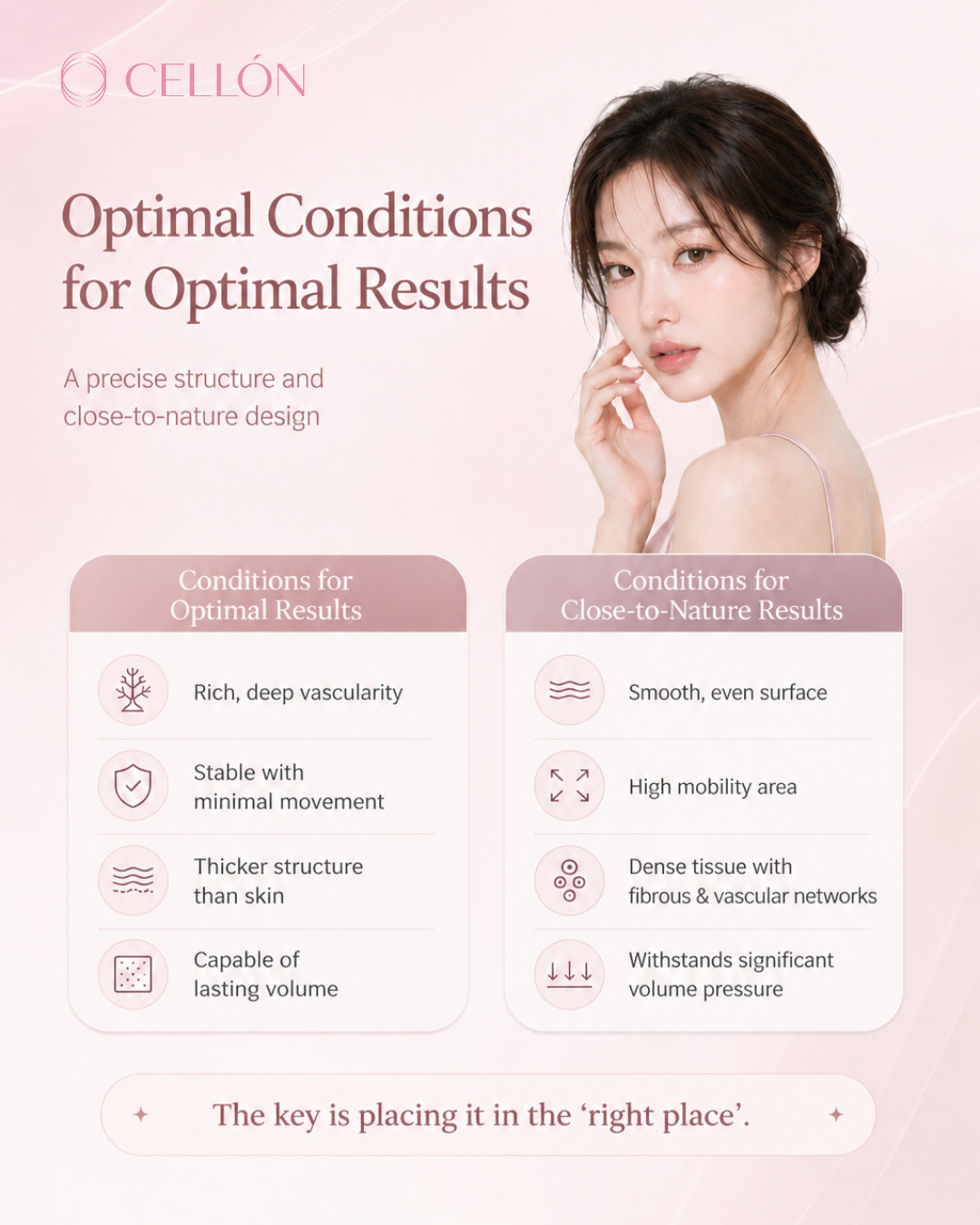
Conditions Favorable for Graft Survival
- Periosteal and deep muscular layers with a rich vascular network
- Zones with minimal facial muscle movement, allowing grafted fat to settle stably
- Thicker skin layers that conceal any surface irregularities after grafting
- Sufficient recipient space to allow wide, dispersed fat distribution
- Moderate volume deficit with no excessive compression on the grafted fat
Conditions That Make Grafting Challenging
- Thin skin that easily reveals surface irregularities after fat placement
- High-mobility zones that move constantly during talking, eating, and smiling
- Fibrotic tissue from prior procedures or treatments
- Low vascular density or a narrow subcutaneous space
- Severe volume deficit that creates ischemic pressure on the grafted fat
The FAMI technique analyzes these conditions zone by zone, then tailors both the injection depth and volume to match each area's specific anatomy. The hallmark of FAMI is placing fat directly into the periosteal layer — the deep plane between bone and muscle — which offers a rich blood supply and a stable environment for long-term graft survival.
The FAMI Technique — Why the Periosteal Layer Is the Key
FAMI uses fine cannulas to precisely deposit fat in the deeper layers of the face — most notably the periosteal layer. This is what sets it apart most distinctly from conventional fat grafting, which primarily targets the subcutaneous fat layer.
FAMI Fat Grafting — A 4-Step Periosteal-Based Design
The periosteal layer is rich in vascular networks that surround bone, creating an ideal environment for transplanted fat cells to receive nourishment. It's much like planting seeds in fertile soil rather than barren ground — and this is the anatomical basis for why FAMI's engraftment stability is consistently rated higher than conventional methods.
Areas Where FAMI Works Best
These are the zones where periosteal-layer access is most achievable and natural contour improvement from volume restoration is most visible.
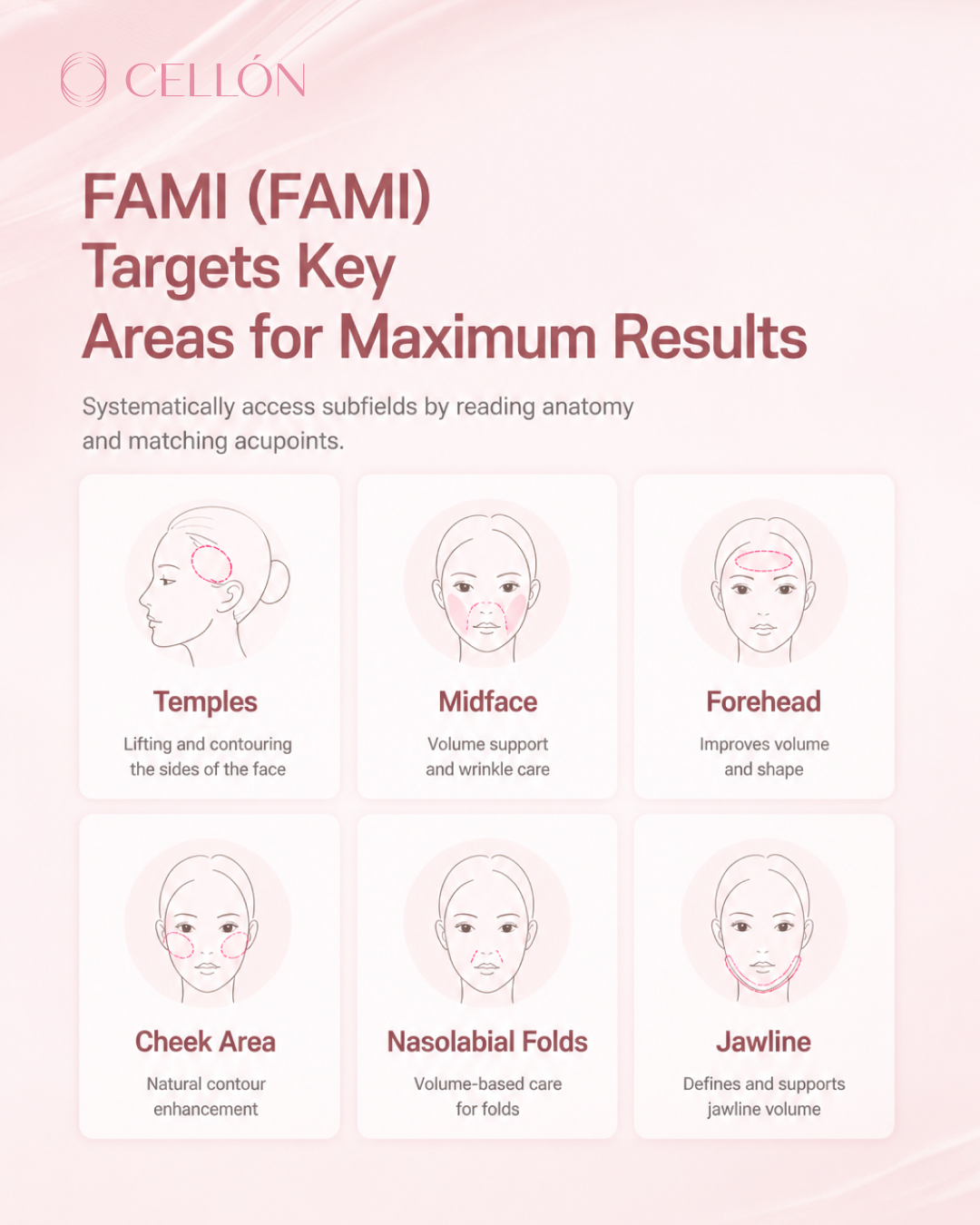
Temple Volume Restoration
The temple is typically the first area to show noticeable hollowing with age. Because the periosteal layer on the lateral skull is accessible here, the FAMI technique truly shines — making a significant difference in restoring the side profile.
Mid-Face Volume Replenishment
As the fullness beneath the cheekbones diminishes, nasolabial folds deepen and the face takes on a tired appearance. Distributed grafting across the periosteal and intermediate layers naturally restores lost volume to this area.
Forehead Volume & Contour Refinement
An ideal area when you want to fill in a flat forehead profile or hollow temples along the sides. The relatively thick skin layer and simple muscle movement create favorable conditions for graft survival.
Natural Fill Around the Cheekbones
When hollowing in front of or below the cheekbones makes them appear overly prominent, fat grafting can restore a more harmonious shape. Precise periosteal-layer access is achievable here due to the surrounding bony structure.
Volume-Based Approach to Nasolabial Folds
Addressing mid-face volume loss can visibly reduce the depth of nasolabial folds. Compared to fillers, this approach delivers a more natural-looking volume improvement over time.
Chin Contour Correction
Small-volume fat grafting can be highly effective for chin projection deficiency or mild left-right asymmetry. It's an option worth considering for those who want subtle shape correction without implants.
Areas That Require Expectation Management — Let's Be Honest With You
Even with the FAMI technique, not every area delivers the same level of results. The zones below require a more cautious approach and thorough pre-treatment consultation.
The under-eye area has extremely thin skin and complex, layered tissue. The risk of surface irregularities after grafting is higher here than in other areas. While micro-precision grafting is an option, combining hyaluronic acid filler or regenerative treatments may be more appropriate depending on individual anatomy. A thorough consultation is absolutely essential.
This is a high-mobility zone that moves constantly when you speak, eat, and smile. Continuous movement can compromise stable fat engraftment and increase absorption rates. Regenerative treatments such as Rejuran or laser therapy are often more effective in this area.
When skin elasticity is significantly reduced, fat grafting alone cannot address sagging — in fact, adding volume may actually accentuate the droop. A combined approach with skin-tightening treatments such as thread Lifting or HIFU is recommended.
Directly injecting fat into the nasolabial folds or alongside the nose is not recommended. These areas contain densely packed blood vessels, and over-grafting can result in surface visibility or complications. An indirect approach through an overall mid-face volume restoration strategy is both safer and more natural.
In fat grafting, what matters most isn't "where and how much" — it's "which layer, and by what technique." This is precisely why the FAMI method carefully analyzes and plans around the anatomy of each individual zone.
Chief Director Kang Seung-hun, Cellon ClinicCellon Clinic's Approach to FAMI Fat Grafting
Cellon Clinic is a Ministry of Health and Welfare-designated Designated Advanced Regenerative Medicine Hospital in Cheongdam, specializing in Stem Cell Fat Grafting and integrated anti-aging treatments. FAMI fat grafting procedures are personally performed by Dr. Kang Seung-hoon, the clinic's lead physician. During the consultation, he conducts a comprehensive analysis of the face's overall volume distribution — mapping out which areas to treat, which tissue layers to target, and where combining regenerative treatments may yield better results.
Cellon Clinic also offers a full lineup of regenerative medicine treatments, including Exosome and Rejuran therapies. This allows the team to design combination protocols for areas that fat grafting alone may not fully address. Post-procedure regenerative medicine protocols are also available to support recovery and optimize results.
down to the periosteal plane
zone combinations
by the lead physician
Frequently Asked Questions
Want a personalized consultation on facial fat grafting by area?
Dr. Kang Seung-hoon will personally analyze your facial volume distribution
and walk you through a tailored FAMI strategy — one-on-one.
Cheongdam Designated Advanced Regenerative Medicine Hospital · Cellon Clinic