
Skin Sagging & Unevenness After Liposuction:
Why It Happens and How to Prevent It
Is it true that removing fat always leads to loose skin? Let's break down the science — and how modern techniques are changing the story.
Why the Myth "Liposuction = Sagging Skin" Exists

Two of the most common concerns people search for when considering Liposuction are skin sagging and uneven texture. These are issues you'll easily come across in online reviews, and they're often the main reason people put off the procedure out of vague anxiety. But once you truly understand why these side effects occur, you'll realize that not all Liposuction carries the same risks.
Early Liposuction techniques involved inserting a thin tube called a cannula into the tissue and physically scraping out fat. In this process, the fibrous septa — the connective tissue bands that support the underside of the skin — were frequently damaged in an uneven manner. These fibrous septa act as a kind of scaffolding that connects the skin to the underlying muscle. When they are unevenly disrupted or pulled out of alignment, the surface of the skin becomes irregular and lumpy.
Skin sagging has a somewhat different cause. When the fat layer is suddenly reduced, the overlying skin may not have enough time to contract and can be left loose. This is especially true when the skin has already lost much of its elasticity. Age, treatment area, and the amount of fat removed are all contributing factors.
What Causes Uneven Texture
Uneven damage to the fibrous septa. When fat is not removed uniformly and is concentrated in certain layers, surface irregularities develop.
What Causes Skin Sagging
Insufficient skin contraction after fat volume is reduced. The key is balancing the amount of fat removed with the skin's underlying elasticity.
Technique Makes All the Difference
The way fat is separated and the depth at which the procedure is performed can completely change the pattern of tissue disruption.
How VASER Ultrasound Differs Fundamentally from Conventional Liposuction
VASER (Vibration Amplification of Sound Energy at Resonance) uses ultrasound energy to first liquefy fat cells before suctioning them out. That single distinction matters enormously, because how fat is separated directly determines how well the surrounding tissue is preserved.
Fat cells and the surrounding connective tissue (blood vessels, nerves, and fibrous septa) have different acoustic impedances. VASER ultrasound energy exploits this difference to selectively resonate and break down fat cells alone. In simple terms, it shakes fat cells apart while leaving the surrounding support structures as intact as possible.
"With conventional mechanical liposuction, the cannula physically scrapes through the fat layer and often damages connective tissue along the way. Because VASER energy acts preferentially on fat cells, its tissue selectivity is far greater — and that translates directly into more precise, refined results."
— Cellon Clinic Medical TeamThere is another important point worth noting. The subtle thermal effect generated as VASER ultrasound energy is delivered to tissue can stimulate collagen remodeling in the dermal layer. This means the procedure simultaneously removes fat and promotes skin contraction — a built-in mechanism that is one of the key reasons VASER carries a lower risk of skin laxity compared to conventional suction-based techniques.
Conventional Mechanical Liposuction
- Cannula physically disrupts tissue as it moves through
- Non-selective damage to fibrous septa, blood vessels, and nerves
- Risk of surface irregularities from uneven fat removal
- No mechanism to promote skin contraction
- Bruising and swelling recovery time can be relatively prolonged
VASER Ultrasound Liposuction
- Fat cells selectively liquefied by ultrasound before removal
- Higher likelihood of preserving fibrous septa and blood vessels
- Uniform layer-by-layer removal for improved surface precision
- Subtle thermal effect stimulates dermal collagen remodeling
- Enables precise body sculpting including Hi-Def Abdominal Etching
Three Key Factors That Reduce Skin Sagging and Irregularities
Technology alone doesn't tell the whole story. Even with the same VASER device, results can vary significantly. The surgeon's experience, pre-procedure assessment, and post-care all need to work together to achieve the outcome you're looking for.
Three Pillars That Determine Your Results
Layer-by-Layer Precision Removal — Surgeon Skill and Experience
Fat tissue is divided into deep fat and superficial fat layers. How much of the superficial layer is preserved directly affects skin smoothness. An experienced surgeon adjusts their approach layer by layer based on thickness and location, maintaining an even distribution of remaining fat. This judgment is the single most critical factor in achieving natural-looking results.
Pre-Procedure Skin Elasticity Assessment
When skin elasticity is low, removing too much fat can leave the skin unable to contract and conform. A thorough evaluation of skin condition, age, and tissue thickness in each area is essential for setting realistic expectations around how much fat should be removed. The goal should never simply be removing as much as possible.
Post-Care — Compression and Regenerative Support
Wearing a compression garment after the procedure isn't just about managing swelling. It's a critical step that guides the treated area to adhere evenly as it heals. Uneven or insufficient compression can lead to irregular adhesion and surface irregularities. At Cellon Clinic, we also incorporate regenerative medicine-based treatments to support tissue recovery as part of our post-care approach.
How Cellon Clinic Approaches VASER Liposuction
Cellon Clinic is a Ministry of Health and Welfare-designated Cheongdam Designated Advanced Regenerative Medicine Hospital. We approach Liposuction not simply as a fat removal procedure, but through the lens of true body contouring. Our ability to deliver three-dimensional sculpting — such as VASER Hi-Def Abdominal Etching — comes from combining ultrasound-based precision emulsification technology with a layered sculpting philosophy.
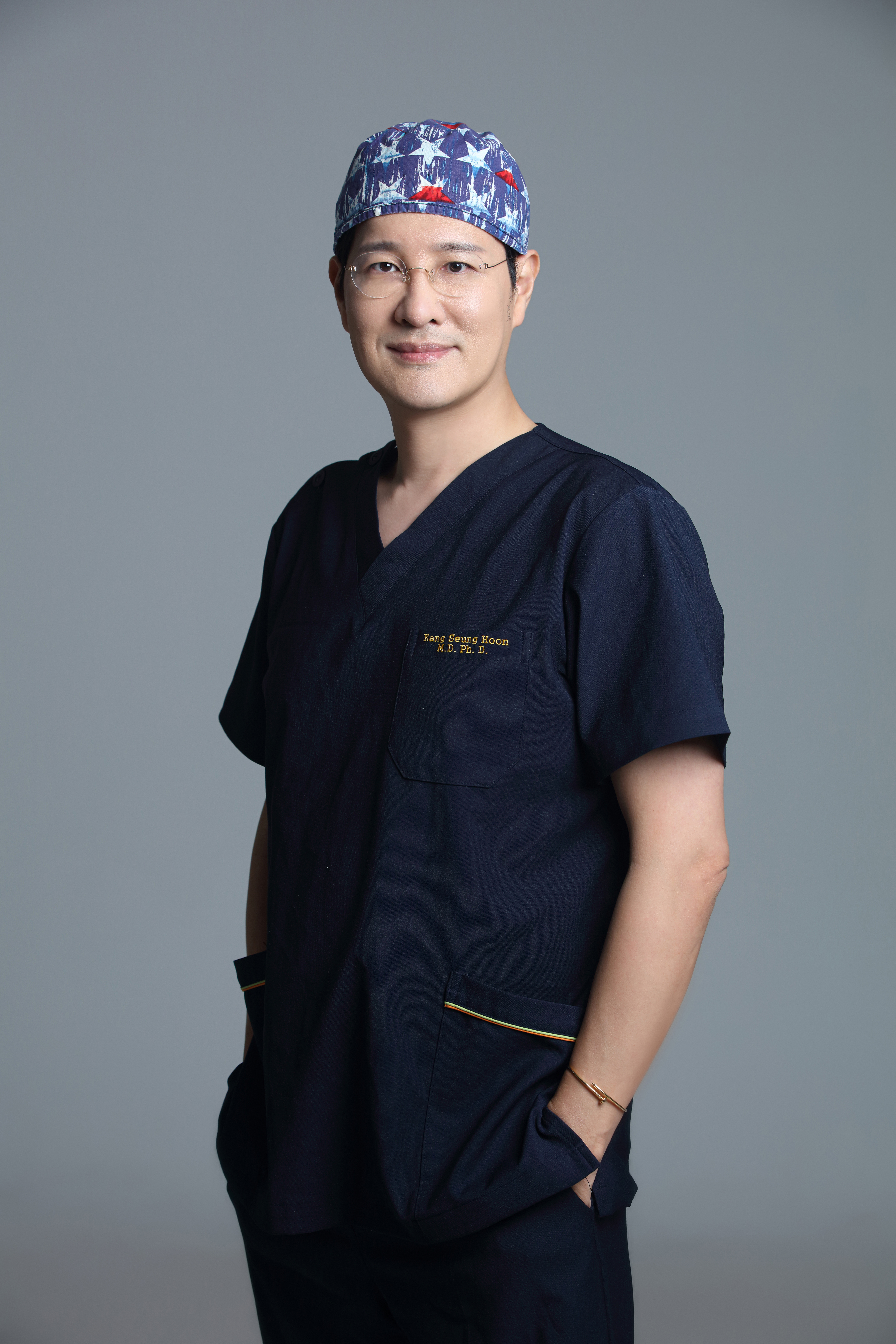
Dr. Kang Seung-hoon, our lead physician, personally handles all consultations and procedures. It is a core principle at Cellon Clinic that the same medical professional oversees the entire process — from initial consultation through treatment and post-procedure care — under a consistent standard of quality. We also have communication systems in place to ensure international visitors receive the same level of care.
At Cellon Clinic, some patients combine Liposuction with regenerative medicine-based treatments designed to support tissue recovery (such as Exosome therapy and Rejuran). These can play a supportive role in restoring skin elasticity and accelerating tissue healing after fat removal. That said, whether these are appropriate depends on each individual's skin condition and treatment plan — the most accurate guidance comes through a personal consultation.
(Deep / Mid / Superficial)
Personally by Dr. Kang
Body Contouring Approach
Recovery Support System
Frequently Asked Questions — Skin Laxity and Unevenness After Liposuction
Q Is skin laxity after Liposuction inevitable?
Not necessarily. The likelihood of skin laxity depends heavily on your skin's elasticity before the procedure, the amount of fat removed, the treatment area, and the technique used. When fat is removed precisely and in appropriate amounts from skin that still has good elasticity — combined with proper compression management — the skin often contracts naturally on its own. That said, if your skin elasticity is already significantly reduced, it's important to have a thorough consultation beforehand to set realistic expectations.
Q If I have uneven results, can they be corrected?
In many cases, yes — it depends on the severity. Irregularities that appear right after the procedure are often temporary, caused by swelling and the adhesion process, and may resolve naturally within 3 to 6 months. If more noticeable unevenness persists beyond that, options such as fat grafting or a touch-up procedure can be considered to restore balance. Regenerative medicine-based skin care may also be incorporated as part of the approach. The most important first step is to allow adequate recovery time and then consult with a specialist.
Q Does VASER Liposuction involve less pain and a shorter recovery than traditional Liposuction?
Results vary by individual, so a definitive comparison is difficult — but because VASER uses ultrasound energy to liquefy fat before removal, there is less friction and physical trauma to surrounding tissue as the cannula moves through it. This is generally associated with reduced bleeding and tissue damage, which can mean less bruising and swelling that clears more quickly. That said, actual recovery time still depends on the volume removed, the treatment area, and each person's physiology.
Q How long do I need to wear a compression garment after Liposuction?
Most guidelines recommend wearing a compression garment for 4 to 8 weeks. The first two weeks post-procedure are especially critical — consistent, even compression during this period helps ensure that the tissue adheres uniformly. Always follow your provider's specific instructions regarding how long and how to wear it. Removing it too early or wearing it inconsistently can negatively affect your results.
Q I have relatively low skin elasticity — is Liposuction still an option for me?
Low skin elasticity alone doesn't automatically rule out Liposuction. However, it does affect the range of results you can realistically expect, and the amount of fat removed needs to be planned more conservatively. The treatment plan should be tailored to your skin's current condition, and if needed, complementary procedures to improve skin firmness can be discussed alongside Liposuction. A consultation to assess your individual situation is always the right starting point.
Curious About Liposuction Results?
Start by Getting the Full Picture
Have concerns about skin laxity or uneven contours? Consult directly with Dr. Kang Seung-hoon, Chief Director of Cellon Clinic. From the fundamentals of Liposuction to a personalized approach tailored to your condition, we'll walk you through every step.
Chat with Us on WhatsAppCheongdam Cellon Clinic · Designated Advanced Regenerative Medicine Hospital