
Skin Sagging & Irregularities After Liposuction —
Does It Really Happen?
It's one of the most common questions we hear from patients considering Liposuction. Let's break it down honestly — from the science behind how VASER ultrasound technology interacts with your skin's structure, to how Cellon Clinic approaches these concerns.
Is Skin Sagging Really Caused by Liposuction Itself?

"Liposuction causes skin to sag" — this statement is neither entirely wrong nor entirely right. There's a clear distinction between cases where sagging occurs and cases where it doesn't.
Skin has its own natural elasticity. Collagen and elastin are woven together like a mesh, allowing the skin to contract and fill the space left behind by removed fat — to a degree. But this ability to bounce back has its limits.
Conditions That Increase Sagging Risk
Reduced skin elasticity after age 40 / Removing too much fat in a single session / Cannula technique that damages the dermal layer / Inadequate post-procedure compression care. If even one of these factors is present, the skin may fail to contract fully and settle in a loose, sagging position.
Conditions That Minimize Sagging Risk
Good skin elasticity in your 20s–30s / Carefully planned fat removal volume / Precise technique that preserves the dermal layer / Consistent use of compression garments and proper follow-up care. When the right technique meets the right conditions, the skin naturally contracts and fills the space where fat was removed.
"Sagging isn't an inevitable outcome of Liposuction — it's a result of how the tissue is handled during the procedure. This is exactly where technique makes all the difference."
The Real Reason for Uneven Results — Skill and Experience Matter
Uneven skin texture after liposuction is known in medical terms as "contour irregularity." There are three main reasons this occurs.
-
1
Uneven Fat Removal
When the cannula repeatedly moves along the same layer or direction, some areas end up with too much fat removed while others have too little. This difference in tissue thickness shows up as visible bumps and dips on the skin's surface.
-
2
Dermal Damage and Fibrosis
Excessive mechanical trauma causes the fibrous tissue just beneath the dermis to harden irregularly. This creates a pulling effect from within the skin, resulting in dimpling or puckering on the surface.
-
3
Uneven Skin Retraction
Removing large volumes of fat too quickly causes the skin to retract at different speeds and in different directions across areas. This is especially noticeable in thinner-skinned areas such as the inner thighs and underarms.
All three of these causes are preventable by minimizing tissue trauma during the procedure. In other words, the technique used to break down and remove fat is what ultimately determines your results.
Why Is VASER Better at Preserving Skin? — The Selectivity of Ultrasound
VASER (Vibration Amplification of Sound Energy at Resonance) uses ultrasound energy to selectively emulsify fat cells. The word "selectively" is the key.
Traditional Cannula Suction vs. VASER Ultrasound Emulsification
Traditional Method
A cannula physically pushes and pulls to break up fat tissue. This can damage not only fat cells but also surrounding blood vessels, nerves, and connective tissue. The resulting space is prone to bleeding and hematoma, and uneven residual tissue can lead to an irregular, lumpy contour.
VASER Method
Ultrasound energy acts selectively on fat cell membranes, emulsifying them while relatively preserving blood vessels, nerves, and connective tissue. The emulsified fat is then gently suctioned out, reducing tissue trauma and creating a more uniform environment for skin retraction.
How VASER Positively Supports Skin Elasticity
Ultrasound energy can stimulate collagen production within the dermal layer
Because fat is emulsified before suctioning, the remaining fat layer is even, allowing for more consistent skin retraction
Reduced physical friction lowers the relative risk of hematoma and fibrosis
That said, results with VASER still vary depending on the skill and experience of the practitioner. Applying ultrasound energy at too high a level or for too long can actually cause thermal damage. Ultimately, what brings out the best in the technology is thoughtful treatment planning and hands-on surgical expertise.
Cellon Clinic's Approach — Designed Beyond the Technology
As a Cheongdam Designated Advanced Regenerative Medicine Hospital, Cellon Clinic goes beyond standard VASER Liposuction by integrating regenerative medicine principles. We don't just remove fat — we consider the tissue environment left behind.
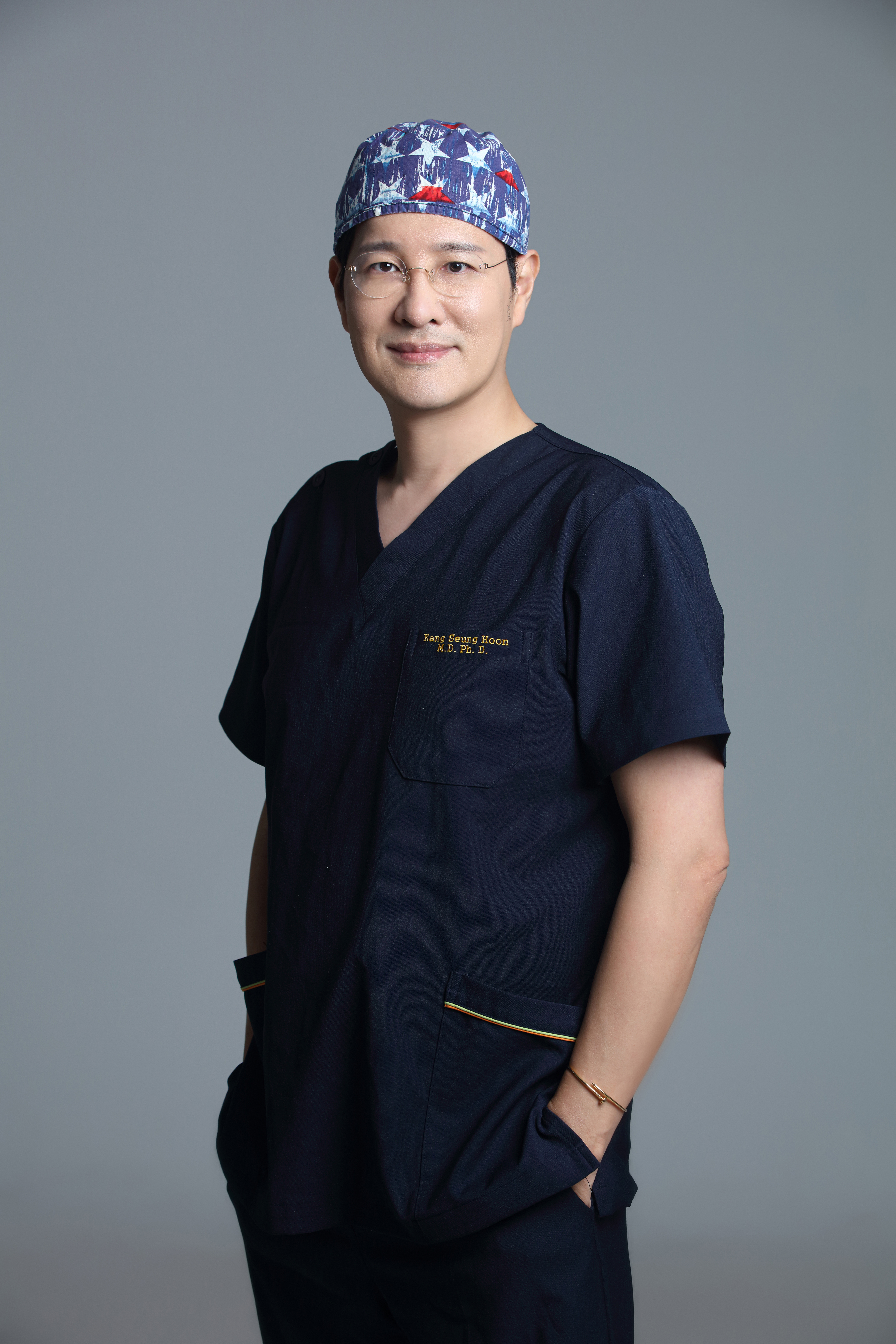
Performed Directly by Lead Physician Dr. Kang Seung-hoon
At Cellon Clinic, Dr. Kang Seung-hoon personally consults and performs every procedure. He directly assesses the anatomical characteristics of each area along with the patient's individual skin elasticity, adjusting cannula direction and depth in real time to ensure even, consistent fat removal.
Post-Procedure Care with a Regenerative Medicine Perspective
As a Designated Advanced Regenerative Medicine Hospital, we can incorporate Exosome and growth factor-based regenerative treatments into our post-Liposuction recovery program — helping to accelerate tissue healing and improve skin retraction.
Personalized Fat Removal Planning
Our goal isn't to remove as much fat as possible in a single session. We set target volumes within a range the skin can realistically retract, taking into account skin elasticity, thickness, and age for each treatment area. Overly aggressive removal is the leading cause of sagging after Liposuction.
The Same Standard of Care for Every Patient
International patients visiting for medical tourism receive the exact same standard of care as our local patients. From initial consultation through post-procedure follow-up, we provide a seamless and consistent experience — with no language barriers.
Skin sagging and uneven results depend far less on which device was used and far more on the principles and planning behind the procedure. The technology is just a tool.
Frequently Asked Questions
QDoes skin always sag after Liposuction if you're older?
It's true that skin elasticity decreases with age — but that doesn't mean sagging is inevitable. By assessing your skin's condition beforehand and tailoring the amount of fat removed accordingly, we can minimize the risk of sagging. When needed, Lifting treatments can also be combined for added support. The key is never to over-remove fat beyond what your skin can realistically handle.
QDoes VASER guarantee zero irregularities?
VASER does cause less tissue trauma than traditional methods and creates a more uniform removal environment — that part is true. But no device can guarantee a perfect result 100% of the time. Outcomes depend heavily on the surgeon's experience and how the procedure is planned. VASER is a great tool for achieving great results, but the tool alone doesn't guarantee them.
QCan uneven skin after Liposuction be improved later?
The first 3–6 months after your procedure is a stabilization period for the tissue. If surface irregularities persist beyond that point, options such as fat redistribution, touch-up Liposuction, or RF/ultrasound-based skin-tightening treatments can help. In cases of significant fibrosis, more active intervention may be required. The first step is always an accurate assessment of how your results have progressed.
QHow important is the compression garment?
More important than most people realize. Compression garments guide the skin to contract evenly into the space left by removed fat. Without proper wear, the skin is more likely to adhere unevenly or develop hematomas. We typically recommend wearing one for 4–8 weeks post-procedure — sticking to this timeframe has a direct impact on the quality of your final results.
QIs it possible to combine Liposuction with a Lifting treatment?
Yes — especially in areas with lower skin elasticity, such as the thighs or arms, Liposuction is sometimes paired with a Lifting treatment to help the skin contract more effectively. The right combination depends on your skin's elasticity, the volume of fat to be removed, and your body goals, so this is determined through a personalized consultation. At Cellon Clinic, these multi-approach consultations are conducted directly by our head physician, Dr. Kang Seung-hoon.
Worried About Your Liposuction Results?
Start with a Consultation First
We'll take a closer look at your skin elasticity, target areas, and desired outcomes,
then walk you through Cellon Clinic's personalized approach.