MCT Meta Cell Technology
How Stem Cell Growth Factors Transform Your Skin
A cutting-edge mesotherapy that purifies key growth factors from stem cell conditioned media at high concentrations to stimulate skin regeneration. Cellon Clinic — Cheongdam's Designated Advanced Regenerative Medicine Hospital walks you through the science and the process, step by step.
What Is MCT? — From the Name to How It Works
MCT stands for Meta Cell Technology. Rather than directly injecting stem cells into the skin, MCT works by extracting, refining, and concentrating the growth factors and cytokine complexes that stem cells naturally produce — then delivering them to the skin at high potency. Because this approach harnesses the signaling molecules that cells create, rather than the living cells themselves, it significantly minimizes the immune reactions and safety concerns associated with direct cell transplantation, while still delivering meaningful regenerative results.
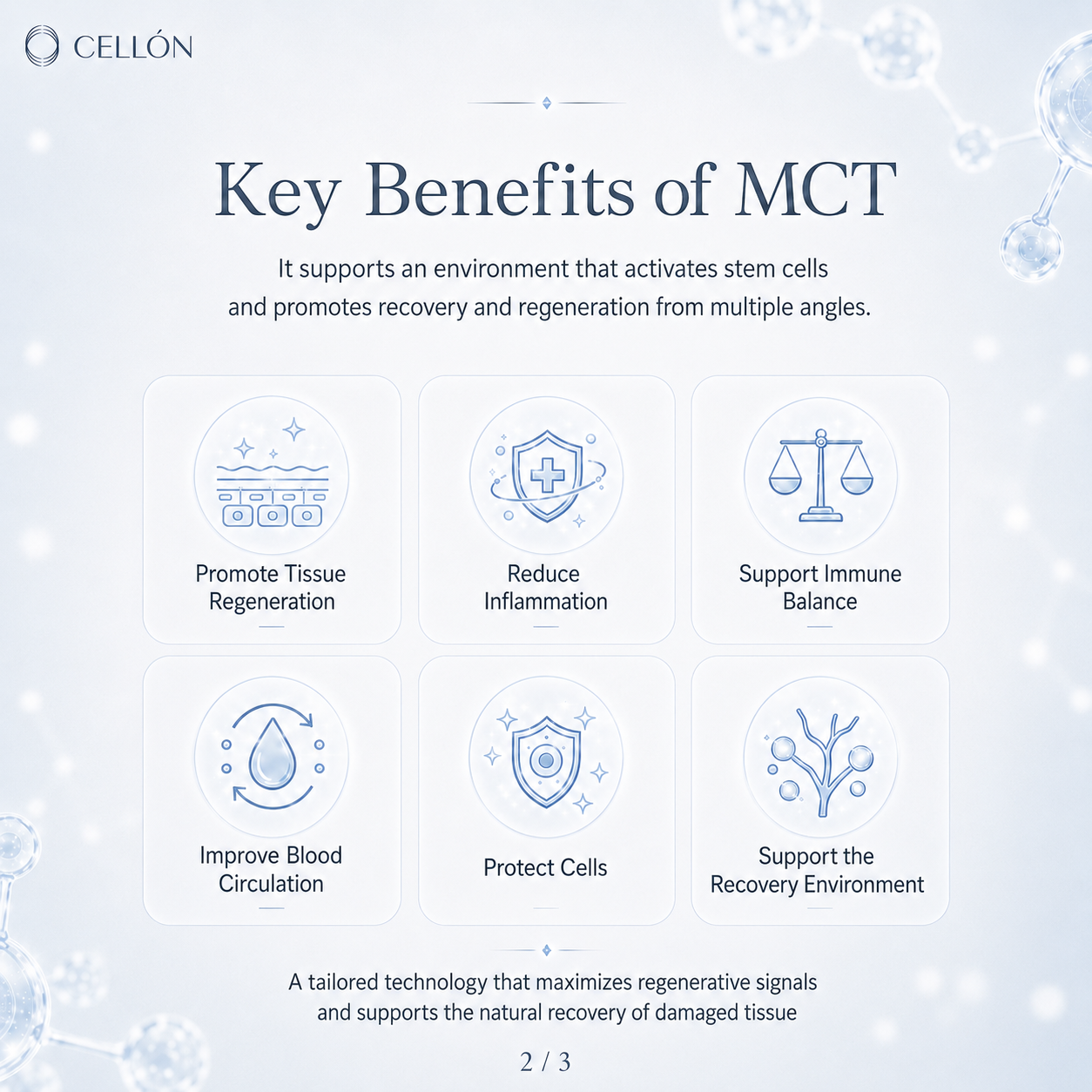
In dermatology, growth factors are proteins that regulate the core processes of skin renewal — including cell division, collagen synthesis, angiogenesis, and cell survival. As we age, the natural secretion of these signaling molecules declines, leading to a gradual loss of the skin's regenerative capacity. MCT addresses this by precisely replenishing these factors from the outside in.
The MCT formulation used at Cellon Clinic utilizes ingredients that have been validated through processes meeting the standards of Korea's Designated Advanced Regenerative Medicine Hospital program under the Ministry of Health and Welfare. In terms of ingredient composition and concentration, it goes well beyond ordinary nutritional injections or standard skin boosters.
components
of living cells
approx. 30–50 min
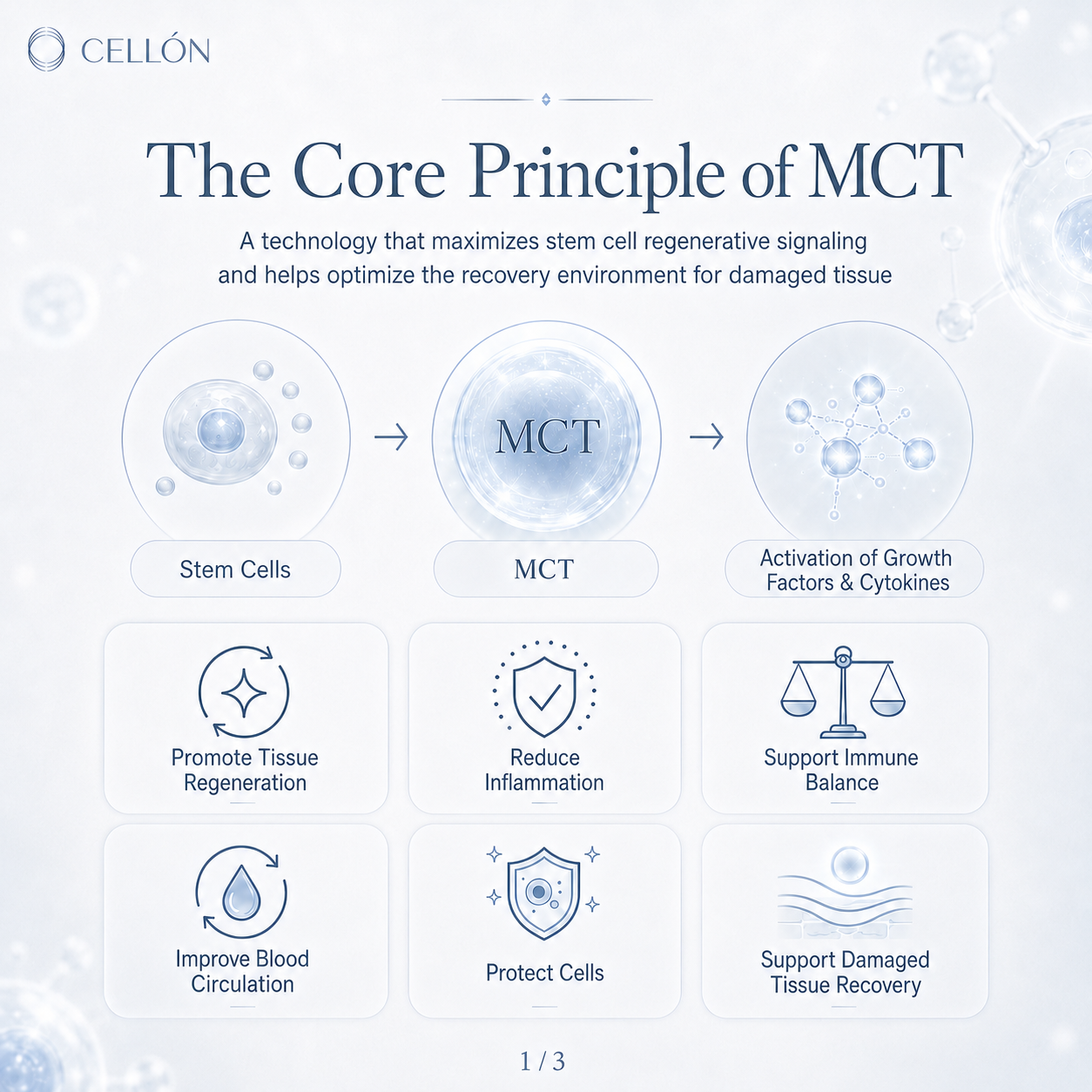
How Growth Factors Drive Skin Regeneration
The skin is made up of three layers — the epidermis, dermis, and subcutaneous tissue. It's the dermis, where collagen and elastin reside, that determines your skin's firmness and volume. The challenge is that fibroblast activity within the dermis gradually declines with age.
The key growth factors in MCT work by directly stimulating fibroblasts to boost collagen and elastin synthesis, while also activating the cell cycle to accelerate skin renewal. Here's a closer look at each component and the role it plays.
EGF — Epidermal Growth Factor
One of the most well-known growth factors, EGF promotes the division and renewal of epidermal cells. By normalizing the turnover cycle of keratinocytes, it helps create a smoother, more even skin texture.
bFGF — Basic Fibroblast Growth Factor
bFGF directly stimulates collagen synthesis. It works by enhancing fibroblast activity in the dermis, helping to improve skin density and structural integrity.
IGF-1 — Insulin-like Growth Factor 1
IGF-1 supports cell survival and proliferation, and works synergistically with bFGF during collagen synthesis — contributing to overall maintenance of skin density and resilience.
VEGF — Vascular Endothelial Growth Factor
VEGF supports the formation of new microvessels within the dermis, improving the skin's nutrient supply environment. Better circulation means enhanced oxygen delivery and more efficient removal of waste products.
"What makes growth factor therapy truly effective is that multiple cytokines work together at the cellular level — not a single ingredient acting alone. That's precisely what sets MCT apart from a standard skin booster."
— Dr. Kang Seung-hoon, Medical Director, Cellon ClinicMCT Treatment Process — How It Works at Cellon Clinic
From the initial consultation to post-treatment care instructions, here's a step-by-step look at how MCT is performed at Cellon Clinic. Knowing what to expect beforehand makes the whole experience much smoother.
MCT Treatment: Step-by-Step
-
1Skin Assessment & Consultation Our head physician evaluates your skin thickness, elasticity loss patterns, pigmentation, and pore condition in detail. Any combination treatments for the same session are also decided at this stage.
-
2Cleansing & Topical Anesthetic Application Your skin is thoroughly cleansed to remove makeup and impurities, followed by the application of a numbing cream left on for 20–30 minutes. This step ensures maximum comfort throughout the procedure.
-
3MCT Solution Injection (Mesotherapy Technique) Using a fine needle or a motorized meso-injector, the MCT solution is precisely delivered into the dermal layer. The injection method and dosage are tailored to your skin thickness and target depth.
-
4Soothing Care Immediately after the procedure, a cooling mask or LED calming therapy is applied to help settle the skin. This helps reduce redness and sensitivity right away.
-
5Post-Treatment Care Instructions You'll receive detailed guidance on same-day cleansing, moisturizing protocols, and sun protection. The same aftercare standards apply to both domestic and international patients.
Why MCT Stands Out — How It Differs from Conventional Treatments
The skin regeneration space is crowded with options — lasers, PRP, Exosome, Rejuran, and more. Here's a clear breakdown of what sets MCT apart from the rest.
| Category | MCT | PRP (Platelet-Rich Plasma) | Standard Growth Factor Injection |
|---|---|---|---|
| Ingredient Source | Stem cell culture supernatant | Patient's own blood | Single growth factor preparation |
| Concentration | High-concentration, multi-component blend | Varies by blood draw volume | Single, low-concentration |
| Batch Consistency | Standardized manufacturing process | Depends on patient's blood condition | Varies by manufacturer |
| Target Depth | Mid-to-deep dermis | Dermal layer | Epidermis to superficial dermis |
| Downtime | Mild redness, 1–2 days | Possible bruising and swelling | Varies by treatment |
One of MCT's greatest strengths is its reproducibility. Unlike PRP, where results can vary depending on the patient's own blood composition, MCT uses a standardized stem cell culture process to deliver a consistent ingredient profile with every session. This makes it a more reliable alternative to PRP — especially for patients with compromised immune function or low platelet counts.
Why Choose MCT at Cellon Clinic
As a Designated Advanced Regenerative Medicine Hospital certified by the Ministry of Health and Welfare, Cellon Clinic maintains rigorous in-house standards for all regenerative treatments. MCT is offered both as a standalone procedure and as part of combination protocols, integrated within a comprehensive regenerative lineup that includes Exosome, Rejuran, and Stem Cell Fat Grafting.
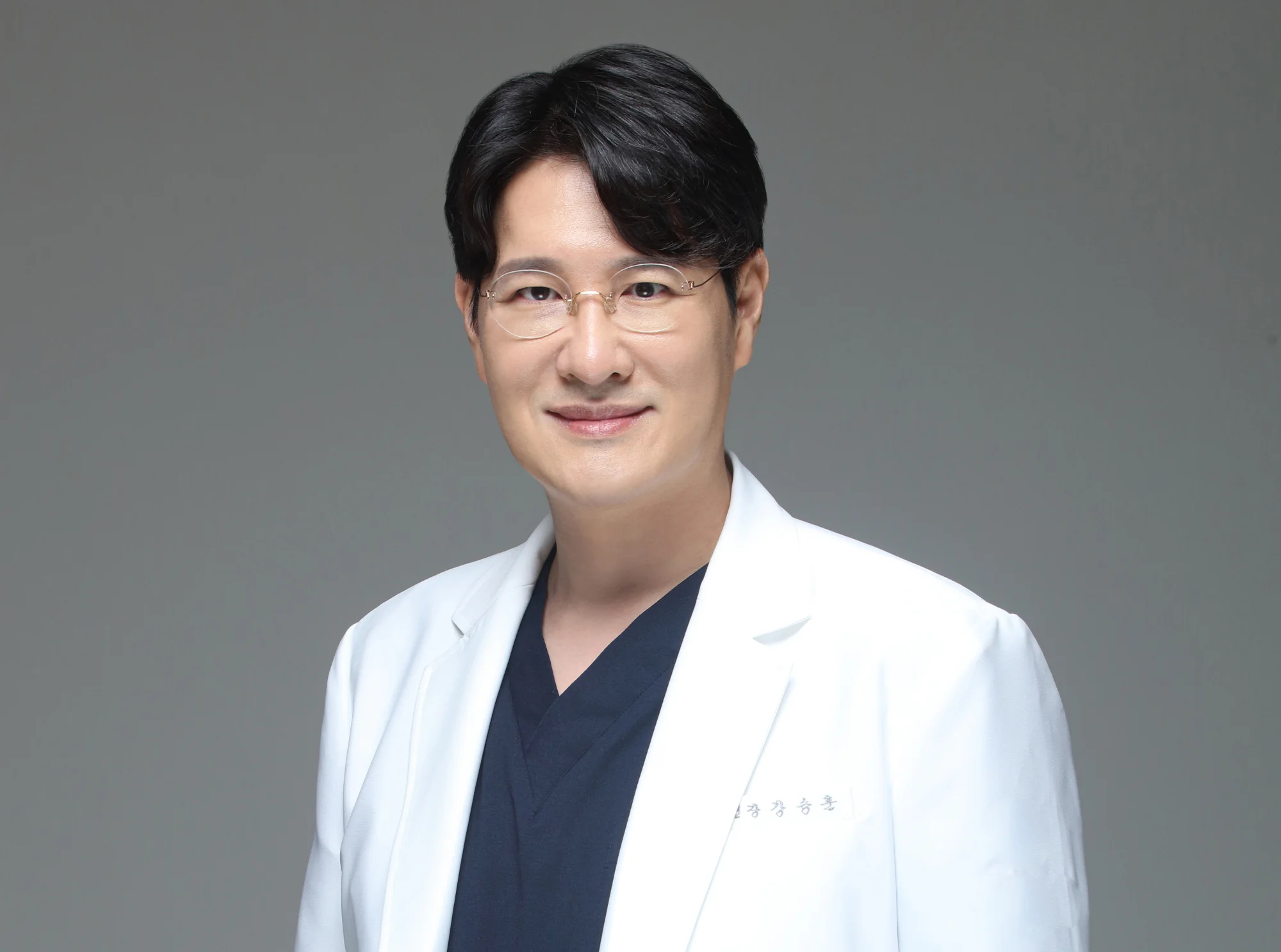
Because Dr. Kang Seung-hoon, our lead physician, is personally involved in every procedure, each patient receives consistent injection technique and precise dosage management across all treatment sessions — a defining characteristic of MCT at Cellon Clinic.
Who Is MCT For — and What to Know Beforehand
Like any treatment, MCT has ideal candidates as well as situations that require extra caution. Review the information below before your consultation so you're fully prepared.
You May Be a Good Candidate If You:
- Want to support skin recovery and regeneration after laser or resurfacing treatments
- Are experiencing general signs of aging such as loss of elasticity, skin thinning, or a dull complexion
- Are looking for an alternative to PRP, or if drawing your own blood is not an option
- Want to address pigmentation, enlarged pores, and uneven skin texture all at once
- Prefer ongoing regenerative care with minimal downtime
Please Let Us Know in Advance If You Have:
- Any current medications (especially anticoagulants, steroids, or immunosuppressants)
- Pregnancy or are currently breastfeeding
- A history of keloid scarring or unusual reactions at injection sites
- Had any skin procedures within the past two weeks
- Active skin inflammation or infection in the treatment area
"In regenerative medicine, accurately assessing the skin's condition before designing the right protocol is what determines the outcome. Whether MCT is used on its own or combined with other treatments is something we decide together after a thorough evaluation."
— Dr. Kang Seung-hoon, Medical Director, Cellon ClinicMCT MetaCell Technology — Frequently Asked Questions
Interested in MCT? Consult with Cellon Clinic
At Cellon Clinic — Cheongdam's Designated Advanced Regenerative Medicine Hospital —
Dr. Kang Seung-hoon personally evaluates your skin condition and recommends a customized treatment protocol.