
PRP vs. Blood-Derived Stem Cells: What's the Difference?
A Complete Guide with Novastem
Both start from your own blood — but they work in completely different ways. Here's a thorough breakdown of how each treatment works, what sets them apart, and why Cellon Clinic chose the Novastem system.
What You Extract from the Blood Is Everything

PRP and blood stem cell therapy share one thing in common: both start with drawing the patient's own blood and running it through a centrifuge. But that's where the similarities end — after that, they take completely different paths.
PRP (Platelet-Rich Plasma) is essentially a concentrated form of platelet-rich plasma. Platelets are packed with growth factors like PDGF, TGF-β, and VEGF, which work together to support tissue regeneration and reduce inflammation. Think of PRP as a precision delivery system — a package that carries regenerative signals straight to where they're needed.
Blood stem cell therapy is a different story. It involves isolating specific cells from the mononuclear cell layer of the blood — including endothelial progenitor cells (EPCs), hematopoietic stem cells (HSCs), and other blood-derived progenitor cells. Unlike PRP, these cells don't just send signals — they actually participate in rebuilding tissue directly. They're the "builders" on the job site, not just the messengers.
- Highly concentrated platelet-rich plasma
- Rich in growth factors (PDGF, TGF-β, VEGF, etc.)
- Delivers regenerative and wound-healing signals
- Does not contain stem cells themselves
- Progenitor and stem cells from the mononuclear layer
- Includes endothelial progenitor cells (EPCs) and hematopoietic stem cells (HSCs)
- Cells that directly participate in tissue reconstruction
- Precisely isolated and concentrated using the Novastem system
There's a Reason PRP Came First
PRP was first applied in oral and maxillofacial surgery back in the 1980s for wound healing, and quickly spread to orthopedics and dermatology. Its appeal lies in simplicity — as long as a centrifuge is available, blood can be drawn and treated in a single visit using well-established protocols. That's why it remains one of the most widely used autologous regenerative treatments today.
In dermatology, PRP is primarily used for hair loss treatment (scalp injections), skin texture improvement, and wound recovery support. The growth factors work by improving the environment around hair follicles and stimulating collagen synthesis in the skin.
That said, PRP is ultimately a "cell-free" treatment. It sends strong signals, but if there aren't enough functional cells to receive and act on those signals, the results can plateau. This is why a different approach may be needed when tissue damage is extensive or when the cells themselves have lost their regenerative capacity.
What Is Novastem — The Standard in Blood Stem Cell Systems
Novastem is a system designed to isolate and concentrate stem cells and progenitor cells from blood at high purity. Unlike conventional PRP centrifugation, it precisely separates the mononuclear layer (buffy coat) — rather than the platelet layer — to harness the progenitor cell population found within.
The key difference lies in which cells are concentrated and how accurately. Through a specialized density-gradient centrifugation process, the Novastem system isolates a mononuclear cell fraction separated from red blood cells and platelets, yielding a highly purified population of regeneration-related cells, including CD34+ endothelial progenitor cells.
The reason Cellon Clinic — as a Designated Advanced Regenerative Medicine Hospital — has adopted this system is straightforward. In regenerative treatment, what ultimately determines outcomes isn't simply what is administered, but how consistently and precisely a refined component is delivered. Novastem is designed to satisfy both the reproducibility and safety demands of that process.
Venous blood is drawn from the patient. Because only autologous components are used, the risk of rejection is inherently low.
The blood is centrifuged together with a specialized separation medium, stratifying red blood cells, platelets, mononuclear cells, and plasma into distinct layers.
The buffy coat layer — where stem cells and progenitor cells are concentrated — is precisely extracted. The accuracy of this step determines the overall quality of the final product.
Unwanted proteins and cell debris are washed away, and a final concentrated solution is prepared. Standardizing this step is essential for achieving consistent results every time.
The concentrated cell solution is delivered to the target area using the method best suited to the treatment goal — whether by injection, topical application, or another approach. At Cellon Clinic, the delivery method is tailored to the specific purpose of each procedure.
So, How Do You Choose Between PRP and Blood-Derived Stem Cells?
These two treatments aren't competitors — they serve different purposes, and the right choice depends on your goals and circumstances. In some cases, combining both may actually be the better approach.
PRP has a broad range of applications, a relatively quick procedure time, and a well-established safety profile, making it a go-to first-line option for skin regeneration, hair loss, and inflammation relief, among other concerns. Blood-derived stem cell therapy, on the other hand, is worth considering when you want to take tissue regeneration a step further — or when PRP alone hasn't delivered the results you were hoping for.
One area where blood-derived stem cells are drawing particular attention is their use alongside fat grafting. For transplanted fat cells to survive, angiogenesis (the formation of new blood vessels) needs to happen quickly — and a growing body of research suggests that endothelial progenitor cells (EPCs) play a key role in driving that process. This is precisely why Cellon Clinic is exploring the combined use of Novastem with fat grafting procedures.
Cellon Clinic's Standards as a Designated Advanced Regenerative Medicine Hospital
Cellon Clinic is officially designated by the Korean Ministry of Health and Welfare as a Designated Advanced Regenerative Medicine Hospital. This designation is more than just a title — it means the clinic meets the legal and infrastructural requirements necessary to perform cell-based treatments.
Operating the Novastem blood stem cell system requires conditions that are difficult for general dermatology clinics to meet: a sterile cell separation process, cell quality verification procedures, and a cold chain system from processing to administration. Cellon Clinic conducts all procedures within an environment that fully satisfies these standards.
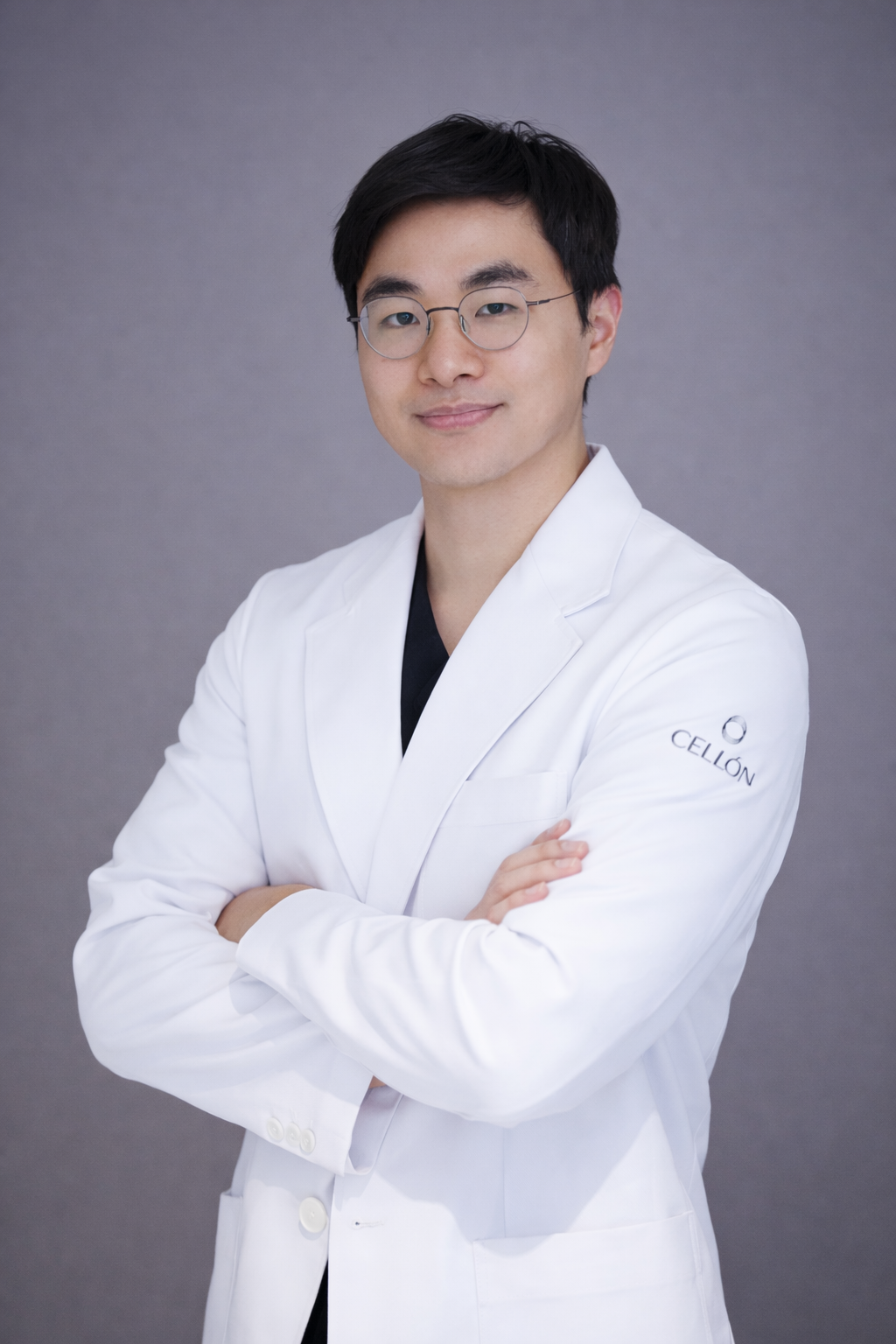
Another key factor is the direct involvement of Dr. Kang Seung-hoon, the clinic's medical director, in both consultations and procedures. In regenerative medicine, outcomes are influenced not only by the protocol itself, but by the clinical judgment of the physician performing it. Selecting appropriate candidates, choosing the right treatment approach, and monitoring outcomes afterward all require the expertise of an experienced specialist.
In regenerative medicine, the question isn't just "what are we using?" — it's "why did we choose this?" We don't recommend stem cells to patients who are better suited for PRP, and we don't substitute PRP when stem cells are truly what's needed. Accurate assessment of each patient's indication always comes first.
Frequently Asked Questions
Q. Are PRP and blood stem cell treatments painful?
Both treatments involve a blood draw and an injection step. The blood draw itself is no different from a routine blood test. Depending on the treatment area, local anesthesia is often used, so discomfort during the procedure is generally kept to a minimum. Some temporary swelling or bruising may occur afterward, but it typically resolves on its own within a few days.
Q. Is the Novastem system significantly more expensive than a standard PRP treatment?
Because the separation process is more precise and requires specialized equipment and conditions, the cost structure can differ. That said, at Cellon Clinic, we start by determining what treatment is truly right for each patient — before discussing price. During your consultation, we'll talk through your goals and expected outcomes together before deciding on a treatment plan. Pricing details will be shared after your consultation.
Q. Do I have to combine blood stem cell therapy with fat grafting?
Not necessarily. Fat grafting on its own using the FAMI technique can achieve excellent engraftment rates. However, there is evidence that combining stem cells may be beneficial in areas where angiogenesis is especially important — such as around the eyes or in cases of significant volume loss — as well as in revision grafting cases. The best way to assess whether the combination is right for you is to discuss it with your doctor during your consultation.
Q. Can blood stem cell therapy only be performed at a Designated Advanced Regenerative Medicine Hospital?
Cell-based advanced regenerative medicine procedures may only be legally performed at institutions designated by the Ministry of Health and Welfare. To maintain that designation, facilities must meet strict requirements for cell processing infrastructure and clinical safety standards. Cellon Clinic, located in Cheongdam, holds this designation and fulfills all required criteria.
Q. How many sessions of PRP or blood stem cell therapy are needed to see results?
It depends on the treatment goal, the area being treated, and your individual regenerative capacity. For PRP, a common starting point is one session per month for three to six sessions, particularly for hair loss or skin rejuvenation. Blood stem cell therapy is designed with session frequency and intervals tailored to the specific treatment objective. Results begin to appear gradually after the first session and continue to build over several weeks. A detailed treatment plan will be established following your initial consultation.
PRP vs. Blood Stem Cells — Find Out Which Is Right for You
Regenerative treatment starts with the right diagnosis.
Dr. Kang Seung-hoon, Medical Director of Cellon Clinic, is ready to guide you personally.