
Stem Cell Fat Grafting vs. Traditional Fat Grafting
How Big Is the Difference in Survival Rates, Really?
You've probably heard that adding stem cells helps grafted fat last longer. But very few clinics actually explain what that difference looks like in practice — or why it happens in the first place. Today, we're going to give you an honest breakdown.
Why "Engraftment" Is Everything in Fat Grafting

The most common question people ask about fat grafting is, "How long will it last?" Fillers have a fairly predictable lifespan — roughly six months to two years — but fat grafting is, in theory, permanent. The catch? There's a variable standing between theory and real-world results: the engraftment rate.
Engraftment refers to the process by which transplanted fat cells form new blood vessels and integrate into the surrounding tissue. Cells that engraft successfully survive long-term; those that don't get absorbed through an inflammatory response or calcify over time. That's why two patients who receive the same volume of fat can end up with dramatically different amounts remaining six months later.
The challenge is that engraftment rates vary widely depending on the technique used, the treatment area, and the patient's individual condition. Perhaps the most decisive factor of all is how the fat was harvested and prepared before it ever enters the body.
Standard Fat Grafting Survival Rates — Why Do They Stay in the 20–30% Range?
Standard fat grafting involves harvesting fat, centrifuging it to isolate the pure adipocyte layer, and then transferring it to the target area. The technique has advanced considerably over the years, and in skilled hands, it can deliver meaningful results.
That said, survival rates tell a different story. Depending on the study, the average is often reported somewhere between 20–40% — meaning more than half of the transferred fat is reabsorbed by the body. Why does this happen?
For transplanted fat cells to survive, new blood vessels must form quickly to deliver oxygen and nutrients from surrounding tissue. This process, known as angiogenesis, lacks sufficient cellular signaling in standard fat grafting to proceed at the pace needed. While vascularization catches up, the cells enter an ischemic state — and many simply don't make it.
Another issue is cellular damage that occurs during the harvesting and processing stages. High-pressure aspiration, repeated centrifugation, and delays in processing all compromise cell membrane integrity and reduce the proportion of viable cells available for grafting.
for standard fat grafting
typically reabsorbed
to fully stabilize
This is why standard fat grafting relies on the concept of "overcorrection" — transferring more volume than the desired final result, with the expectation that what remains after reabsorption will meet the target. The approach has its limitations, however. The more volume is placed, the greater the risk of initial swelling and uneven contour. And because reabsorption rates are difficult to predict precisely, final outcomes can vary considerably from patient to patient.
What Makes Stem Cell Fat Grafting Different?
The key to Stem Cell Fat Grafting (SVF Fat Grafting, Stromal Vascular Fraction Enriched Fat Transfer) lies in extracting the stromal vascular fraction (SVF) — a stem cell-rich component of adipose tissue — and transplanting it together with the harvested fat.
SVF contains not only adipose-derived stem cells (ASCs) but also endothelial progenitor cells, hematopoietic stem cells, and growth factors. After transplantation, these components work together in the following ways.
How Stem Cells Improve Graft Survival
These mechanisms work in combination to significantly boost graft survival rates. Multiple clinical studies conducted both domestically and internationally have reported SVF-enriched fat grafting survival rates of 70–90% — roughly 2 to 3 times higher than those achieved with conventional fat grafting.
Processing Method & Outcomes
- Pure fat extracted via centrifugation
- Stem cell concentration: natural baseline level
- Limited angiogenic signaling
- Estimated survival rate: 20–40%
- Overcorrection strategy required
- Results relatively less predictable
- Primarily focused on volume restoration
Processing Method & Outcomes
- SVF (Stromal Vascular Fraction) isolated and concentrated
- Stem cell concentration: significantly enriched
- VEGF secretion promotes angiogenesis
- Estimated survival rate: 70–90%
- Precise volume design achievable
- Results relatively more predictable
- Combined benefits: volume restoration + skin regeneration
Beyond Graft Survival — Skin Texture & Regenerative Effects
Stem Cell Fat Grafting sets itself apart from conventional fat grafting in more ways than just graft survival rates. One of the most notable differences is the improvement in the surrounding skin itself.
The various growth factors secreted by adipose-derived stem cells (ASCs) stimulate the dermal layer of the skin at the treatment site. Through a combination of collagen synthesis promotion, fibroblast activation, and melanin-regulating signals, many patients experience not only volume restoration but also improvements in skin texture, fine line reduction, and a brighter, more even complexion.
"Some patients tell us their skin looks better after fat grafting — and it's not simply because added volume is stretching the skin. The growth factors secreted by the stem cells actually trigger skin regeneration signals."
Dr. Kang Seung-hoon, Medical Director, Cellon ClinicFor this reason, Stem Cell Fat Grafting is best understood not as a simple "volume filler," but as a comprehensive, multi-dimensional anti-aging procedure. This is precisely why Cellon Clinic approaches fat grafting within the context of regenerative medicine.
The Difference in Volume
When stem cell enhancement improves graft survival, the procedure can be precisely planned from the start. You can achieve your desired contour without relying on excessive overcorrection.
The Difference in Skin Texture
Improvements in elasticity, texture, and skin tone at the treatment site are commonly observed. These combined effects tend to be especially noticeable around the eye area and nasolabial folds.
The Difference in Longevity
Grafted fat cells will respond to changes in body weight, but cells that successfully engraft — rather than being absorbed — are theoretically semi-permanent. The higher the graft survival rate, the more stable the long-term results.
Precision in Treatment Planning
When graft survival becomes more predictable, pre-procedure volume planning becomes far more refined. Graft volume and density can be meticulously adjusted for each individual treatment area.
Stem Cell Fat Grafting at Cellon Clinic — The Standard of a Designated Advanced Regenerative Medicine Hospital
Cellon Clinic holds the designation as a Designated Advanced Regenerative Medicine Hospital by the Ministry of Health and Welfare. This designation is only granted after passing a rigorous multi-faceted review covering facility standards, physician qualifications, clinical protocols, and safety management systems — it is not something any clinic can receive simply by offering stem cell-related procedures.
Cellon's approach to Stem Cell Fat Grafting takes into account minimizing cell damage during SVF isolation, reducing the time between processing and transplantation, and applying a customized grafting strategy for each target area. The foundation of the entire technique lies in the quality of fat harvesting and processing — because no matter how much the stem cell concentration is enhanced, a low initial cell viability renders the effort meaningless.
Another key differentiator at Cellon is that Dr. Kang Seung-hun, the clinic's chief physician, personally oversees and performs every step — from fat harvesting to final grafting. Stem Cell Fat Grafting requires subtle, precise judgment calls at each stage that directly affect cell survival, meaning that a change in the performing physician can lead to a change in outcomes.
Cellon's Stem Cell Fat Grafting is designed to work in synergy with our regenerative medicine lineup, including Exosome and Rejuran therapies. By planning complementary regenerative treatments alongside the fat grafting procedure, Cellon maximizes the overall quality and completeness of your results.
Who Is a Good Candidate for Stem Cell Fat Grafting?
Stem Cell Fat Grafting isn't the right fit for everyone. A thorough consultation is essential before designing any treatment plan to confirm candidacy. That said, it can be a particularly meaningful option for the following individuals.
Those Who Want Regenerative Benefits Alongside Volume
This treatment is ideal for anyone looking beyond simple volume restoration — those who also want to improve skin texture, elasticity, and overall tone. It's especially well-suited for those who want a more comprehensive, multi-dimensional approach to anti-aging.
Those Unsatisfied with Previous Fat Grafting Results
If you've had conventional fat grafting before but found that the results faded quickly due to poor take, the stem cell-enhanced approach may deliver a noticeably different outcome.
Those Who Need Precise, Long-Lasting Volume
For areas requiring delicate volume control — such as the upper eyelids or nasolabial folds — or for those seeking asymmetry correction, a higher graft survival rate makes a significant difference.
Those Looking for Long-Term Results
If you're tired of the short lifespan of fillers and want natural-looking results that last from a single procedure, this may be the right solution for you.
Frequently Asked Questions
Interested in Stem Cell Fat Grafting? Let's Talk.
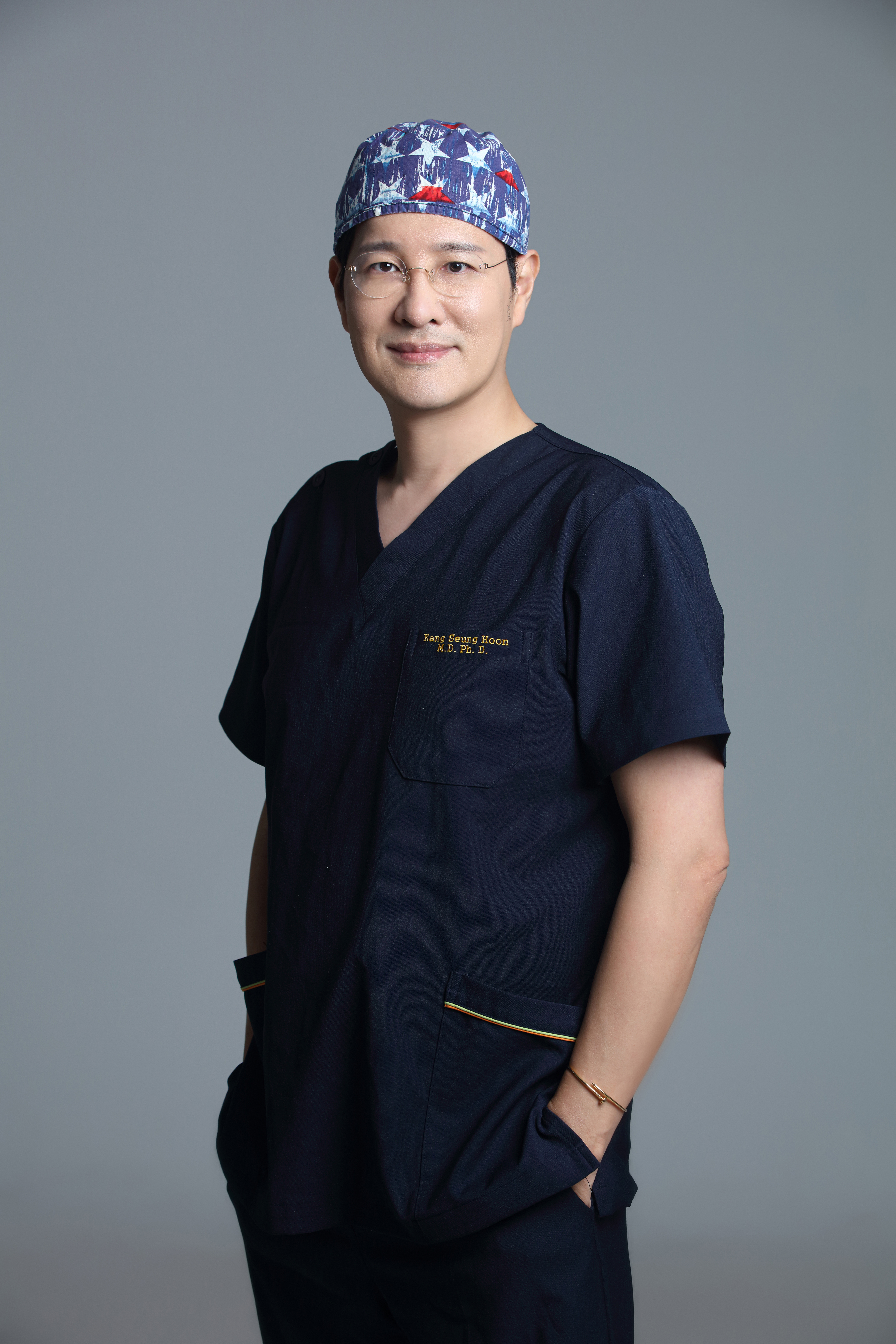
From graft survival rates and volume design to regenerative effects — bring all your questions about fat grafting to Cellon Clinic. Dr. Kang Seung-hoon, our lead physician, will personally consult with you.
Chat with Us on WhatsApp