
Eyelid Fat Grafting:
Why Are Truly Skilled Clinics So Hard to Find?
The eyelid is one of the smallest, most delicate areas on the face. Here's how PHARMI fat grafting approaches this region differently from conventional fat grafting techniques.
Why Is the Eyelid Area So Challenging?
Many patients who come in for facial fat grafting consultations ask, "Can the eye area be improved too?" Dark circles under the eyes, hollowness in the upper eyelid, a sunken look just above the lash line — these concerns are far more common than people realize.
Yet clinics that can perform eyelid fat grafting properly are genuinely rare. The reason is straightforward: the area around the eyes has an extremely limited space, exceptionally thin skin, and a dense network of blood vessels and nerves.
Standard fat grafting — such as filling the cheeks or nasolabial folds — works in areas where there is a reasonable amount of room to work with. The eyelid is an entirely different story. Inject even slightly too much and the fat becomes visible as irregular bumps under the skin. Inject too little and the results are barely noticeable. The margin between the two is razor-thin.
per injection site on the eyelid
(less than half the facial average)
compartments around the orbit
These figures illustrate exactly why eyelid fat grafting requires a fundamentally different approach from any other area of the face. In this region, clinical experience, a deep understanding of anatomy, and precise fat processing technique must all come together at once.
What Is PHARMI Fat Grafting?
PHARMI is the name of the fat grafting protocol used at Cellon Clinic. Rather than simply harvesting and injecting fat, it focuses on how the fat is processed, which tissue layer it is placed in, and how precisely it is distributed.
The PHARMI protocol is built around two core principles.
After harvesting, the fat is centrifuged and filtered to remove excess oil, blood, and cellular debris as thoroughly as possible. The goal is to retain only high-purity fat cells, which directly improves the take rate. This is why the same volume of fat can yield very different results depending on how well it has been purified.
In delicate, confined areas like the upper eyelid, distributing small amounts of fat across multiple tissue layers produces far more natural results than injecting into a single layer. When fat is spread evenly rather than concentrated in one spot, the skin surface remains smooth even after the graft has fully integrated.
There is one more critical factor in the PHARMI approach: the diameter of the injection tool. The cannula used around the eye must be significantly thinner than standard fat grafting instruments. A thicker cannula increases injection pressure, which can damage fat cells and raise the risk of intra-tissue bleeding. At Cellon Clinic, an extra-fine gauge cannula is used specifically for the upper eyelid area.
Is Eyelid Fat Grafting Right for You?
Eyelid fat grafting isn't the right choice for everyone. Understanding your specific condition first is the most important step.
-
1Hollow or sunken upper eyelids
As we age, the fat layer around the eyes naturally diminishes, which can cause the upper eyelids to look sunken. When the area above the lash line becomes indented, the eyes can appear sharp, tired, or harsh. For those with this concern, restoring volume with fat grafting can create a softer, more refreshed appearance.
-
2Under-eye hollowing due to volume loss around the orbital area
One common cause of under-eye dark circles is volume loss rather than pigmentation. If the darkness is caused by shadowing rather than discoloration, replenishing fat in the right area can help improve the appearance. That said, precise layer placement is especially critical in this zone.
-
3Overall signs of aging around the eye area
When volume loss has progressed across the entire face — including the cheeks, nasolabial folds, and eye area — treating the eyelids in isolation tends to look less natural. Incorporating the eyelid area into a comprehensive facial fat grafting plan typically produces more harmonious, balanced results.
-
4Irregularities from previous surgery or treatments
If the upper eyelid appears hollow following double eyelid surgery, or if tissue irregularities have developed after filler complications, fat grafting may be used as a corrective measure. In these cases, however, a thorough assessment of the underlying cause and current tissue condition is essential.
Eyelid Fat Grafting vs. Filler — What's the Difference?
When it comes to restoring volume around the eyes, fillers and fat grafting are often compared. While both aim for a similar result, they work differently and suit different situations.
- Immediate volumizing effect
- Absorbed within approximately 6–18 months
- Requires repeat treatments
- Risk of vascular compression around the eye area
- Improper placement can cause lumping or skin pallor
- Partially reversible with enzyme injections
- Long-lasting results once engrafted
- No foreign-body reaction — uses your own tissue
- Regenerative benefits (especially when SVF is included)
- Natural texture with precise placement
- Final results assessed after initial swelling subsides
- Graft survival rate is the key variable
Using filler around the eyelids isn't inherently problematic. However, this area carries a higher risk of vascular complications compared to other injection sites, and filler material can spread more widely than expected. Fat grafting, on the other hand, uses your own tissue — eliminating the risk of an immune reaction — and when properly engrafted, can deliver stable, long-term results.
That said, fat grafting does involve a variable: graft survival rate. Not all of the injected fat will survive, which means initial and final results may differ. The FAMI protocol's refined preparation and placement techniques are specifically designed to minimize this uncertainty.
Why Cellon Clinic Approaches the Upper Eyelid Area with Extra Care
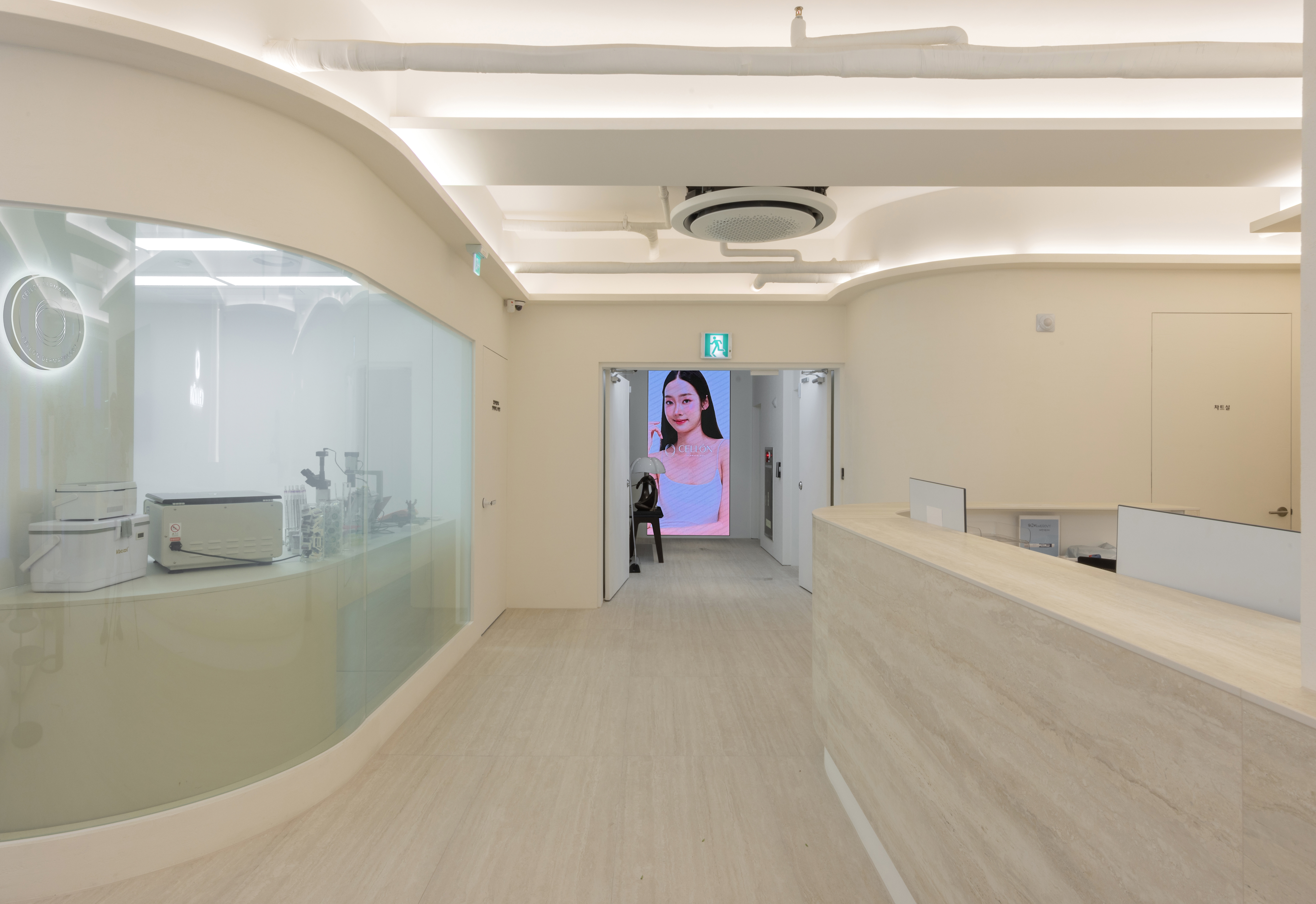
Cellon Clinic is a Designated Advanced Regenerative Medicine Hospital located in Cheongdam. This designation from the Ministry of Health and Welfare is not a matter of procedure volume or marketing — it means the clinic has been officially recognized for meeting rigorous standards in technique, safety, and medical ethics.
When it comes to upper eyelid fat grafting, there is one principle Cellon places above all else: the judgment to know when not to proceed.
Upper eyelid fat grafting is only performed when there is a clear indication. Not every eyelid concern is best addressed with fat grafting — the wrong approach can actually make the eyes appear heavier or create surface irregularities. In this area, identifying the root cause and determining whether fat grafting is truly appropriate is just as important as the procedure itself.
The fact that Dr. Kang Seung-hoon personally handles both consultations and procedures is especially meaningful in this area. For a delicate region like the upper eyelid, the physician who assessed the anatomical condition during the consultation should be the one performing the treatment — that continuity is what makes outcomes more predictable. When different people handle the consultation and the procedure, critical information can get lost in the handoff.
When needed, Cellon can also combine fat grafting with SVF (stromal vascular fraction) or Exosome therapy as part of a regenerative medicine-based approach. Rather than simply adding volume, the goal is to improve the tissue's regenerative environment itself. This is precisely why Cellon identifies as a specialist in regenerative medicine and anti-aging integration.
What You Need to Know Before and After the Procedure
If you're considering eyelid fat grafting, setting realistic expectations is essential.
-
1Initial swelling is unavoidable
The eye area tends to swell more noticeably than other parts of the face. During the first one to two weeks, you may feel like too much was injected. The final result should only be assessed four to eight weeks after the procedure, once the swelling has subsided and the grafted fat has stabilized.
-
2A touch-up may be needed depending on the take rate
With fat grafting, a portion of the injected fat is naturally absorbed by the body. Areas with frequent movement, like the eyelids, tend to have a relatively lower take rate. Because initial results can sometimes appear undercorrected, a follow-up touch-up session may be planned in some cases.
-
3Consider the fat harvest site as well
Since only a small amount of fat is needed for the eyelids, very little needs to be extracted from donor sites such as the abdomen or thighs. This procedure can be performed on its own, but combining it with fat grafting to other areas of the face can help minimize the impact on the harvest site.
-
4Recovery is faster than most people expect
While swelling around the eyes can be noticeable at first, it rarely lasts long enough to prevent normal daily activities. Individual results vary, but many patients are able to return to their routine within one to two weeks. That said, following post-care guidelines — especially sun protection — is particularly important during the early recovery period.
Frequently Asked Questions
Concerned About Your Upper Eyelids? Start with an Accurate Diagnosis
The best way to find out whether fat grafting is right for your area of concern — and which approach suits your condition — is through a in-person consultation. Dr. Kang Seung-hoon, Chief Director of Cellon Clinic, will personally guide you through every step.
Chat with Us on WhatsApp