Cellon Clinic
Stem Cell Lab
Regenerative
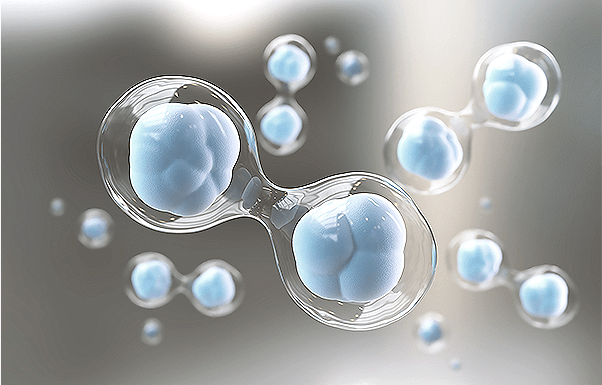
What is the Cellon Dermatology Stem Cell Lab?
Stem Cell Research Institute
The Cellon Dermatology Stem Cell Research Institute meets the strict facility
standards and protocols required by Advanced Regenerative Medicine designation,
positioning us as a leader in regenerative medicine. More than a clinical treatment
space, the lab serves as a core R&D hub that explores the fundamental potential
of stem cells and develops optimized therapies, equipped with state-of-the-art
infrastructure that precisely controls every stage—cell isolation, culture, analysis,
and storage.
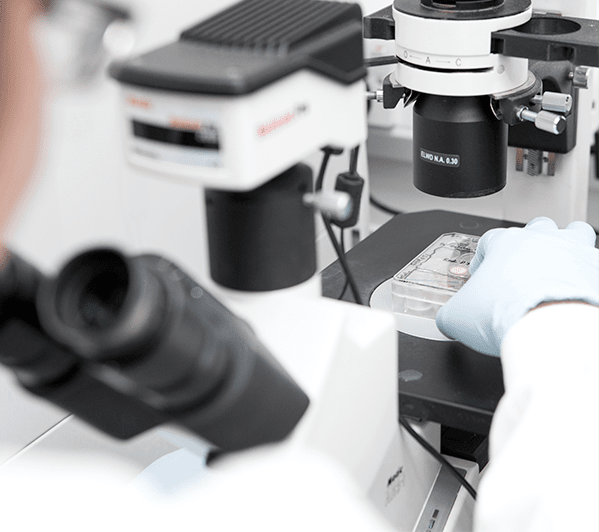
An advanced analytical system that explores the microscopic world of cells
Our core research instrument, the Olympus Inverted Phase-Contrast
Fluorescence Microscope, is a high-performance analysis system that
combines phase-contrast imaging—allowing observation of living cells in their
natural state without staining—with fluorescence imaging, which tags specific
molecules or structures to visualize their location and expression with precision.
This lets us monitor subtle morphological changes, differentiation, and cellular
activity in real time, maintaining the highest standard of cell quality control.
We also use a Fluorescence Cell Counter to quantitatively analyze cell
concentration and viability. Fluorescent reagents responsive to specific
wavelengths clearly distinguish living from dead cells, allowing us to verify
the efficacy of treatment-grade stem cells with greater than 99% precision.
Infrastructure for precise cell isolation and preservation
| Key Equipment | Description |
|---|---|
| High-speed centrifuge | Protocols efficiently separate and concentrate stem cells and growth factors from tissue by density gradient. |
| Lab workstation | All cell-handling steps are performed aseptically in a clean workstation environment that eliminates the risk of contamination at the source. |
| Cell storage facility |
Our cryogenic liquid-nitrogen freezer for long-term cell preservation is the flagship model from Taylor-Wharton, a globally recognized leader in this field. |
| Uninterruptible power supply |
Instantly supplies emergency power in the event of an outage, ensuring the continuous operation of all critical equipment, including the cryogenic freezer. |
Setting the standard for advanced regenerative medicine
Built on systematic, science-driven infrastructure that meets Advanced Regenerative
Medicine criteria, the Cellon Dermatology Stem Cell Lab is turning the boundless
potential of regenerative medicine into reality.
Tap the button below to book a consultation.
Cellon Clinic
Blood-Derived Stem Cells
Regenerative
What are Blood-Derived Stem Cells?
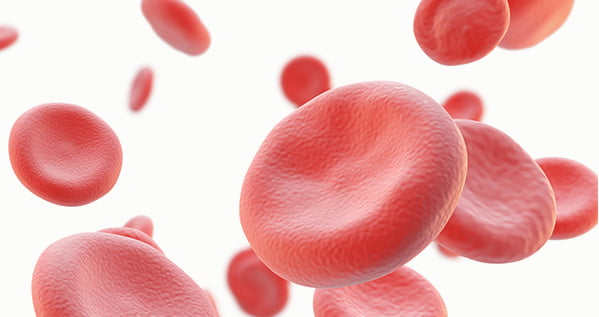
Peripheral Blood Stem Cells, PBSC
A technique that collects and isolates the small population of hematopoietic stem cells (CD34⁺ HSC) circulating
in peripheral blood, then uses them therapeutically. Compared with traditional bone marrow harvesting, it is far less
invasive and can be automated, easing the burden on patients.
How are they collected?
-
 Draw 30–240 mL of autologous blood
No G-CSF or other mobilization agents,
minimizing the risk of side effects. -
 Centrifugation & fractionation
Proteins and red blood cells are removed
to isolate the mononuclear cell layer. -
 CD34⁺ cell purification
Purified within 90 minutes on MFDS-approved
equipment → roughly 1–3 × 10⁶ cells
secured (varies by individual). -
 Immediate administration
Sterile delivery via either fine intradermal
microinjection or intravenous infusion, tailored to your needs.
Why does your skin change?
| Key Mechanism | Description |
|---|---|
| Regenerative cytokine secretion | Releases numerous growth and immune-modulating factors that may help stimulate collagen synthesis and new blood vessel formation |
| Homing to damaged tissue | Migrates to inflamed or hypoxic tissue, taking part directly in local regeneration |
| Immune & anti-inflammatory effect | Polarizes macrophages to ease chronic inflammation |
How does it compare with other stem cells?
| Category | Blood-Derived (PBSC) | Adipose-Derived (MSC) |
|---|---|---|
| Ease of collection | Simple venous blood draw | Requires local anesthesia and liposuction |
| Key markers | CD34⁺ · CD45⁺ | CD73⁺ · CD90⁺ · CD105⁺ |
| Primary lineage | Blood & immune cells | Bone, cartilage, fat, dermal fibroblasts |
| Collagen stimulation | Mainly paracrine (secretory) | Paracrine + partial direct differentiation |
| Cell count | Relatively low; high-density concentration needed | Larger yields, easy to expand in culture |
-
Procedure Benefits
- Improved skin elasticity & reduced wrinkles: reported increase in collagen density
- Accelerated scar & wound healing: faster wound contraction, reduced pigmentation

-
Safety & Legal Standards
- Because autologous cells are used, the risk of immune rejection or GVHD is markedly low.
- Under the Advanced Regenerative Medicine and Bio-pharmaceutical Act, our clinic is a Ministry of Health and Welfare designated Advanced Regenerative Medicine Provider.

-
Cellon Dermatology PBSC
Program Highlights- 01.
- ‘Non-G-CSF' (mobilization-free) draw →
minimizes fatigue, bone pain and similar side effects
- 02.
- 90-minute one-stop processing → minimizes drop in cell viability
- 03.
- Paired with hyperbaric oxygen therapy* → synergy for early engraftment and oxygen delivery
- 04.
- Follow-up monitoring at 1, 3, and 6 months
* Hyperbaric oxygen (2.0 ATA) + LED regenerative light therapy immediately after the procedure

-
Q1.
Is it painful?
The blood draw feels similar to a standard donation, and the topical anesthetic cream makes the injection tolerable for most patients. -
Q2.
What about downtime?
Minor flushing and slight swelling resolve within 1–3 days, so you can wash your face and apply makeup right away. -
Q3.
How many sessions are needed?
Typically one session, followed by a 1–3 month review to decide whether additional treatment is warranted. -
Q4.
Any side effects?
Rare reports include bruising at the injection site and transient warmth;
no serious complications have been reported to date.
Reboot your skin from within
With Cellon Dermatology's Blood-Derived Stem Cell Lifting & Revital program, you can
lower the burden while unlocking your skin's full regenerative potential.
Tap the button below to book a consultation.
Cellon Clinic
Adipose-Derived Cultured Stem Cells
Regenerative
What are Adipose-Derived Cultured Stem Cells?
Adipose Derived Mesenchymal
Stem Cells, AD MSC
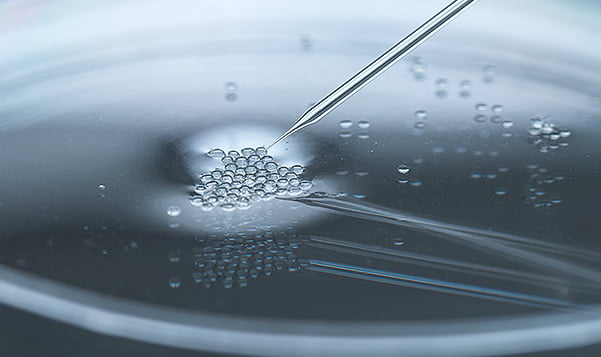
The subcutaneous fat in our body acts like a "stem-cell reservoir," brimming with mesenchymal
stem cells (MSCs). By safely harvesting these cells and then culturing and concentrating
them in a sterile environment, we obtain a high-purity population that may help drive
skin regeneration and modulate inflammation.
How are cells collected and cultured?
-
 Small-volume fat harvest
Under local anesthesia, we gently
aspirate just 10–20 mL with
a fine cannula. -
 Cell isolation
Centrifugation separates the
stem-cell-rich
"stromal vascular fraction (SVF)"
from the fat tissue. -
 Sterile culture & expansion
In a GMP-grade facility,
cell counts are increased
tens to hundreds of times over 2–3 weeks. -
 Quality & safety testing
All cultures are confirmed negative for bacteria,
mycoplasma, and endotoxin, with verified expression
of marker panels (CD73⁺·CD90⁺·
CD105⁺) -
 Personalized administration
Based on your skin condition, we choose
microinjection, layered delivery,
or intravenous infusion.
How does it work?
| Key Mechanism | Description |
|---|---|
| Paracrine effect | Growth factors and cytokines released by stem cells may help stimulate collagen and elastin production. |
| Immune modulation | Rebalances T-cells and macrophages to ease chronic inflammation and stabilize the skin barrier. |
| Antioxidant & anti-aging | Reduces reactive oxygen species (ROS) and defends cells from damage, helping slow signs of aging. |
| Direct differentiation | A portion of cells differentiate into fibroblasts, helping rebuild damaged dermal structure. |
What to expect
-
Firmness & lifting
Higher collagen density helps
define facial contours. -
Fine lines & refined pores
Promotes dermal remodeling for
a smoother, more refined skin texture. -
Reduced pigmentation & scars
Faster tissue recovery may help
lighten pigmentation and scarring. -
Calmer dry, sensitive skin
Anti-inflammatory and hydrating cytokines
strengthen the skin barrier.
※ Results and how long they last can vary based on individual skin condition and lifestyle.
-
How safe is it?
- Because autologous tissue is used, the risk of immune rejection or foreign-body reaction is very low.
- All culture steps are performed in a GMP-certified lab to minimize contamination risk.
- Cellon Dermatology is a Ministry of Health and Welfare designated Advanced Regenerative Medicine Provider, and we strictly comply with applicable regulations.
-
Strengths of the Cellon Dermatology AD-MSC Program
- 01.
- Small-volume fat harvest minimizes scarring
- 02.
- Cell-bank system – one harvest can support multiple sessions
- 03.
- Paired with hyperbaric oxygen and LED regenerative light to support early engraftment
- 04.
- Quantitative pre- and post-procedure assessment via ultrasound and 3D scanning
-
Q1.
How long does the procedure take?
Fat harvest takes about 30 minutes, culture takes 2–3 weeks, and administration takes roughly 20–30 minutes. -
Q2.
Is it painful?
The harvest area is anesthetized locally; injections use numbing cream or a vibration device, so most patients are comfortable. -
Q3.
Is recovery long?
Bruising and swelling at the harvest site fade within 3–5 days; you can return to daily activities right away. -
Q4.
How many sessions are needed?
One administration, then a 6–12 month review to decide whether additional sessions are warranted. -
Q5.
Can it be combined with other lifting devices?
Because Ulthera and Thermage work in different energy ranges, there's a synergistic effect. The exact sequence is decided after consultation.
Let your skin recover on its own.
With Cellon Dermatology's Adipose-Derived Cultured Stem Cell program, awaken your
skin's innate regenerative ability.
Tap the consultation booking button now.
Cellon Clinic
Hyperbaric Oxygen Therapy
Regenerative
What is Hyperbaric Oxygen Therapy?
HBOT
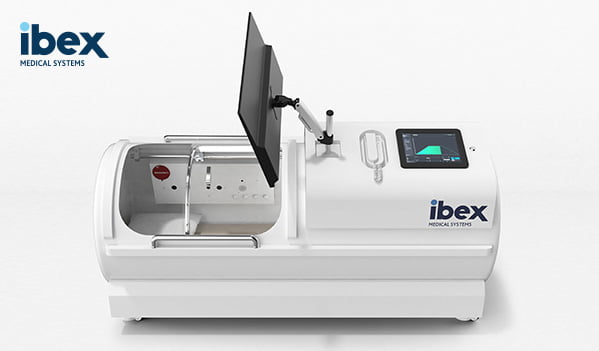
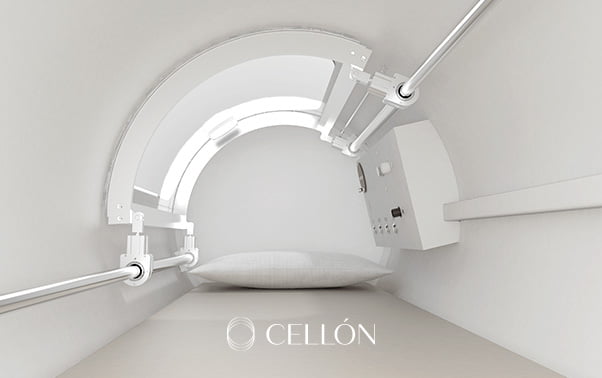
At Cellon Dermatology, our hyperbaric oxygen therapy is a regenerative treatment
delivered inside a private single-occupant chamber pressurized to more than twice
the normal atmosphere, where you breathe 100% oxygen. The oxygen dissolves deeply
into your blood and skin cells, accelerating recovery and supporting procedure outcomes.
Why pair HBOT with stem cell, PRP, or other regenerative procedures?
- Changes from increased oxygen
- Relieves hypoxic stress
- Supports collagen and elastin production
- Activates microvasculature and growth factors
- Strengthens immune and anti-inflammatory response
- Expected benefits in regenerative procedures
- Improved survival and engraftment of injected stem cells
- Faster scar fading and elasticity gains after PRP or laser
- Less bruising, less swelling, shorter recovery after fat grafting or thread lifting
- Faster soothing of skin irritation and inflammatory reactions
 Key point Adding HBOT immediately after a "cell-based" procedure creates an environment where cells can breathe — making outcomes more pronounced.
 Session flow (total 50 minutes)
-
10 min pressurization
Similar to an airplane takeoff,
your ears may briefly feel full. -
30 min of 100% oxygen
Relax and lie back as
oxygen penetrates deep into your tissues. -
10 min depressurization
Pressure is lowered slowly,
letting your body adapt naturally.
-
Recommended sessions
- Laser · HIFU: 1–3 sessions
- Autologous fat grafting · stem-cell injection: 3–5 sessions
- Customized based on procedure type and skin condition.
-
What makes Cellon Dermatology's HBOT different
- 01.
- Regen-Combo Protocol Stem cells, PRP, and laser linked with HBOT in one space to maximize synergy
- 02.
- Single-occupant chamber Guarantees privacy and minimizes external infection risk
- 03.
- 50-minute focused program Pressurization, treatment, and depressurization all within one hour
- 04.
- Dedicated regenerative-medicine team Dermatology specialists and HBOT-certified nurses manage every step with precision
If you have any questions, please reach out to the
Cellon Dermatology Regenerative Medicine Center any time.
In 50 minutes, get the best of both worlds: recovery and results!
Cellon Clinic
SELAVE Therapy
Regenerative
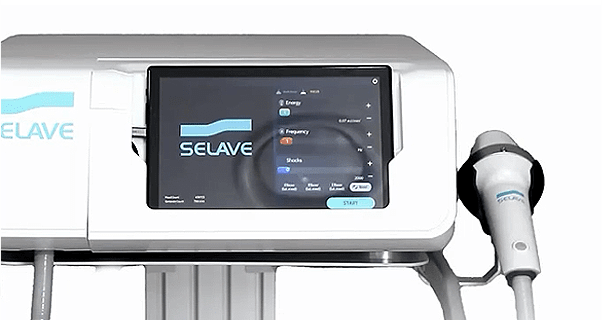
What is SELAVE Therapy?
SELAVE
SELAVE is a premium skin-regeneration system built on LIMFU (Low Intensity Multi-Focused Ultrasound)
technology. LIMFU stands for low-energy, multi-focused acoustic waves and delivers an innovative
non-thermal regenerative mechanism that sets itself apart from conventional lifting devices.
LIMFU vs HIFU — a fundamentally different concept
| Category | LIMFU (Low Intensity Multi-Focused Ultrasound) | HIFU (High Intensity Focused Ultrasound) |
|---|---|---|
| Intensity | Low-intensity energy | High-intensity, focused energy |
| Energy type | Mechanical stimulation via pulsed acoustic waves | Thermal energy from ultrasound |
| Target mechanism | Tissue regeneration and remodeling via mechanotransduction |
Coagulative necrosis and thermal damage of fat cells at high temperatures (above 56°C) |
| Treatment goal | Minimize pain while supporting collagen generation and circulation across the full skin layer | Destroy and reduce deep subcutaneous fat |
Activating mechanotransduction
-
Cell & growth factor stimulation
Helps drive proliferation and activation of
fibroblasts and stem cells. -
Improved collagen & elasticity
Meaningfully supports skin elasticity and
reduces the appearance of fine lines. -
Relaxed muscle tension & refined contours
Eases excessive facial muscle tension
to support a natural lift and refined
contours. -
Circulation & fat-layer management
Stimulates blood and lymphatic microcirculation,
helping reduce facial lymphedema and
activate fat metabolism.
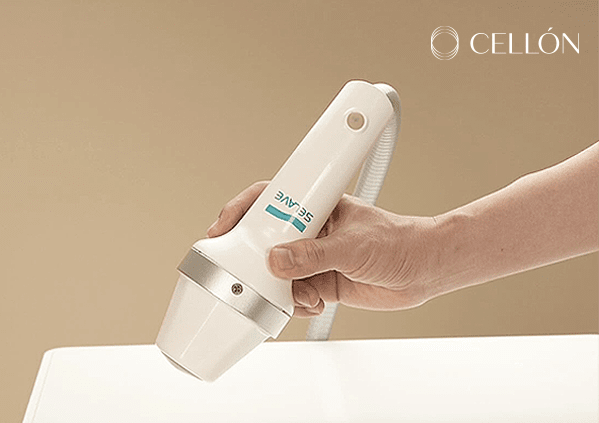
SELAVE's Multi-Focus method
SELAVE uses pulsed waves generated by an EM (Electro Magnetic) device
to deliver energy. In particular, the patented Multi-Focus Head technology
maximizes lifting efficiency.
Tap the button below to book a consultation.
Cellon Clinic
Collagen Regeneration
Regenerative
What is Collagen Regeneration?
Collagen Biostimulation
In modern skin science, treatments that slow or reverse aging by harnessing the
skin's own regenerative ability have become a key approach. Going beyond simply
filling volume with external fillers, collagen biostimulation uses biocompatible
materials to stimulate dermal fibroblasts and trigger new collagen synthesis — a
fundamentally regenerative principle.
How collagen biostimulators work
| Stage | Description |
|---|---|
| Initial response | The injected material occupies physical space, delivering an initial volume effect. |
| Cellular stimulation | As the material gradually breaks down, it continuously stimulates surrounding fibroblasts. This triggers a controlled, subacute inflammatory response that may activate cellular activity. |
| Collagen synthesis | Activated fibroblasts increase the production of type I and type III collagen and other extracellular matrix. |
| Structural improvement | Over several months, the newly formed collagen fibers strengthen the skin's structural scaffold, delivering gradual, natural volume restoration, improved elasticity, and refined texture. |
Types of collagen biostimulators
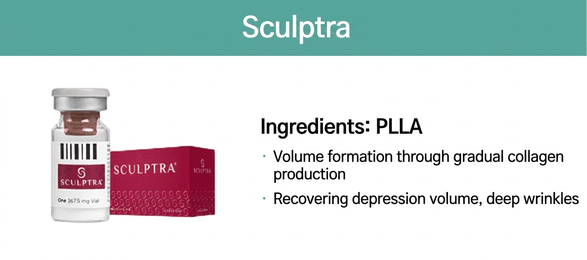
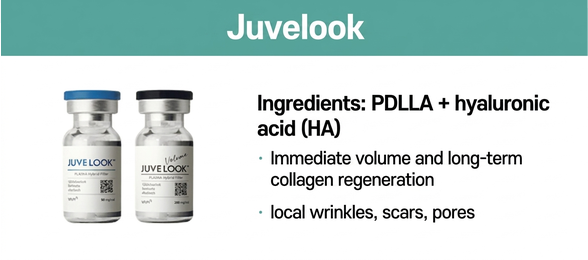
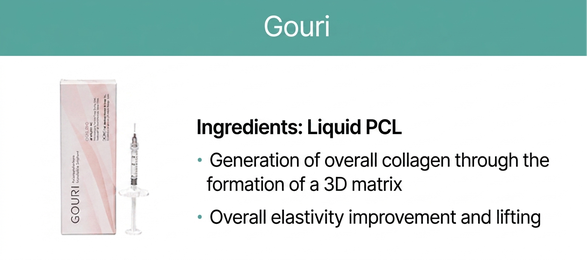
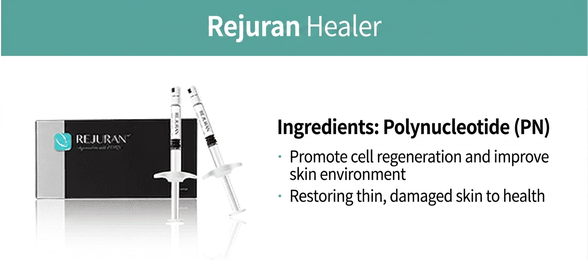
With its unique ingredients and mechanism of action,
collagen regeneration delivers distinct clinical characteristics.
A successful outcome starts with an accurate medical assessment of your skin type,
degree of aging, anatomical features, and improvement goals.
Tap the button below to book a consultation.
Cellon Clinic
Exosome Therapy
Regenerative
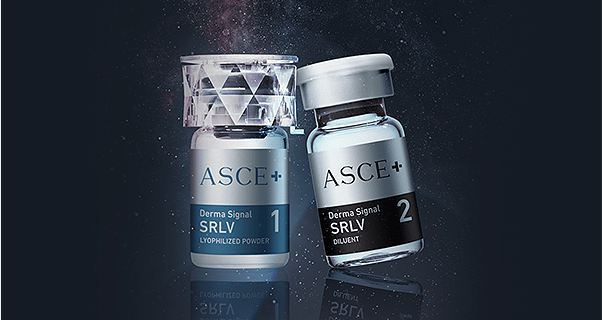
What are Exosomes?
Exosome
Cells, the smallest functional unit of our body, do not exist in isolation — they
constantly exchange signals to keep tissues and organs healthy. The substances
that mediate this precise cell-to-cell communication are
exosomes.
What exosomes can do
-
 Activate skin-cell proliferation
Activates skin cell proliferation,
helping increase skin density
and elasticity. -
 Anti-inflammatory action
Supports the improvement of
inflammatory skin conditions like
acne, atopic dermatitis, and dermatitis. -
 Skin barrier restoration
Stimulates ceramide synthesis —
a core component of the skin barrier —
to strengthen the skin's defensive
capability. -
 Damaged-tissue recovery
Speeds the recovery of damaged tissue and
helps relieve redness and
sensitivity after laser
procedures. -
 Tone & brightening
Helps improve pigmentation and
build a clearer, more even
skin tone.
Key components of exosomes
-
Growth factors
Proteins that drive cell growth,
proliferation, and differentiation -
Cytokines
Signaling molecules that
regulate immune and inflammatory responses -
Proteins & peptides
Build cellular structure and
regulate function -
Lipids
Components that form and
protect cell membranes -
Nucleic acids
Genetic information that
regulates the expression of specific proteins
to control cellular activity
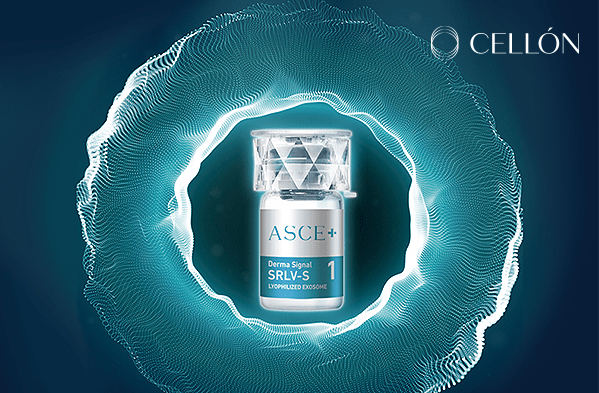
Through cell-to-cell communication, awaken your skin's foundation
Exosomes are a next-generation anti-aging solution that helps rebuild a depleted
skin environment and reawaken time-weary skin cells, helping them radiate from within.
Tap the button below to book a consultation.
CELLON CLINIC Cheongdam. CELLON CLINIC Cheongdam. CELLON CLINIC Cheongdam. CELLON CLINIC Cheongdam.
Location
- Address
- 37 Seolleung-ro 152-gil, 3F, Gangnam-gu, Seoul
(Cheongdam-dong 90-19)
- Parking
- Valet parking is available on the 1st floor.
- Reservations
Cellon Clinic Guide
- Hours
- Weekdays10:00 AM – 7:00 PM
- Saturday10:00 AM – 4:00 PM
- *Closed on Sundays and public holidays

Cellon Dermatology Clinic
37 Seolleung-ro 152-gil, 3F, Gangnam-gu, Seoul (Cheongdam-dong 90-19)
Lead Director: Kang Seunghoon / Business Reg. No.: 211-09-45444
Email: cellonclinic@naver.com
This website (cellonclinic.com) is operated by Cheongdam Cellon Dermatology Clinic.
COPYRIGHT © 2026 Cellon Clinic (청담 셀온피부과의원). ALL RIGHTS RESERVED